


Activists detained when their flotilla attempted to breach Israel’s naval blockade of Gaza say they have been mistreated at the hands of Israeli soldiers, describing beatings, tasers and attack dogs.
The Global Sumud Flotilla of 50 boats was intercepted in international waters some 250 miles (400 kilometers) off the coast of Israel, and activists along with journalists and at least one lawmaker from Italy were transferred onto military boats and brought to a larger military vessel at the Ashdod port in southern Israel, where they were held in containers, according to their accounts. They told The Associated Press they were punched and kicked, as well as dragged and pulled by their hair.
Israel's far-right security minister Itamar Ben-Gvir, who has called for deporting political opponents and was barred from mandatory military service for his extreme views, sparked global outrage after promoting a video of himself taunting activists from a flotilla to Gaza who were detained by his police force. Foreign leaders have condemned his on-camera treatment of the detainees and several countries summoned Israeli envoys to air their concerns.
Israel denies mistreatment. The allegations were “false and entirely without factual basis,” said Zivan Freidin, a spokesperson for the Israeli Prison Service.
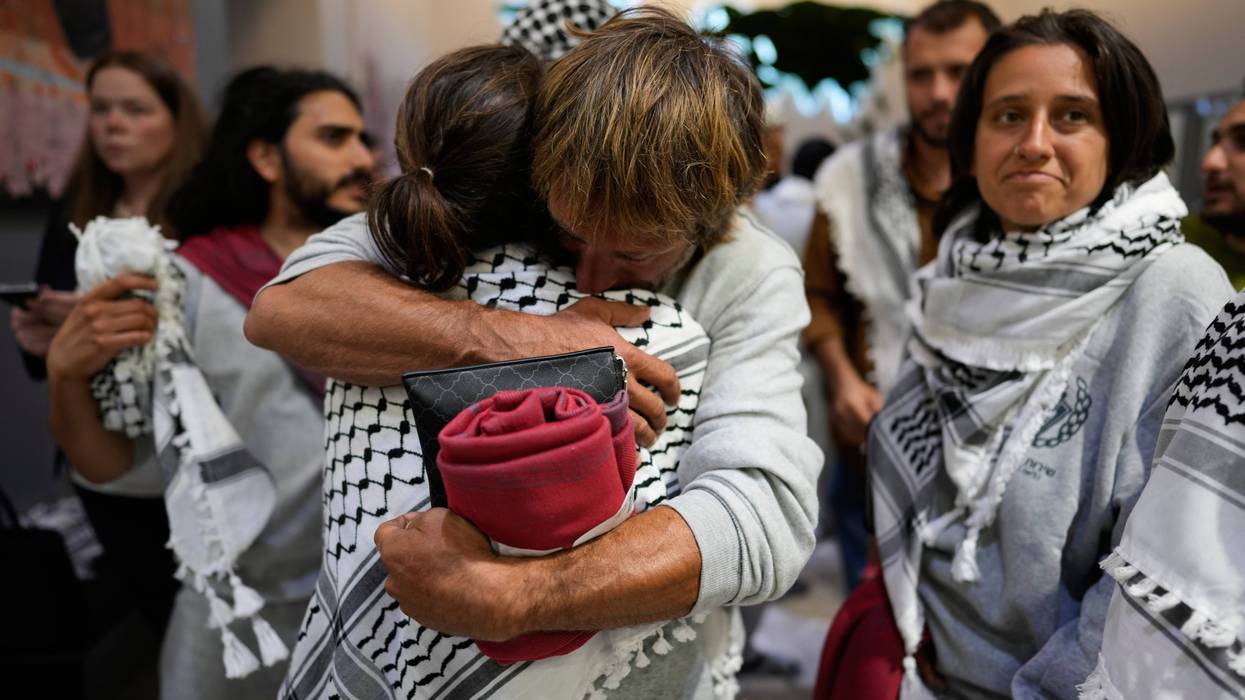
Some 420 activists departed for Turkey on Thursday after they were deported from Israel, many wearing gray sweatsuits and Arab kaffiyehs.
The AP spoke to some Thursday and Friday as they reached Istanbul, Athens and other European cities:
Here are their accounts:
Zeynel Abidin Ozkan, Turkish flotilla board member
He detailed being held in a container alongside other detainees shortly after the flotilla raid and he said some people were taken outside the containers where he heard them being physically assaulted.
“We faced periods where we couldn’t stand, our heads were bowed to the ground, we were dragged and pulled by our hair. The handcuffs left serious marks on us.”
After arriving at Ashdod port, Ozkan says he was denied the right to contact his lawyer, embassy officials or relatives back home. He describes being told to sign papers under duress, which he refused.
“When we refused to sign, they treated us like prisoners, creating a file, taking photos, forcibly handcuffing our hands and feet with iron shackles. And then, with the soldiers, dragged us along the ground, surrounded by dogs, releasing the dogs on us, before loading us into prison trucks.”
Christopher Boren, activist from Hawaii
“When we got to Ashdod port, I was immediately grabbed by five IDF (soldiers) or police officers. They put my head down and started beating me. One of them had gloves on with hardened plastic and he started punching my face and it swelled shut,” he said, showing his black eye.
Alessandro Mantovani, Italian journalist for the daily Il Fatto Quotidiano
“During the crossing, we were put on our knees, blindfolded, and told to make sure the blindfold didn’t move. They repositioned mine 30 times because I kept trying to look around. And there’s absolutely no possibility in this situation to say ‘I’m a member of parliament’ or ‘I’m a journalist’ — you’re dealing with machines that scream and accompany their screaming with physical gestures. They put you flat on the ground, then on your knees, with zip ties on your wrists. The blindfold, plus an additional zip tie securing your wrists down to a metal structure, just a few inches from the deck. So you’re forced to travel in an extremely uncomfortable position on rough concrete. And I had cramps in my legs the whole time, obviously.”
After they were transferred to a ship that was used for detention “the treatment became immediately more violent. We entered through this small hatch and were shoved and dragged by force with our arms twisted behind our backs, forced to kneel in front of a wall with our heads down.”
At one point, he was thrown down “flat on my stomach, hands behind my back, face pressed, head pressed against the soaking wet and dirty floor of this ship — pressed down with their feet — and then they pressed my hands behind my back.”
Once inside the container, “I was kicked in the shin. Honestly, I don’t expect it. And they say ‘Welcome to Israel.’ Then a punch to the face, one from this side, one from that side. A closed-fist punch. I moved to get up and I got kicked in the leg. A little jolt from a taser to the ribs. And then I make it out the other side of this container and reach the deck.”
Mantovani said he was also strip searched, and his eye glasses and wallet discarded. He and the activists on his ship threw their cellphones into the sea when the Israeli boats approached, and he didn’t wear a watch on this mission after his was nearly confiscated on a previous flotilla.
Yiannis Atmatzidis, Greek activist
“I was struck with a taser, beaten with punches and kicks, insulted and humiliated. On the prison ship there was a container that everyone had to pass through. You entered through one door and a group of six or seven people would beat you mercilessly until you emerged from the other side. Every single one of us went through that.”
Atmatzidis said he was being processed for identification when Ben-Gvir was touring the prison ship.
“The minister entered the room and asked me where I was from. I replied, ‘from Greece.’ He then asked why I was there, and I told him that I had come to deliver humanitarian aid to people who needed it. He responded, ‘Are you a friend of Hamas?’ I explained that our mission had no political agenda and was purely humanitarian. He was surrounded by four armed guards who aimed their weapons and laser sights at me while I sat there handcuffed behind my back.”
He added: "Whenever we told them that circulation was being cut off and our hands were going numb, they showed absolutely no mercy. I do not have the words to describe the brutality and cruelty of these people. It is something I will never forget.”
——
AP journalists Emrah Gurel in Istanbul, Andrea Rosa in Rome and Derek Gatopoulos in Athens contributed to this report.