


The Red Sox might very well score 10 runs Saturday night, launching into a season-changing win streak. When all the elements of this lineup are at their best, that is a very real possibility.
But as of now, it is so far from their best, and they are seemingly so far from accomplishing either the run total or the win streak.
That was the feeling and the narrative after the Red Sox's series-opening, 3-2 loss to the Cardinals.
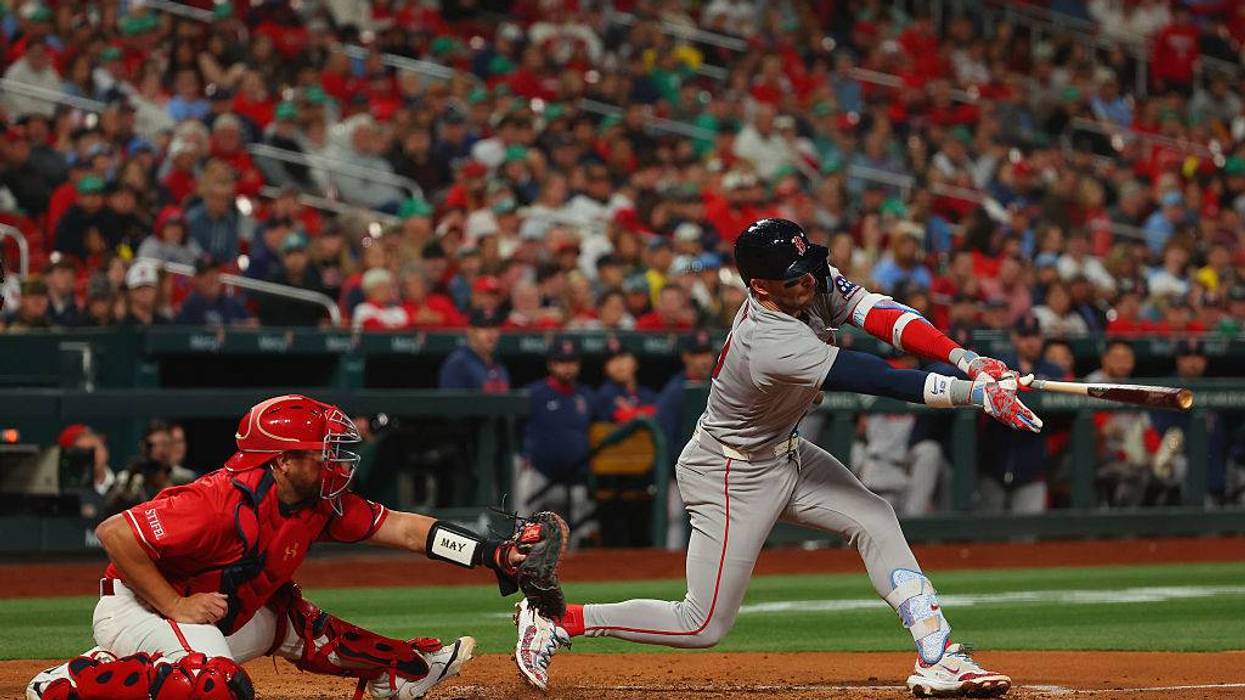
Friday night, the Sox were shut down by the pitcher they had put their faith in at last season's trade deadline, Dustin May, who came into the start carrying a 15.95 ERA over his first two starts. Seemingly out of nowhere, May found a fastball that reached as high as 99.3 mph and averaged just over 96 mph.
But no matter the pitcher, the now 4-9 Red Sox have to wake up to the reality that this is a results business, and the results are not nearly good enough.
The problem? This blueprint isn't bringing out the best in the players they need to be close to their best.
Because of an outfield/designated hitter rotation that seems more and more like a square peg in a round hole, the team's offensive centerpiece, Roman Anthony, wasn't in the lineup. It left the Red Sox with a top of the order that put Jarren Duran at leadoff and Caleb Durbin sliding into the No. 2 spot, with Masa Yoshida hitting third. The mixing and matching led to those first three positions going a combined 1-for-10, with Duran's and Durbin's 0-fers putting their batting averages at .162 and .103, respectively.
The original plan? That was to ride the coattails of Anthony, Trevor Story and Duran in the first three spots. The rookie aside, Story is hitting .140, with Duran not exactly thriving in this positional and lineup-rotation setup. No qualified hitter in MLB is swinging and missing at a higher percentage than Duran (45.8 percent).
So, why isn't this plan working? Because most of the time when teams try to juggle this sort of roster construction, it rarely bears fruit.
Take Duran, for instance. This is a player whose best season to date was when he thought he had a chance to play in 162 games. Now? It has become far more complicated. Is he struggling because of the playing-time and position roller coaster, or is deferring to the likes of Yoshida and Ceddanne Rafaela justified because they give the Red Sox a better chance to win?
Then there is the team's master plan on living life leaning on run prevention instead of runs. That also seems to be an uncomfortable approach.
The Red Sox have the third-fewest runs and home runs in baseball. It's fair to revisit chief baseball officer Craig Breslow's initial offseason instincts, which proclaimed the team needed more power. Perhaps some of the projected upticks in home run-hitting in certain players take root, but it is times like this - with too many hitters struggling to piece together significant rallies - that such skill-sets are in demand.
Then there is the Anthony dynamic.
Even if he has to pivot to more time as a DH while figuring out his throwing issues, there were a few pieces of this puzzle that shouldn't have been ignored. First, the safety net in case Anthony wasn't the All-Star leadoff hitter was thin, without the proven star-level bats most winning teams possess sitting somewhere behind him. A case could be made that, at their best, Story, Duran, Willson Contreras, and Wilyer Abreu all could be those guys. But, right now, it still feels like the Red Sox desperately need the 21-year-old more than they should.
The Red Sox have the fourth-worst OPS out of the leadoff spot, with their No. 2 spot residing at the bottom of MLB. And in that second position in the lineup, Cora has already rolled out five different players.
The Sox aren't alone in their April eye-rolling. Two teams projected to win their respective divisions, the Tigers and Mariners, both sit at 5-9, with all but three American League teams carrying a record of .500 or worse.
Potential and plans are all well and good until they aren't. That's a reminder the Red Sox are currently being slapped in the face with.