



The Patriots’ most glaring weakness throughout much of the playoffs, and especially in the Super Bowl, was their offensive line, particularly at the tackle positions.
Rookie Will Campbell returned from an MCL tear, but struggled to regain the form he showed early in the season. While Mike Vrabel has made it clear that Campbell is viewed as the Patriots’ future at left tackle, questions remain about how long the team will stay committed to the LSU product if those struggles carry into next season.
Right tackle Morgan Moses will be 35 years old by the time the Patriots kick off their season and has a potential out in his contract after next year. Bill Belichick long emphasized addressing positions a year early rather than a year late, and New England would be wise to follow that approach.
Keeping their franchise quarterback upright should remain the top priority.
Whether on the left or right side, the Patriots should look to secure their future at the tackle position in the upcoming draft.
Here are five options for the Patriots at tackle, with the NFL Draft just one week away.
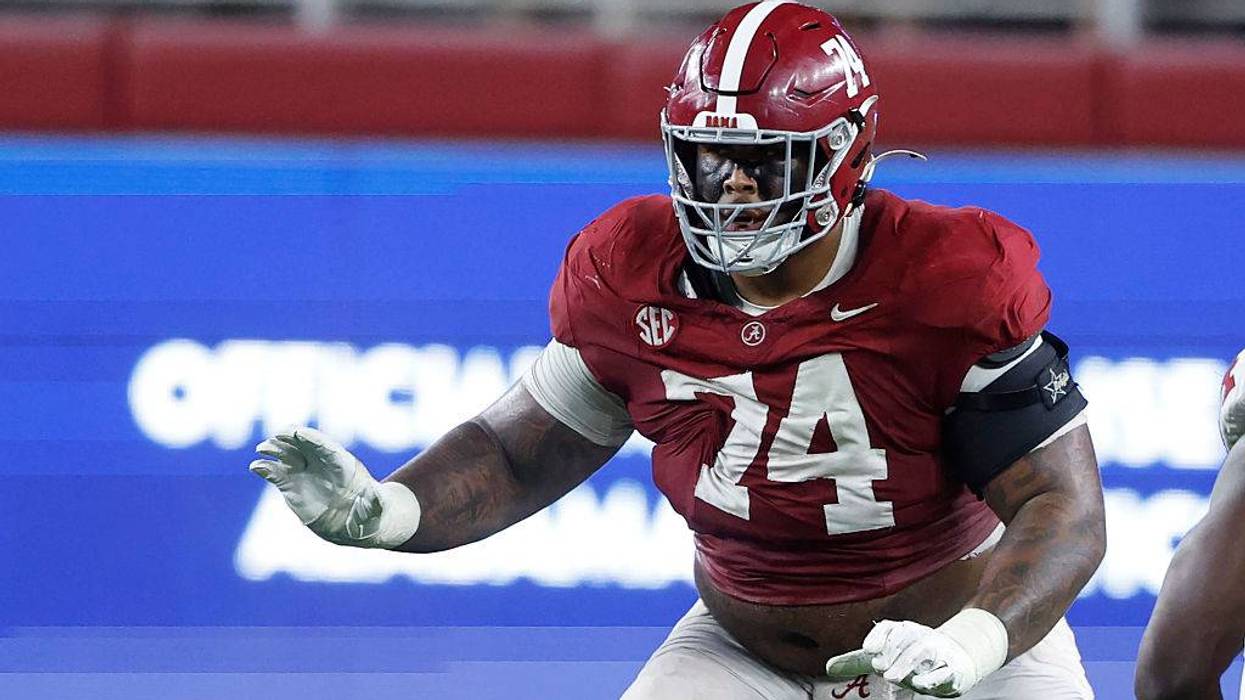
Kadyn Proctor, Alabama
Proctor is an imposing presence at 6-foot-7 and 352 pounds, a true mountain of a man. He maximizes his size, routinely overwhelming defenders with his strength and power, and even flashes surprising quickness for a player of his build. His strong, heavy hands only add to his dominance, making it extremely difficult for power rushers to win reps against him.
Once he gets set, it’s incredibly difficult to move the Alabama product. He has enough speed to reach the second level, where he truly becomes a mauler. His “throw-you-out-of-the-club” strength shows up consistently, and once he latches onto a defender, he often makes them look overmatched and downright silly.
Proctor can be vulnerable to speed, particularly when he’s left on an island in space. He often plays too passively, allowing defenders to dictate the rep rather than taking control himself, and his movement can appear somewhat heavy at times. Still, with cleaner footwork and more polished technique, he has the upside to develop into a dominant presence.
He is a true “Play in a telephone booth” type of player, as he thrives in close quarters. He’s more effective in the run game than in pass protection, which is a key reason he falls outside the top ten. His issues with speed rushers can also shorten a quarterback’s dropback, forcing the offense to operate on tighter, quicker timing.
Patriots fans became very familiar with arm length discussions around this time last year, when the team selected Will Campbell out of LSU. Proctor’s arms measured slightly shorter than Campbell’s at 33 ⅜ inches compared to Campbell’s 33 ⅝. The ideal threshold for an NFL left tackle is generally considered to be 34 inches or more. It is difficult to determine whether arm length contributed to his struggles last season. Still, it immediately became a talking point among fans the moment the Patriots called the rookie’s name on draft day.
There is a strong chance NFL teams view Proctor as a right tackle or even a very large guard, but he will likely be given an opportunity to begin his career at one of the tackle positions on the offensive line.
Blake Miller, Clemson
Miller has emerged as a standout at Clemson over the past two seasons, earning back-to-back First Team All- ACC honors. A true competitor, he set a Clemson record for most consecutive starts by a non-specialist, along with a program mark for consecutive snaps played. His durability and experience will be especially appealing to
teams looking for an immediate starter.
The former Tiger stands out for his outstanding quickness, often arriving at the point of attack ahead of pass rushers and setting the tone early in the rep. Clemson also utilized his athleticism on pull assignments, where he consistently got out in space and found the man he was responsible for. He moves with quick feet and closes ground quickly when climbing to the second level.
He is a smart, well-prepared player with great anticipation. He would rarely get confused about what pass-rushing moves he was going to face. He passed off rushers with great success and recognized when defensive fronts were trying to confuse him. He played strong competition this year, against teams with either future NFL prospects or players going in the first three rounds this spring.
His hand usage is inconsistent, with placement that is not always ideal and a lack of consistent strength at the point of attack. Too often, pass rushers are able to work through his blocks and create separation. At the next level, he will need to deliver more forceful, well-timed punches to control defenders more effectively. Power rushers have had success against Miller, and improving his anchor will be essential for his development.
He is vulnerable to swim moves, largely due to limited hand and wrist strength. Miller will also need to refine his run blocking, particularly in how he uses his body at the point of attack. He too often lunges at defenders instead of engaging them with proper leverage and control, which prevents him from maximizing his strength. Whether it stems from uncertainty in his footwork or pad level, he plays too high at times and needs to develop a more consistent base. If the Patriots place greater emphasis on the run game next season, there will be a clear adjustment period for the senior from Ohio.
While he spent most of his college career at right tackle, his combination of size, length, and athletic ability could also allow him to project to the left side if needed.
Max Iheanachor, Arizona State
Iheanachor possesses outstanding size and may be the most athletic offensive tackle in this draft class. He allowed no sacks last season and surrendered just three total pressures, showcasing remarkable consistency in pass protection. He also delivered a dominant performance against David Bailey, Texas Tech’s top-ranked pass rusher in this year’s class. Iheanachor further elevated his profile with an impressive showing at the Senior Bowl this past winter, significantly boosting his draft stock.
He has an effective slide step that allows him to stay balanced and prepared for edge rushers trying to turn the corner. His speed stands out on tape, and he moves with a fluidity rarely seen in players of his size. A right tackle in college, he brings solid length to the position, though his arms measure just an eighth of an inch below the prototypical threshold for a left tackle, making it likely he remains on the right side at the next level.
He plays with an edge that both coaches and fans will appreciate, consistently finishing blocks aggressively and delivering the occasional highlight-reel pancake. His physical tools are the kind you simply cannot teach. That upside has already drawn local attention, as Patriots head coach Mike Vrabel even put him through a hands-on workout at Arizona State’s Pro Day.
Iheanachor spoke about the workout, saying, “I went in for a visit with them and am very familiar with that coaching staff and everyone there.” Despite his impressive athleticism, he can rely on it too heavily at times. His technique remains a work in progress, particularly with inconsistent hand placement and pad level. In pass protection, he tends to engage rushers too high and would benefit from lowering his hands and trusting his base to anchor more effectively.
He moved to the United States at 13 and played basketball in high school, and that background occasionally shows up on tape, particularly when processing defensive stunts. He was flagged eight times last season, with most of those penalties stemming from inconsistent technique.
Patriots offensive line coach Doug Marrone would be taking on a developmental prospect, but this is why you hire experienced coaches. With the chance to learn behind a proven veteran like Morgan Moses and the upside Max Iheanachor brings, he stands out as an appealing option for a team that can afford to bring him along gradually rather than rely on him right away.
Caleb Lomu, Utah
If the Patriots choose to stay at No. 31 and target the best available left tackle, Caleb Lomu would be a strong candidate. His strength lies in pass protection, where his quickness off the snap consistently stands out. He has a solid frame and room to add strength, though that is typical for many players transitioning from the collegiate level.
He is an intelligent player who understands blitz concepts and quickly diagnoses stunts and twists. His technique is sound, with consistent hand placement that typically puts him in the right position. He maintains good balance, avoiding overextension in either direction, and varies his hand usage to keep pass rushers off balance. He has allowed just two sacks over the past two seasons, both coming in 2024.
He does a strong job of locking onto rushers and sustaining control once engaged in blocks. His athleticism also gives him value as a pull blocker, allowing offenses to diversify their run concepts and overall approach. He earned First Team All-Big 12 honors and has started all 12 games in back-to-back seasons at left tackle for Utah.
The Patriots signed Reggie Gilliam this offseason, potentially signaling an intent to lean more heavily on the run game this year. If that is the case, Lomu will need to take significant strides in his development. At times, he appears uncertain when working in space and locating blocks for the ball carrier, and he does not consistently finish his blocks with authority.
His footwork is inconsistent, and it can impact the entire rep when it breaks down. He does not consistently control the line of scrimmage the way more physically dominant college offensive linemen do. He rarely generates significant push in the run game and often struggles to move defensive linemen backward.
He is not a finished product yet, but with added strength, particularly in his upper body, and quality coaching, he could carve out a role on the field during his rookie season.
Monroe Freeling, Georgia
Freeling has risen quickly up draft boards over the past few months. He brings the length to play either tackle spot at the NFL level and took a noticeable step forward as a pass blocker last season. At 6-foot-7 with 34 ¾-inch arms, his frame alone makes it difficult for pass rushers to get around him. His strong first step allows him to consistently reach his spot and set his base, from which he can use his frame to win matchups.
Monroe finishes his blocks with force and brings strong speed to the position, offering real value as a downfield blocker thanks to how well he moves for his size. He remains composed when defenses try to confuse him with stunts or complex blitz packages, showing good poise and awareness in pass protection.
Playing at Georgia, he consistently faced top-tier talent in the SEC. He appeared in all 14 games for Georgia this past season and in 2024, logging significant experience on both sides of the line with 18 starts at left tackle and 10 at right tackle, underscoring his versatility. For a team with long-term questions at both tackle spots, the Patriots could view Freeling’s skill set as an intriguing option.
Freeling is significantly more advanced in pass protection than in the run game, where his instincts and overall feel are still developing. Despite his ideal size and length, he often finds himself lunging at defenders rather than letting his frame do the work. He can also play too upright at times, appearing to overcompensate for a lack of consistent strength and power.
Despite his height and arm length, he will need to add both weight and overall strength to succeed at the professional level. Power rushers can have success against him, particularly in the run game, while more skilled and stronger edge defenders could also test him in pass protection. Many of the pressures he allowed came when he over-set at the snap, creating inside leverage for rushers to cross his face and win back inside.
He has all the physical tools needed to develop into a starting-caliber left tackle in the NFL, but that progression will take time. If the Patriots can afford to be patient, Freeling has the potential to develop into their long-term answer on the left side.


