

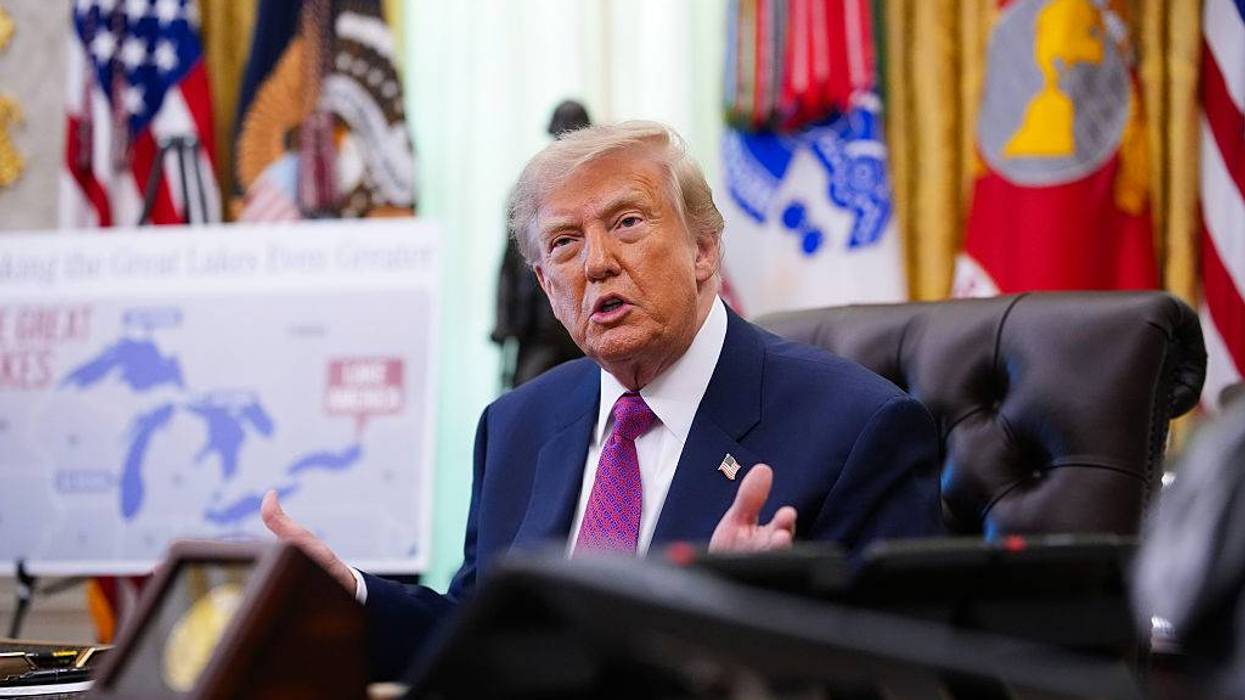

(WWJ) Following through on a social media threat made earlier this week, President Donald Trump signed an executive order directing the U.S. Department of the Interior to rename Lake Ontario to "Lake America" as the trade dispute between the U.S. and Canada continues to escalate.
"We've notified all the various people that you need to notify," Trump said, while signing the order in the Oval Office on Thursday. "This is official, effective immediately."
The official directive comes days after Trump posted on Truth Social that the U.S. was giving "serious consideration" to the change, writing that "we don't expect to (be) doing much business with Ontario any longer".
The move is reminiscent of an executive order Trump issued last year directing federal agencies to change the name of the Gulf of Mexico to the "Gulf of America."
Trump brought that up in the Oval Office on Thursday, telling reporters, "So, if you think about it, we have a gulf and we have a lake. Now, all we need is an ocean. So maybe we'll have to change the name of the Atlantic and/or the Pacific. Maybe we'll change them."
When reporters asked him in the Oval Office why he was doing this and whether it was meant to send a message to Canada, Trump gave his reasoning and aired broader grievances with the country, Trump said, "No message. As you know, Canada has been ripping us off for a long time on trade, very sadly. Even the military — you know, we defend Canada for nothing, we don't get anything. They're not a state, but they want to be treated like they're a state. And so we just can't do that anymore."
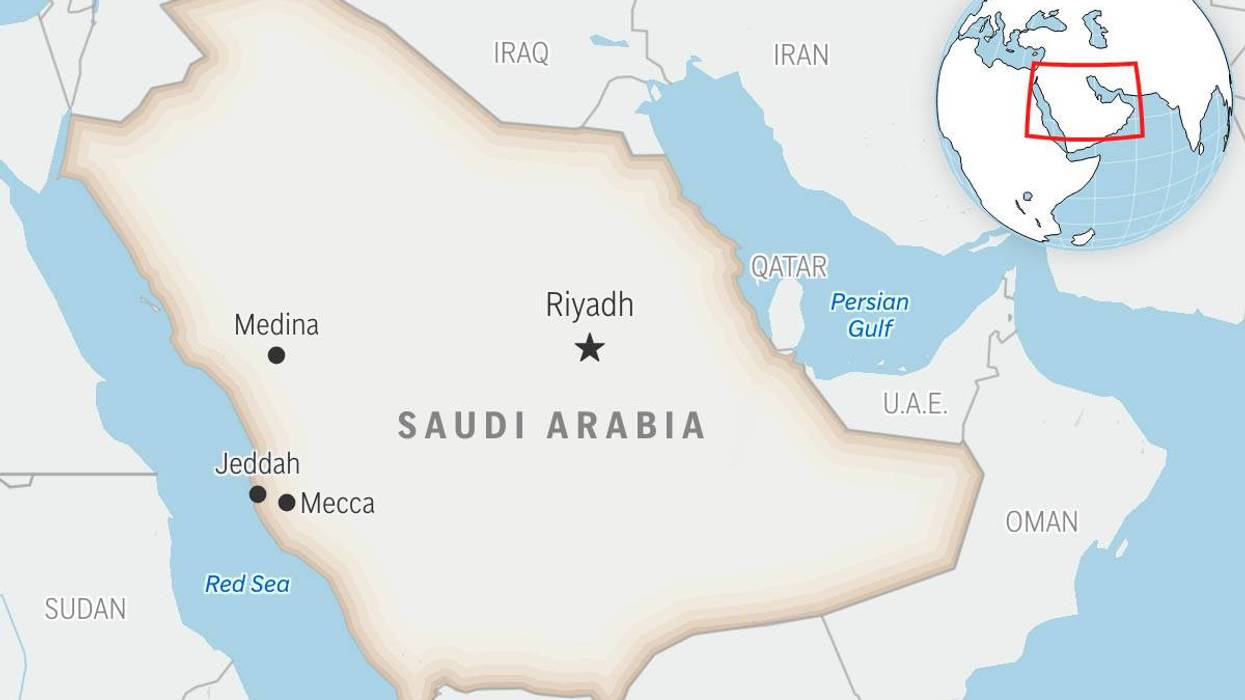
Lake Ontario, the easternmost of the Great Lakes, straddles the border between New York and the Canadian province of Ontario. While it is the smallest of the five Great Lakes by surface area, its shores are home to major population centers, including Toronto and Rochester.
Geographically and historically, the lake was not named after the Canadian province. Its name derives from the Huron Indigenous word “oniatarí:io,” meaning “lake of shining waters" or "beautiful lake.". The province of Ontario took its name from the lake when it was founded in 1867.
In a post on X, Canadian Prime Minister Mark Carney noted that the name Ontario is more than 400 years old, predating both the Confederation of Canada and the U.S. Declaration of Independence.
He wrote: "We know that America is changing. Their trading relationships, their foreign policies, their national monuments, their hydronyms. Canadians also know that naming reality means calling it Lake Ontario – then, now and always."
Michiganders react to the change
Reaction was swift from leaders in Michigan, following Trump's announcement.
U.S. Rep. Debbie Dingell, who represents parts of Washtenaw County, Wayne County, Monroe County, and Oakland County within Michigan's 6th Congressional District, is among those who plan to keep calling the lake Ontario.
“The Great Lakes are a shared treasure that generations of Americans and Canadians have worked together to protect. Donald Trump can sign all the executive orders he wants, but it will always be Lake Ontario. Canada is not our enemy. It is our neighbor, our ally, and one of Michigan’s most important economic partners. It is a friendship that no stroke of a pen can erase,” said Dingell.
“President Trump is trying to divide us and distract people from his reckless trade war that is raising costs and threatening American workers. When he is done doing arts and crafts in the Oval, I’d suggest he turn his attention to his failed economy that is raising costs, eliminating jobs, and leaving working men and women behind.”
Also responding on Thursday was Michigan Sec. of State Jocelyn Benson, who's running for governor as a Democrat.
In a statement, she called out the president for renaming lakes while Americans are struggling.
“Renaming a lake doesn't lower a grocery bill. It doesn’t put more money in people’s pockets. It doesn’t bring back a single supplier contract that Michigan companies just lost," Benson said.
“While the President is workshopping map graphics, Michiganders are staring down a 50% tariff raising costs on steel and the cars we build here, and Ontario is threatening the electricity that keeps the lights on for 1.5 million Americans. Canada is our closest ally and our biggest customer. Treating them like an enemy is a gift to China, and Michigan pays for it.”
Gov. Gretchen Whitmer's office calls the name change a "distraction from what truly matters". The fact is our relationship with Canada supports hundreds of thousands of jobs on both sides of the border. The governor's concern right now is the 50% tariff on autos and steel, which will make things more expensive for Michiganders and lead to layoffs. Tariffs are a tax on Michigan families, and no name change fixes that. We should be sitting down with Canada, not picking fights with them.
What does the order actually do?
While a U.S. president can direct domestic agencies to update maps, databases, and federal terminology, the White House cannot unilaterally force Canada or international charting bodies to adopt the change.
In practice, the executive order binds U.S. federal agency usage, creating a dual-naming scenario rather than a global replacement. When the administration took similar action with the Gulf of Mexico, some private platforms — including Google Maps — and certain U.S. media outlets voluntarily adopted the federal nomenclature for domestic users. Canadian authorities and international entities are expected to continue using "Lake Ontario."
The order comes amid severe economic friction between the two neighbors. The Trump administration recently enacted 50% tariffs on approximately $20 billion worth of Canadian imports after bilateral negotiations broke down. In response, Canadian Prime Minister Mark Carney announced dollar-for-dollar retaliatory tariffs on American goods. Trump has also threatened to raise tariffs on all imported cars, trucks, auto parts, and steel.
Trump said Thursday, "The Canadian officials have treated us very badly — they're nasty people... We love the people of Canada. I don't think their representatives do an appropriate job. Maybe they'll change, I really don't know."