


Small wild cats can be elusive and hard to study. That’s why it was lucky that a man found an unusual kitten on a road near a forest in Bolivia around a decade ago.
This cat has now been identified as the first new species of felid discovered in more than a century, as explored in a study published this week in the Current Biology journal. While the man thought it was a domestic breed at first, he eventually realized it was wild and brought it to the Senda Verde wildlife sanctuary, according to National Geographic.
Then, the sanctuary contacted Paola Nogales-Ascarrunz, a biologist and National Geographic Explorer working in Bolivia, about the “weird cat” in 2017. The call led her on a road to discovery that has changed the way scientists understand the world of small wild cats.
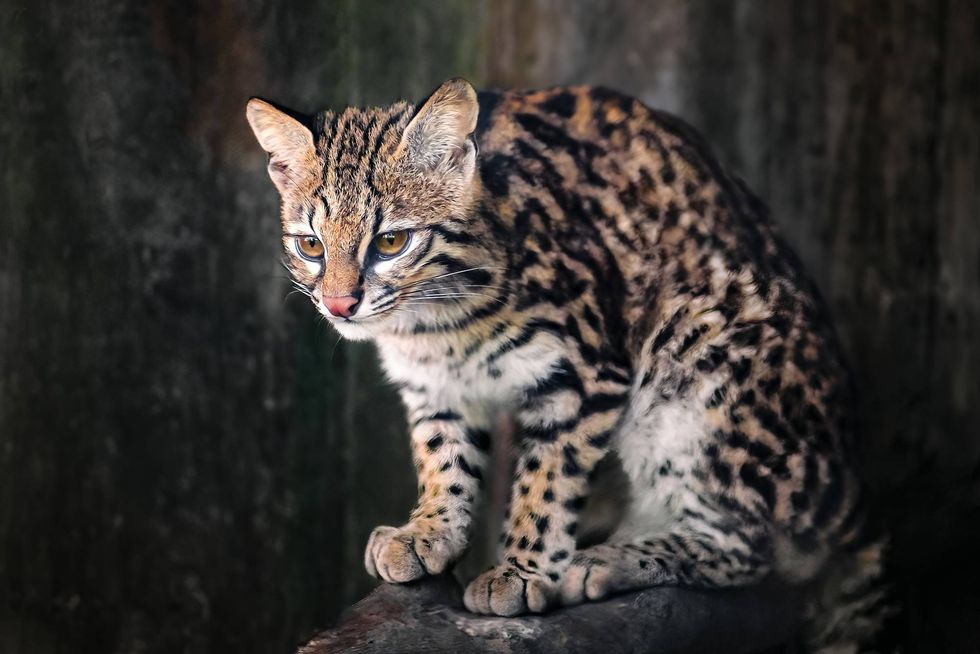
Nogales-Ascarrunz, lead scientist and founder of the Bolivian Felids Research Program (Programa de Investigación de Félidos Bolivia), was fascinated with the little creature when she arrived. She said it was too small to be a housecat. It had a little scrunched-up face, round ears and long whiskers but it also had leopard-like spots.
“I took a hundred pictures of it,” Nogales-Ascarrunz said.
At first, she assumed it was a member of the Leopardus tigrinus species first observed in 1775. However, she started questioning this assumption in 2019 when she was preparing a booklet about Bolivia’s cat species and realized the cat from her photos didn’t look like a guidebook reference photo of from Leopardus tigrinus Brazil.
Over the next few years, Nogales-Ascarrunz developed her skills in genetic analysis and began working with Eduardo Eizirik, a geneticist at Pontifical Catholic University of Rio Grande do Sul in Brazil, and study co-lead author Jonas Lescroart from the University of Antwerp to study 38 individuals across the Leopardus genus. Scientists had already started providing evidence in 2013 that the Leopardus tigrinus species was actually more complicated than it seemed – and that it could be two different species.
With their new study, Nogales-Ascarrunz and her team have identified five tiger cat species. Eizirik described them as a “species complex.”
As for the little cat found in Bolivia, the team identified it as Leopardus tilcayo. They chose “tilcayo” because it’s the name locals use for it and they also recommended that as its English common name.
“L. tilcayo is a small felid with a head-body length of 425–505 mm and a tail length of 250–265 mm. It has a light brown dorsum, darker along the mid-dorsal ridge and paler toward the limbs,” said the study authors. “The pelage is characterized by relatively large, irregular, dark brown to black rosettes, mostly open or partially closed, on a light brown to beige background. The rosettes do not coalesce.”
National Geographic noted that Leopardus tilcayo is the first new cat species discovered since the pampas cat in 1923.
“The new paper doesn’t just name a new species; it redraws the cat family tree to have a lot more branches than previously thought,” said National Geographic. “What’s more, the researchers hope the methods used to identify L. tilcayo may soon be used to find even more cat species spread across the world, and even transform how we protect them.”
Leopardus tilcayo might be news to us humans, but the research indicates it’s been around for some time. According to the new study, it diverged from the L. tigrinus/pardinoides lineage nearly 1.4 million years ago, during the Early Pleistocene period.
“This period was marked by substantially fluctuating climatic conditions that led to the fragmentation of the montane forest, which likely facilitated geographic isolation,” the study authors explained. “During the glacial cycles, the lowlands of the tropical forest were replaced by dry regions or savannas, whereas the montane forest conserved humidity and acted as climatic refugia for cloud forest species, enabling population persistence and genetic differentiation.”
In addition to discovering a species, the researchers also identified a new novel cat subspecies in Peru – Leopardus tigrinus antisuyo.
“The subspecific epithet ‘antisuyo’ refers to ‘Antisuyu’ one of the four administrative regions (suyus) of the Inca Empire, which encompassed large proportions of the southern and central Andes,” the authors explained. “The name reflects the Andean distribution of this subspecies and its occurrence within regions historically included in this territory.”
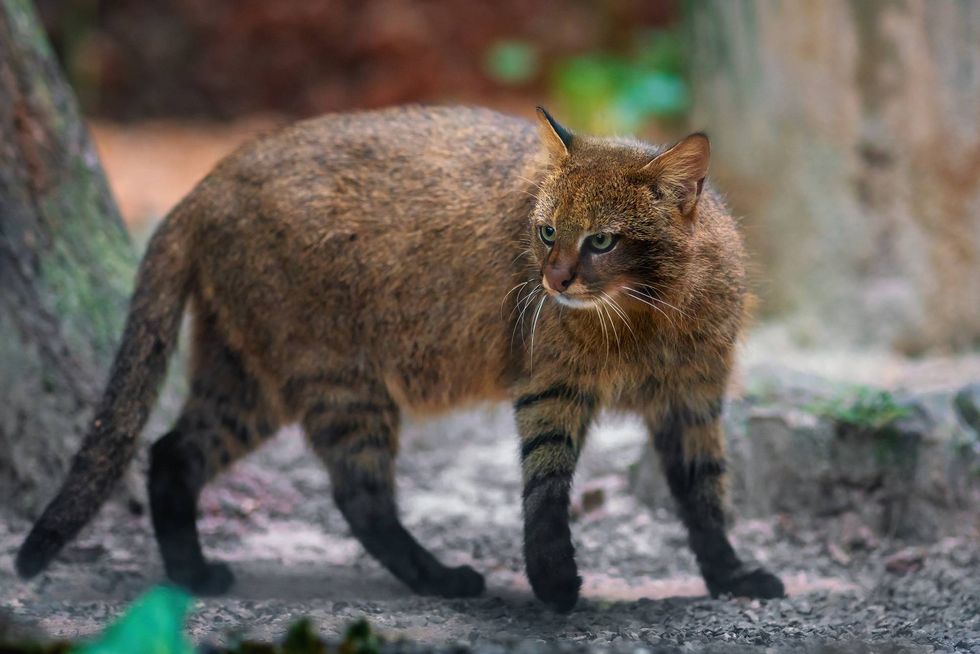
They said the Antisuyo tiger cat (their proposed English vernacular name for the cat) is distinguished from L. tilcayo by a less bushy tail, the absence of complete rings on the distal proportion of the tail, and its more robust appearance.
“L. t. antisuyo is a small, robust felid with a relatively homogeneous yellowish-brown ground color and a slender tail tapering to a pointed tip,” the study said. “The coat is characterized by narrow, elongated to fusiform spots arranged in oblique bands from the scapular to the inguinal region, with dark margins surrounding a darker brown center.”
Research from the team indicates that there are even more new species of cat to identify. Of course, it’s cool to discover new species. It is also important when it comes to conservation efforts.
“Altogether, our results clarify the evolutionary history of a complex radiation of wild cats, reveal novel taxa, and serve as a basis for conservation planning on behalf of these elusive wild cats,” said the study authors.
Basically, the more we know about the world and life around us, the more we can do to save and protect it.
“If you think [the tiger cat] is a single thing from southern Brazil all the way to Costa Rica, you’re going to find it’s not endangered,” Eizirik said. “But if we find that it’s not a single thing, but actually five things, each of them must be assessed separately.”