



DUBAI, United Arab Emirates (AP) — Iran fired on targets Friday across the Middle East, damaging a desalination plant and setting a refinery ablaze in Kuwait, while American and Israeli airstrikes hit the Islamic Republic as the war neared the end of its fifth week.
Tehran has kept the pressure on Israel and its Gulf Arab neighbors, despite U.S. and Israeli insistence that Iran’s military capabilities have been all but destroyed. In a sign that part of Iran’s theocracy could be willing to negotiate, the country's former top diplomat published a proposal for ending the conflict in an influential American magazine.
Iran’s attacks on Gulf energy infrastructure and its tight grip on the Strait of Hormuz, through which a fifth of the world’s oil and natural gas transits in peacetime, have roiled stock markets, sent oil prices skyrocketing, and threatened to raise the cost of many basic goods, including food.
Iran's ability to wreak havoc in the global economy has proved a major strategic advantage, and world leaders have struggled to figure out how to reopen the waterway. The U.N. Security Council was expected to look at a new proposal.
Iran’s former top diplomat suggests terms to end the war
Former Iranian Foreign Minister Mohammad Javad Zarif — a seasoned diplomat with long experience negotiating with the West who remains close to a pragmatic wing of Iran's leadership — wrote on Friday that the time has come to end the suffering on both sides.
“Prolonged hostility will cause a greater loss of precious lives and irreplaceable resources without actually altering the existing stalemate,” Zarif, who helped negotiate Iran's 2015 nuclear deal with world powers, wrote in Foreign Affairs magazine.
The U.S. has presented Iran with a 15-point plan for a ceasefire that includes reopening the Strait of Hormuz, dismantling Iran's nuclear facilities and limiting its missile production in exchange for sanctions relief. But no signs of progress were apparent in the diplomatic effort.
Iran's initial five-point counterproposal aired by hard-line state television included recognizing Iran's sovereignty over the strait, the removal of U.S. bases from the region, compensation for war damage, and a guarantee against further aggression — all things likely unpalatable to the Trump administration.
Zarif's proposal included elements of both of the plans.
Iran “should offer to place limits on its nuclear program and to reopen the Strait of Hormuz in exchange for an end to all sanctions — a deal Washington wouldn’t take before but might accept now,” he wrote.
Tehran and Washington were in talks about Iran’s nuclear program when the U.S. and Israel began bombing on Feb. 28 — the second time under President Donald Trump that the U.S. has attacked while in high-level negotiations.
It's not clear how much to read into Zarif's proposal. While he has no official position now in Iran’s government, he helped get reformist President Masoud Pezeshkian elected and would likely not have published such a piece without at least some authorization from senior leaders.
But it also remains clear who in Iran has the authority to negotiate since many of Iran's leaders have been killed in the war. Immediately after the piece came out, Zarif wrote he had been “torn” about it — a sign he may already face pressure at home.
What's more, it's not clear how Trump will respond. He has vacillated between saying the U.S. is negotiating an end to the war and threatening to expand it. Thousands of U.S. Marines and paratroopers have been ordered to the region, raising speculation that there could be a ground offensive.
Iran targets a desalination plant and a refinery
Kuwait’s Mina al-Ahmadi oil refinery came under Iranian attack. The facility has been hit multiple times during the war and state-run Kuwait Petroleum Corp. said firefighters were working to control several blazes.
Kuwait also said that an Iranian attack caused “material damage” to a desalination plant. Such plants are responsible for most of the drinking water for Gulf states, and they have become a major target in the war.
Sirens also sounded in Bahrain, Saudi Arabia said it had destroyed several Iranian drones, and Israel reported incoming missiles.
Authorities in the United Arab Emirates shut down a gas field after a missile interception reportedly rained debris on it and started a fire.
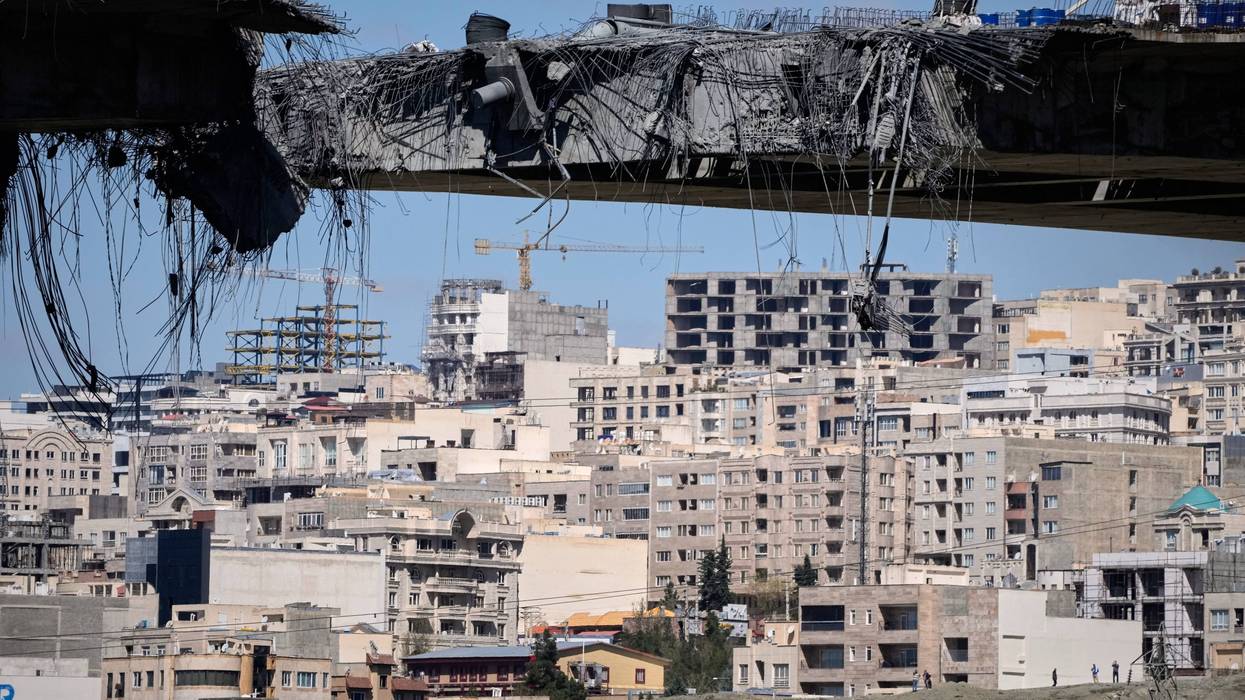
Activists reported strikes around Tehran and the central city of Isfahan, but it wasn’t immediately clear what was hit. A day earlier, Iran said the U.S. hit a major bridge, which was still under construction, killing eight people.
More than 1,900 people have been killed in Iran during the war, while 19 have been reported dead in Israel. More than two dozen people have died in Gulf states and the occupied West Bank, while 13 U.S. service members have been killed.
More than 1,300 people have been killed and more than 1 million displaced in Lebanon, where Israel has launched a ground invasion in its fight with the pro-Iranian Hezbollah militant group. Ten Israeli soldiers have also died there.
UN Security Council to take up Strait of Hormuz security question
With the Strait of Hormuz closed, spot prices of Brent crude, the international standard, were around $109 early Friday, up more than 50% since the start of the war, when Iran began restricting traffic through it.
The U.N. Security Council was expected to vote Saturday on a proposal from Bahrain that would authorize defensive action to ensure vessels can safely transit the waterway. Bahrain’s initial draft would have allowed countries to “use all necessary means” to secure the strait, but Russia, China and France — who have veto power on the Council — expressed opposition to approving the use of force.
Following meetings in Seoul between South Korean President Lee Jae Myung and French President Emmanuel Macron, the two leaders said they resolved to “cooperate to ensure safe passage” through the strait but did not offer specifics.
___
Rising reported from Bangkok. AP journalists Sylvie Corbet in Paris, Tong-hyung Kim in Seoul, South Korea, and Edith M. Lederer at the United Nations contributed to this report.