HAVANA (AP) — Cuba is preparing to receive its first shipment of Russian oil this year, just days after the government announced it was operating on natural gas, solar power and thermoelectric plants as severe power outages continue to hit an island whose power grid is crumbling.
The Russian-flagged Anatoly Kolodkin is some 3,000 nautical miles from Cuba in the Atlantic Ocean and is expected to reach the island in 10 days, Jorge Piñón, an expert at the University of Texas Energy Institute, told The Associated Press.
If so, that would mark the first time any oil shipment from any country reaches Cuba in the past three months given a U.S. energy blockade.
The tanker is carrying 730,000 barrels of fuel and is on the list of vessels of its type sanctioned by the United States, the European Union and the United Kingdom following the war in Ukraine, Piñón said.
He added that it's hard to determine how long that amount of fuel could sustain Cuba: “We’re talking about crude oil that has to be refined into liquid fuels. ... Each product has its specific demand.”
Piñón said the anticipated shipment could produce about 180,000 barrels of diesel -- enough to feed Cuba’s daily demand for nine or 10 days.
Tracking a second vessel
Another vessel, the Hong Kong-flagged Sea Horse, is also reportedly carrying Russian oil to Cuba, transporting approximately 200,000 barrels of diesel, Piñón said.
He noted that Cuba consumes roughly 20,000 barrels of diesel per day, and that the Sea Horse’s cargo does not necessarily cover overall demand for diesel given the island’s low storage inventories.
Piñón believes the fuel will likely be used for “critical sectors of the economy,” such as transportation and agriculture.
He said it would likely take four days for the Sea Horse to reach Cuba if that is indeed its destination.
Piñón noted that the ship lingered for 20 days in the middle of the Atlantic Ocean before deciding to continue its west-southwestward journey. It is some 958 nautical miles from Matanzas, Cuba.
The difficulty in tracing the ship’s destination lies in the fact that some of these vessels — amid tensions caused by international sanctions or threats of capture by the United States — turn off their satellite tracking devices, preventing effective monitoring, experts say.
If the arrival of any of the two ships is confirmed, it would be the first shipment of Russian oil this year. The previous shipment detected was transported by the Ocean Mariner with 85,000 barrels from the port of Pajaritos, Mexico, on Jan. 9.
On Thursday, Gen. Francis Donovan, head of the U.S. Southern Command, said in Senate testimony that his officers are tracking a Russian destroyer supported by an oil “replenishment ship” that is scheduled to make a port call to Cuba. He said the oiler, even if it does unload its cargo, is unlikely to have any significant impact on Cuba’s oil supplies.
In response to senators’ questioning, Donovan said his command is not currently rehearsing for any military intervention in Cuba and its sole planning focus is on protecting the U.S. Embassy and military base in Guantanamo Bay, although if needed it can also respond to any migration or humanitarian crisis in the Caribbean.
Deepening crises
Cuba produces barely 40% of its petroleum; the rest is obtained from Russia, Mexico and Venezuela.
But critical shipments from Venezuela were halted after the U.S. attacked the South American country in early January and arrested its then-leader, President Nicolás Maduro — a key commercial and ideological partner for Cuba.
In late January, U.S. President Donald Trump threatened to impose tariffs on any country that sells or supplies oil to Cuba. That month, Mexico halted its oil shipments to Cuba.
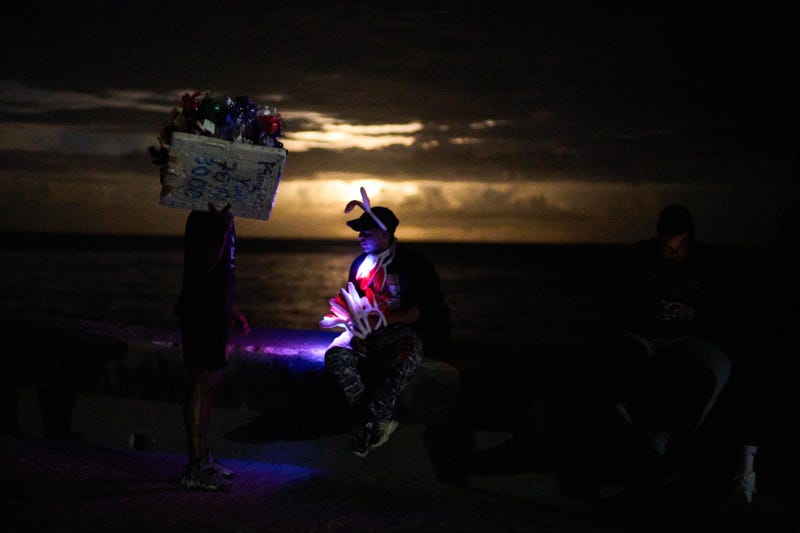
The situation has deepened the island’s energy and economic crises, leading to 10-hour blackouts, forcing a reduction in working hours, limiting transportation and leading to a drop in tourism — previously one of its main sources of income.
The worsening situation also has sparked small protests.
Cuba has been experiencing a severe economic crisis since the beginning of this decade due to tightened U.S. sanctions, the impact of the COVID-19 pandemic and an internal financial reform that triggered inflation.
Food and medicine shortages have become a reality for Cubans. Meanwhile, the crises have unleashed a surge in emigration, particularly of young people and skilled workers, to the United States, Mexico and Europe.
This week, as part of an ongoing international convoy to help Cuba, European activists delivered more than four tons of medical supplies to the island. More aid is expected to arrive Friday via plane and Saturday via a large flotilla, including solar panels, medical supplies and nonperishable food collected by activists in Mexico. Among those expected to travel to Cuba aboard the flotilla are British Parliamentarian Jeremy Corbyn and popular Irish hip-hop trio Kneecap.
The flotilla will consist of three ships, 30 tons of humanitarian aid and 40 people. Thiago Ávila, one of the organizers, said that although the situation in Cuba is different from that in Gaza, the group has conducted a risk assessment in case of any unexpected decision by the Trump administration and is prepared for any eventuality.
Trump has said he is prepared to take Cuba by any means necessary; and the Cuban government, while acknowledging talks with the United States, has defended its sovereignty.
___
Associated Press reporter María Verza in Mexico City contributed to this report.