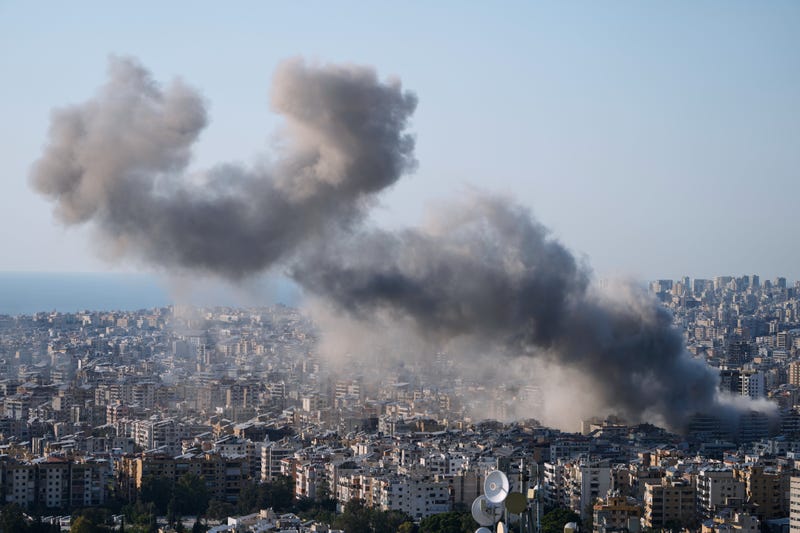
U.S. Defense Secretary Pete Hegseth said Tuesday would be the most intense day yet of U.S. strikes inside Iran. The Islamic Republic, its firepower diminished, vowed to fight on. Israeli Prime Minister Benjamin Netanyahu said the war’s aim is a popular overthrow of Iran’s government, and “we are breaking their bones.” White House press secretary Karoline Leavitt said U.S. President Donald Trump “is not making anything up” as he offers varying justifications for launching the war.
The U.S. stock market and oil prices were holding relatively steady Tuesday after Trump's signals about how long the war could last caused wild swings in financial and fuel markets. The Pentagon, meanwhile, offered its first tally of American wounded, saying about 140 U.S. troops have been injured, 8 severely.
Iranian Parliament Speaker Mohammad Bagher Qalibaf dismissed any suggestion of seeking a ceasefire, while another top Iranian security official, Ali Larijani, warned Trump himself, writing on X that “Iran doesn’t fear your empty threats. Even those bigger than you couldn’t eliminate Iran. Be careful not to get eliminated yourself.”
Here is the latest:
More explosions heard in Doha Tuesday evening
The Qatari Defense Ministry says it intercepted another missile attack from Iran. Earlier in the day, Qatar said it intercepted five Iranian ballistic missiles launched, with no casualties or damage reported.
Germany’s foreign minister says Iran is ‘not ready’ for an end the war
“If they were ready for a diplomatic solution, it is achievable,” Johann Wadephul said during a visit to Jerusalem. “But for now, this is what we hear from Tehran, they are not ready for a diplomatic solution. And as long as this is not the case, we still have to wait.”
Wadephul met with his Israeli counterpart, Gideon Saar. It is the first visit by a European official to Israel since the beginning of the war with Iran.
White House avoids explaining why Trump erroneously claimed Iran has Tomahawks
Press secretary Karoline Leavitt didn’t answer why Trump falsely asserted on Monday that Iran has access to the U.S.-made Tomahawk cruise missile, the weapon likely used to strike a girls school in Iran, killing 165 people.
She responded in part that “the president has a right to share his opinions with the American public” while noting “he has said he’ll accept the conclusion of that investigation.”
Raytheon, the U.S. manufacturer of the Tomahawk, sells the weapon to some allies, but there is no evidence to suggest that Iran has gotten its hands on the cruise missile.
Israel says Iran is using cluster munitions. What to know about the weapons
Israel says Iran has been firing cluster munitions throughout this war, adding a complicated and deadly challenge to Israel’s already-stretched air defenses.
The warheads burst open at high altitudes, scattering dozens of smaller bomblets across a wide area. The smaller bombs, which at night can resemble orange fireballs, are difficult to intercept and have proven lethal.
Normally restrictive about releasing information on Iranian hits and damage, Israeli authorities in recent days have sought to educate the public about their dangers, which can persist as unexploded bombs on the ground even after civilians leave shelters. At least three people have been killed, including two at a construction site in central Israel on Tuesday.
Over 120 countries have signed an international convention banning the use of cluster munitions. Israel, the United States and Iran are among the nations that have not joined the treaty. Israel used the weapon when it fought the Iran-allied Lebanese militant group Hezbollah in 2006.
White House says Trump ‘is not making anything up’
Leavitt was asked about Trump’s shifting explanations in which he said Iran was going to strike the U.S. first, but offering a variety of different timelines in which he said that would happen.
Leavitt said Trump’s statements were “a feeling the president had based on facts.”
When asked why other U.S. leaders or Israeli leaders were not making the same assertions and if Trump was “making this up” to justify the war, Leavitt responded by saying “The president is not making anything up.”
White House says the US Navy did not escort an oil tanker through the Strait of Hormuz
Leavitt said the post by the energy secretary claiming that the U.S. Navy had helped an oil tanker the Strait of Hormuz was false.
“I can confirm that the U.S. Navy has not escorted a tanker or a vessel at this time, though of course that’s an option,” Leavitt told reporters at the news briefing.
Leavitt said she had not had a chance to talk to the energy secretary about the misleading post that triggered a reaction in the energy markets. But she added that “the post was taken down pretty quickly.”
The prospect of military escorts could open up the strait for key oil and natural gas shipments, helping to reduce price pressures created by the U.S. and Israeli war with Iran.
About 140 US troops have been injured in Iran war, 8 severely, and 108 returned to duty, Pentagon says
The Pentagon says about 140 U.S. service members have been wounded in conflict with Iran.
“The vast majority of these injuries have been minor, and 108 service members have already returned to duty,” Pentagon spokesman Sean Parnell said in an emailed statement. Eight are currently “severely injured,” Parnell added.
These numbers are the first insight into the broader toll of injuries sustained by U.S. troops after a barrage of retaliatory rocket and drone strikes from Iran that also killed seven soldiers in Kuwait and Saudi Arabia.
Residents of Tehran report some of the war’s heaviest airstrikes
They say extensive strikes led to electricity cuts in many western neighborhoods. One resident who lives in the western part of the capital said his neighborhood was shaking for half an hour because of strikes around midnight.
Another resident said he didn’t think he would survive the night.
A 27-year-old mother of a toddler said she witnessed a residential building get hit. She and others reached by The Associated Press spoke on condition of anonymity to prevent reprisals. Iranian media said civilians were the main casualties in the overnight strikes. AP could not independently confirm the claims.
On Tuesday, Tehran’s streets were less crowded and many private businesses closed their offices earlier, fearing more strikes.
U.S. Defense Secretary Pete Hegseth said Tuesday would be the most intense day yet of U.S. strikes inside Iran.
— Jon Gambrell
UN Security Council to hold an emergency meeting on Lebanon fighting
Humanitarian chief Tom Fletcher will brief the Security Council at an emergency meeting Wednesday morning, U.N. spokesman Stephane Dujarric said.
France called for the meeting with support from the council’s other European members: the United Kingdom, Denmark, Greece and Latvia. Paris expressed deep concern about escalating violence in Lebanon, where Israel has resumed deadly airstrikes, and condemned Hezbollah’s attacks on Israel since March 1.
France’s Foreign Ministry urged Hezbollah “to end its operations and hand over its weapons” and on Israel “to refrain from any land-based or long-term interventions in Lebanon.”
Putin speaks with Iran’s president a day after a call with Trump
Russian President Vladimir Putin noted the need for a political settlement to the war during his phone call Tuesday with Iran’s Masoud Pezeshkian.
Putin also reaffirmed his “principled position in favor of a quick de-escalation of the conflict,” the Kremlin said in a readout, adding that Pezeshkian thanked Putin for Russia’s support, including humanitarian assistance.
The two men last spoke by phone on Friday, and their second official call of the war comes a day after the Russian leader discussed the conflict with Trump.
Israeli fire kills 1 person in Gaza
Several people also were wounded when Israeli forces fired at a house in central Gaza’s Zawaida area on Tuesday, according to Al-Aqsa Hospital. The Israeli military did not immediately comment.
Gaza has seen near-daily Israeli strikes during the current war with Iran, killing at least 18 Palestinians, Gaza’s Health Ministry says. Nearly 650 people in Gaza have been killed since Israel and Hamas agreed to a fragile ceasefire deal in October, according to the ministry.
Gaza’s militants have so far stayed on the sidelines during the current U.S.-Israeli war with Iran.
Canadian police investigate gunfire at US consulate
Toronto Police Deputy Chief Frank Barredo said two individuals emerged from a white Honda CRV SUV at around 4:30 a.m. and fired multiple shots at the building before fleeing. Nobody was injured.
Royal Canadian Mounted Police Chief Superintendent Chris Leather called it a national security incident and said the American and Israeli consulates as well as embassies in Ottawa will see more security.
Two Toronto-area synagogues were struck by gunfire last weekend. Toronto has a large Iranian community and there have been demonstrations outside the U.S. consulate both in support and in protest of the war.
Ukraine is sending anti-drone military experts to the Middle East
Three fully equipped teams will arrive this week in Qatar, the United Arab Emirates and Saudi Arabia, Ukrainian President Volodymyr Zelenskyy told journalists Tuesday.
Answering a follow-up question, Zelenskyy’s communications advisor said an expert team was also being sent to a U.S. base in Jordan. An official in the president’s office confirmed that these are military personnel.
Last week, he said the U.S. and its allies in the Middle East were seeking Ukraine’s expertise in countering Iran’s Shahed drones.
Russia has fired tens of thousands of Shaheds at Ukraine since it invaded its neighbor just over four years ago.
International Energy Agency holds emergency meeting
IEA chief Fatih Birol convened the agency’s 30 member states for talks Tuesday to assess security of oil supplies and "inform a subsequent decision on whether to make emergency stocks of IEA countries available" now that the situation in the Middle East “is creating significant and growing risks” for the oil market.
IEA member countries, including the U.S., currently hold over 1.2 billion barrels of public emergency oil stocks. The IEA hosted a meeting at its Paris headquarters earlier in the day with G7 energy ministers.
US bombers take off from a British base
The three B-1 bombers took off just hours after the U.S. defense secretary said Tuesday would bring the most intense strikes yet on Iran.
Britain initially refused U.S. requests to use bases there for the war, angering Trump. U.K. Prime Minister Keir Starmer later said the bases could be used for attacks on Iran’s missile program but not other targets.
The British destroyer HMS Dragon also sailed Tuesday from Portsmouth toward the eastern Mediterranean to help defend Cyprus after an Iranian-made drone struck the U.K.’s air base there.
Kelly says Trump administration has no exit strategy in Iran
Sen. Mark Kelly, a Democrat from Arizona, told reporters at the U.S. Capitol on Tuesday that the war in Iran does not appear to be coming to a close any time soon.
Kelly pointed to conflicting statements between Trump and his defense secretary, Pete Hegseth, about whether the military operation was beginning or nearing its end.
“Clearly they do not have a strategic goal,” Kelly said. “They didn’t have a plan. They have no timeline. And because of that they have no exit strategy.”
Democratic senator is ‘dissatisfied and angry’ after a classified briefing
“I am left with more questions than answers, especially about the cost of the war,” Sen. Richard Blumenthal of Connecticut told reporters after the briefing before the Senate Armed Services Committee.
The potential deployment of American ground troops to achieve Trump administration objectives is Blumenthal's biggest concern. He's also worried about Russia and China assisting Iran.
“The American people deserve to know much more than this administration has told them about the cost of the war, the danger to our sons and daughters in uniform, and the potential for further escalation,” Blumenthal said.
Pro-government volunteer force is out in force to crush dissent, Iranian lawyer says
The home of a 39-year-old Iranian lawyer in the city of Ahvaz shook with each explosion before she fled with her brother, sister, their relatives and their dogs to the family’s strawberry farm.
The U.S.-Israeli campaign has struck heavy blows to Iran’s leadership and targeted the paramilitary Revolutionary Guard and the all-volunteer paramilitary Basij, which led the crushing of waves of anti-government protests.
But members of the Basij are out in force and heavily armed, “waiting for the slightest movement” showing dissent, the lawyer said. She once campaigned against the mandatory hijab and stopped wearing it years ago, but now wears one outside their home for fear of provoking the Basij.
— By Sarah El Deeb and Lee Keath
US House speaker says Iran war is ‘limited in scope’
U.S. House Speaker Mike Johnson said the operation in Iran is “by design limited in scope and mission.” He also told reporters Tuesday in Florida that he thinks the mission “is being achieved.”
“It’s nearly completed,” the Republican said.
He characterized rising U.S. gas prices as a “temporary blip” that would come down in “a couple of weeks."
Senators are expecting a report on Iran school strike
U.S. senators emerged from a classified briefing confirming an ongoing Department of Defense investigation into a strike that killed 165 people at a girls school near an Iranian military base.
“They have a timeline in which they want to be able to provide us with a full report,” said Republican Sen. Mike Rounds, who sits on the Senate Armed Services Committee. “We are a nation that does not target civilians,” he added.
Mounting evidence points to U.S. culpability for the Feb. 28 strike, but Trump has repeatedly claimed Iran was responsible for the blast.
Witkoff says Russians told Trump on Monday that they were not sharing intelligence with Iran
The president’s envoy said during an interview Tuesday on CNBC that the issue was raised during a call Trump had with Putin and the Russians told the president they were not sharing intelligence.
“We can take them at their word,” Steve Witkoff said.
He also said: “Let’s hope that they’re not sharing.”
When asked if Russia had in fact been sharing intelligence with Iran, Witkoff said: “Well, I’m not an intelligence officer, so I can’t tell you.”
State Department says more than 40,000 Americans have returned to US from the Middle East since start of Iran war
The vast majority have returned commercially without government assistance.
The State Department said in a statement on Tuesday that it has organized more than two dozen charter flights that have carried thousands of U.S. citizens from various Mideast countries to either the United States or Europe but that most of the more than 27,000 who have sought help “have declined assistance when offered, opting either to remain in country or book more convenient commercial flight options.”
“At this time, seats available on the department’s charter options are significantly greater than the demand from Americans in the region,” it said, adding that those charter flights “continue to operate with less than 40% occupancy on average.”
Syria accuses Hezbollah of firing artillery across the border
The Syrian military said Tuesday that the Lebanese militant group had launched shells towards Syrian army positions near the border town of Serghaya, state-run news agency SANA reported.
The Syrian military said in a statement that “appropriate options are being studied to do what is necessary” and the army “will not tolerate any aggression targeting Syria.” Lebanese President Joseph Aoun later said that he spoke with Syrian interim President Ahmad al-Sharaa and agreed that the countries need to coordinate “to control the borders and prevent any security breaches.”
Hezbollah said Israeli helicopters landed an infantry force in Serghaya as part of an attempted incursion into eastern Lebanon and that it clashed with them. In a statement Tuesday, it denied firing on Syrian troops and said “we have no intent of opening a (second) front while we are engaged with the Israelis.”
State Department authorizes up to $40M in emergency funds to pay for evacuation charter flights for Americans
With transportation disrupted by the Iran war, the U.S. State Department approved using the $40 million from a fund normally reserved for emergencies involving diplomatic and consular staff, according to two U.S. officials who weren’t authorized to comment publicly and spoke on condition of anonymity.
The State Department confirmed the use of the emergency funds but declined to specify the amount.
“We have sufficient funding to cover our efforts to date,” it said in response to a query from The Associated Press. “The administration will work with Congress should additional funding be necessary.”
Under federal law, private Americans are obligated to reimburse the government for such transportation but Secretary of State Marco Rubio waived that requirement last week.
— By Matthew Lee
Iranians fleeing cities under attack seek refuge in the countryside
Terrified by explosions shaking their homes in Tehran and other cities, tens of thousands of Iranians have sought refuge in small, remote towns to wait out the massive bombardment by Israel and the United States.
Pouya Akhgari, 22, is holed up in a family house with aunts and cousins in a village in the mountainous countryside 200 kilometers (120 miles) from his home in the capital. Meanwhile his friends in Tehran tell him about the blasts all around them.
“It just feels so chaotic. I thought it’d be very short but it’s dragging on,” he told The Associated Press by a messaging app. ”If it goes on like this, we’ll run out of money.”
The U.N. refugee agency said that in the first two days of the war, about 100,000 people fled Tehran, a city of around 9.7 million. It said that the scale of displacement is likely much higher.
Just the first 2 days of Iran war cost the US $5 billion in munitions alone
An estimate the Pentagon sent to Congress does not appear to include other war-related expenses besides munitions, according to a person who spoke on condition of anonymity to discuss the private briefing.
The tally is higher than previous estimates by outside analysts, and the daily amount is expected to fluctuate. The war is currently in its 11th day.
The Trump administration has said it may seek supplemental war funds from Congress, but several lawmakers have insisted they would refuse to approve any more money for the Pentagon.
The annual Defense bill sent some $838 billion to the Pentagon earlier this year and the Defense Department was provided $150 billion in extra funds last year as part of Trump’s big tax breaks bill that became law.
—By Lisa Mascaro.
About half of Americans worry about US safety as the Iran war continues, polls show
Many Americans worry Trump’s recent military decisions have made the U.S. less safe, according to new polling.
About half of voters in Quinnipiac and Fox News polls said the U.S. military action in Iran makes the U.S. “less safe,” while only about 3 in 10 in each poll said it made the country safer. A CNN poll found about half of U.S. adults thought the military action would make Iran “more of a threat” to the U.S., while only about 3 in 10 thought it would lessen the danger.
In that same CNN poll, about 6 in 10 U.S. adults said they trusted Trump “not much” or “not at all” to make the right decisions about the U.S. use of force in Iran.
War with Iran delivers another shock to the global economy
The war with Iran is inflicting collateral damage — driving up energy and fertilizer prices; threatening food shortages in poor countries; destabilizing fragile states such as Pakistan; and complicating options for the inflation fighters at central banks like the Federal Reserve.
Causing much of the pain: the Strait of Hormuz — through which a fifth of the world’s oil passes — was effectively shut down after the U.S. and Israel launched missile strikes Feb. 28 that killed Iranian leader Ayatollah Ali Khamenei.
“For a long time, the nightmare scenario that deterred the U.S. from even thinking about an attack on Iran and which got them to urge restraint on Israel was that the Iranians would close the Strait of Hormuz,” said Maurice Obstfeld, a senior fellow at the Peterson Institute for International Economics and former chief economist at the International Monetary Fund. “Now we’re in the nightmare scenario.”
Voters are worried about gas prices, a new poll shows
Fluctuating oil prices may already be alarming voters, a new poll suggests.
A Quinnipiac poll conducted over the weekend found about 7 in 10 registered voters are “very” or “somewhat” concerned that the war will cause oil and gasoline prices to rise. Only about one-quarter of voters are “not so concerned” or “not concerned at all.”
The highest levels of concern are driven by Democrats and independents, but about half of Republicans are also at least somewhat concerned about the war increasing gas prices.
More people oppose than support the US military action, polls show
Americans are divided along party lines on U.S. military action against Iran, according to polls conducted since the war began, with most polls showing opposition is higher than support.
About half of registered voters — 53% — oppose U.S. military action against Iran, according to a Quinnipiac Poll conducted over the weekend. Only 4 in 10 support it, and about 1 in 10 are uncertain.
That’s similar to the results of text message snap polls from The Washington Post and CNN, both conducted shortly after the joint U.S.-Israel attacks began, which also indicated that more Americans rejected the military action than embraced it.
A recent Fox News poll found opinions more evenly divided.
▶ Read more about what Americans think about the war in Iran.