Ukraine will see less economic growth this year due to extensive destruction of Ukraine's energy infrastructure by Russia over the winter, an international development bank said Thursday, as businesses struggle to keep going into the fifth year of Russia's invasion.
The European Bank for Reconstruction and Development halved its 2026 growth forecast for the country to 2.5% in its current outlook from 5% growth in the previous estimate from September.
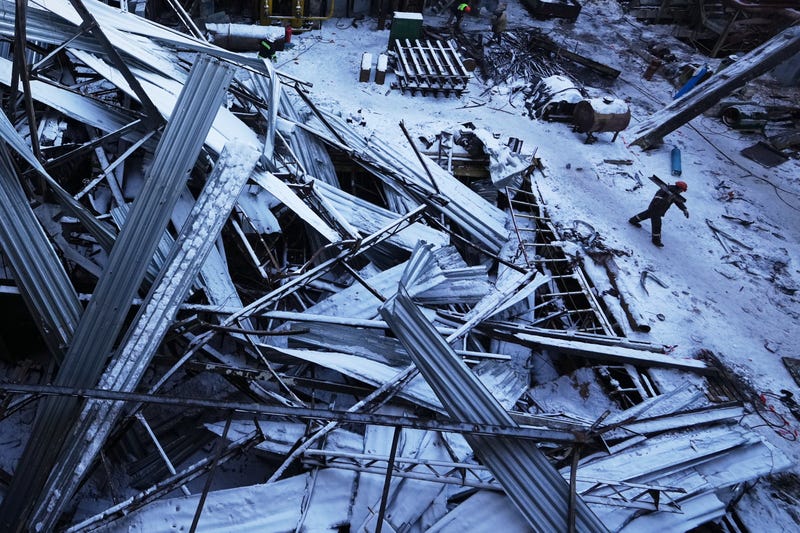
The EBRD added that the economic effects of Russia's missile and drone attacks on power stations and other equipment that have left people enduring cold and darkness will last beyond that and impact growth in 2027.
The lower outlook is “linked to the destruction of critical infrastructure, particularly energy infrastructure," said EBRD Chief Economist Beata Javorcik. "That's impacting Ukraine today, but it will also impact Ukrainian performance next year because it will take time to make the repairs."
“Typically in winter businesses have been coping with shortages of electricity but this year the problem was much bigger," she said. "If you have a power outage, you can't produce because you have no electricity.”
She said Ukrainians were facing “an incredible challenge. They deserve a lot of respect for being able to endure this and not lose hope and continue to support their country in the fight.”
The earlier forecast also assumed that Ukraine would be able to launch some activity connected to reconstruction spending in 2026, without specifying if that meant a complete cessation of the fighting. That prediction has been put back to 2027, with peace still elusive.
The EBRD has supported generator purchases and supported small and medium sized businesses with credit guarantees that enable firms to access credit from Ukrainian banks, enabling more than $3 billion in business financing during the war.
Other factors weighing on the economy include labor shortages due to so many people having left the country or enlisted, poor weather that weighed on grain exports, and withdrawal of some trade privileges with the European Union, the EBRD said in its report. After the war broke out in February 2022 the EU suspended import duties but last year limits were imposed on some politically sensitive imports such as sugar and vegetable oils as part of a review of a free trade agreement between the EU and Ukraine.
Ukraine lost 29% of its GDP in the first year of the war, and its economy remains around one-fifth smaller than before the war. Consumer and business spending have fallen because many people have left and because major businesses are in areas occupied by Russia. Ukraine's government has relied on loans and grants from its allies to keep paying old age pensions and teachers' and doctors' salaries while most domestic tax revenue is spent on the military.
Established in 1991 to support the transition to market economies in central and eastern Europe after the end of the Cold War, the London-headquartered EBRD is owned by 77 countries, the European Union and the European Investment Bank. It has since expanded operations to other regions. The Ukraine estimate was part of the EBRD's growth forecast for economies across regions including Eastern Europe and the former Soviet Union, Central Asia, the western Balkans and sub-Saharan Africa.
___
This version corrects the name of the European Bank for Reconstruction and Development.