


NEW YORK (1010 WINS) — The past two years have brought many new faces into New York City's political representation and those faces are increasingly reflecting the diversity of the Big Apple. From the mayor to the NYPD Commissioner, City Hall's leaders are making history as Black stewards in the field.
Mayor Eric Adams
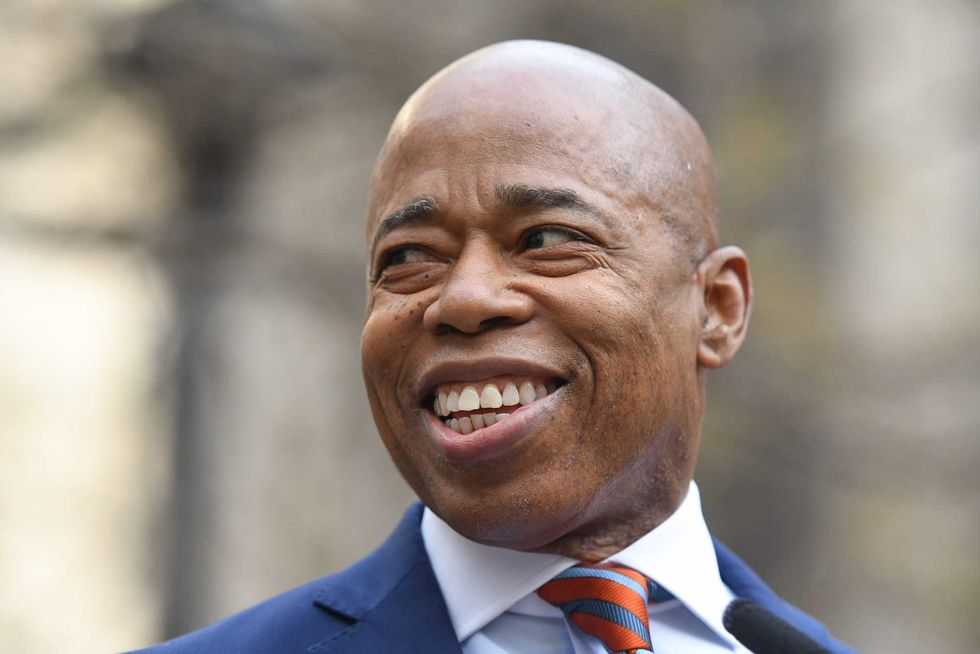 Eric Adams, mayor of New York, speaks during a news conference outside the Manhattan Civil Courthouse in New York, U.S., on Thursday, Jan. 13, 2022.Stephanie Keith/Bloomberg via Getty Images
Before serving 22 years with the NYPD, Mayor Eric Adams found himself in a New York City police precinct under different circumstances. At 14, the Brownsville, Brooklyn native was known as a "tough little guy" while running the streets as part of the gang "7-Crowns." At 15, he was arrested for criminal trespassing, along with his brother, after stealing a T.V. and money order from a woman he'd run errands for after she refused to pay him.
Adams' experience under NYPD custody changed his life and he credits that moment as being what motivated him to become an officer, but not for positive reasons.
While under arrest, Adams and his brother were beaten by white police officers until a Black cop intervened to stop it. After the incident, Adams was haunted by the trauma of what happened, and while his brother was repulsed by police officers after the beating, Adams had a different take—vowing to one day become part of the NYPD to do good.
Adams made good on his promise even if he had a rocky start. As a Bayside High School student, his grades weren't great and he struggled academically. But while he wasn't an A+ student in high school, Adams did have a unique persistence that drove him. He finished his associate degree while working as a clerk at the Brooklyn DA's office, later obtaining his B.A. from John Jay College of Criminal Justice and an M.P.A. from Marist College.
Adams made up for his mediocre academic performance in high school by achieving the second highest average in the police academy.
While working as a cop at various precincts throughout the city, Adams had to reckon with being a Black man on the force. That meant one time being mistaken for a suspect while working undercover as white cops raised their guns at him. But it also meant co-founding an advocacy group for Black law enforcement officials who were seeking police reform.
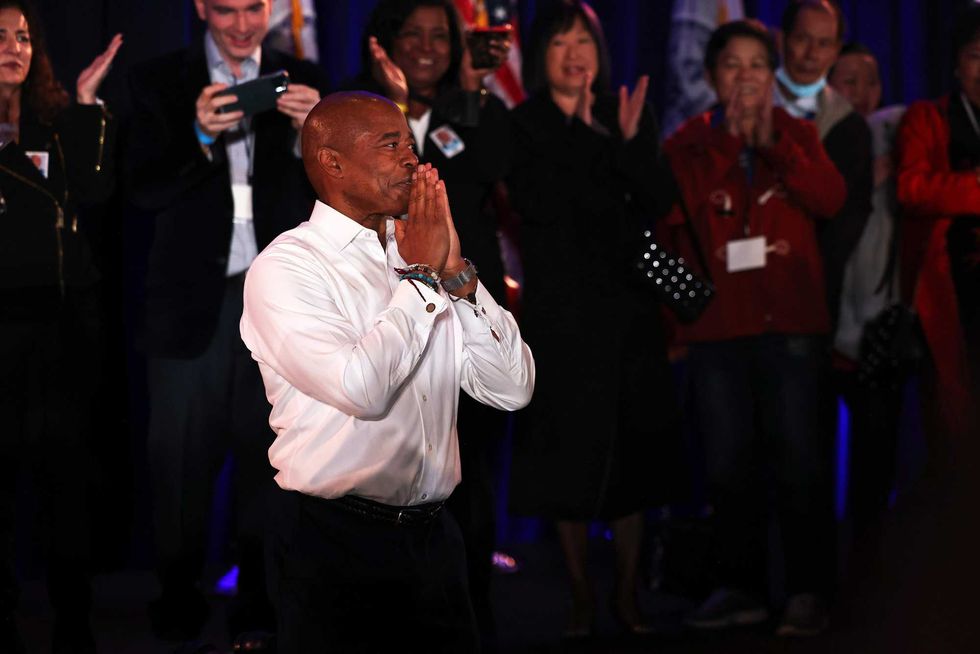
Adams retired from the NYPD in 2006 after 22 years of service. At that point, Adams already had his eye on politics for more than a decade and decided to run for the New York State Senate for which he was later elected, serving until 2013 representing the 20th Senate District which covers parts of Brooklyn.
 Michael M. Santiago/Getty Images
Winning a whooping 90.8% of the vote, Adams was elected Brooklyn Borough President in 2013 where he served two terms and had a hand in a number of policies around education, public safety and health.
Adams had long been eyeing the mayor's office since beginning his political career, officially announcing his candidacy in 2020 for the upcoming 2021 mayoral race. After winning the democratic nomination last summer, Adams was elected as mayor of New York City with 67.4% of the vote. He became only the second Black mayor in New York City's history.
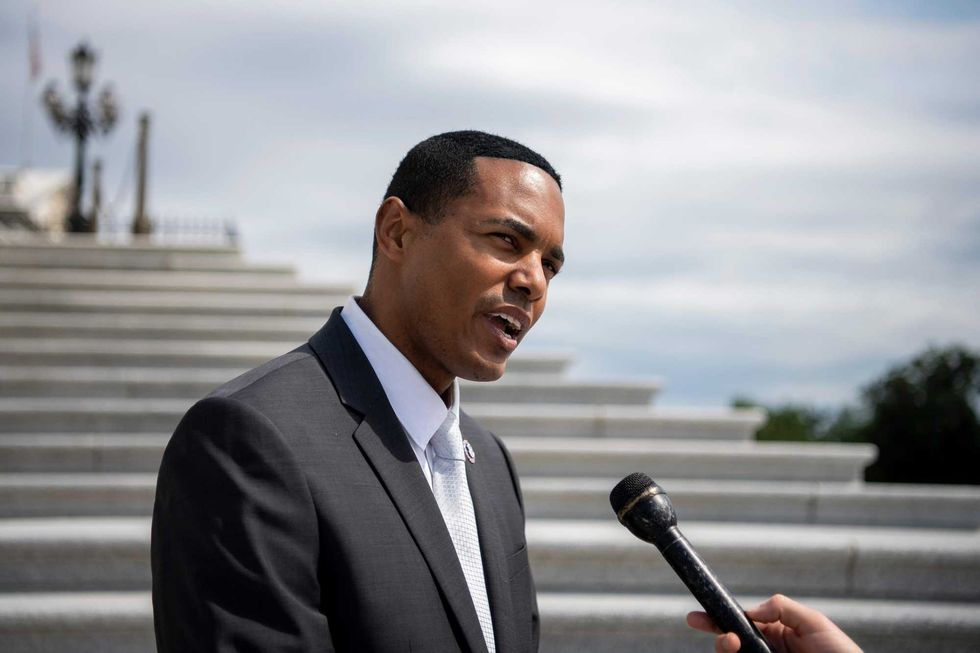
Congressman Ritchie Torres
 Caroline Brehman/CQ-Roll Call, Inc via Getty Images
Congressman Ritchie Torres is not unfamiliar with some of the Bronx's big issues, mostly because he lived with them. Raised in dilapidated public housing riddled with mold and vermin, Torres suffered with asthma as a kid, as many Bronx residents do.
When Torres was growing up in the Throggs Neck neighborhood of the East Bronx, he remembers watching a Trump golf course go up across the street from his apartment which the city had invested $100 million in while the residents of his building, including his mother and two siblings, struggled to maintain their livelihood in what he called "slum conditions."
Under the care of his single mother, Torres often faced housing and food insecurity as his mother's income varied depending on the low-wage job she held.
"When people ask me how my mother raised three children on minimum wage, I describe it as mission impossible," Torres told CBS in a Dec. 2021 interview. "But there are mothers who pull it off."
Torres wasn't entirely sure what he wanted to do as a career when he was younger but he did know there had to be more opportunities out there. During his high school career, Torres interned with the mayor and attorney general's office and when he graduated, Torres went on to attend New York University.
While Torres planned to graduate NYU and go on to law school, his dreams were interrupted by mental health issues which included severe depression, which eventually led him to drop out.
Despite Torres realizing he was gay in junior high school, he did not come out about his sexuality until an adult as he feared violence would be apart of the response. His sexuality became a contributor to his depression in college leading to suicidal thoughts.
After leaving NYU, Torres worked on his recovery through therapy and medication, and turned his attention to local politics. He worked as a housing director for council member James Vacca and went on to be elected to New York City Council, representing the city's 15th district in the Bronx in 2014. At only 25 years old, he was the youngest elected city official and the first openly gay public official in the Bronx.
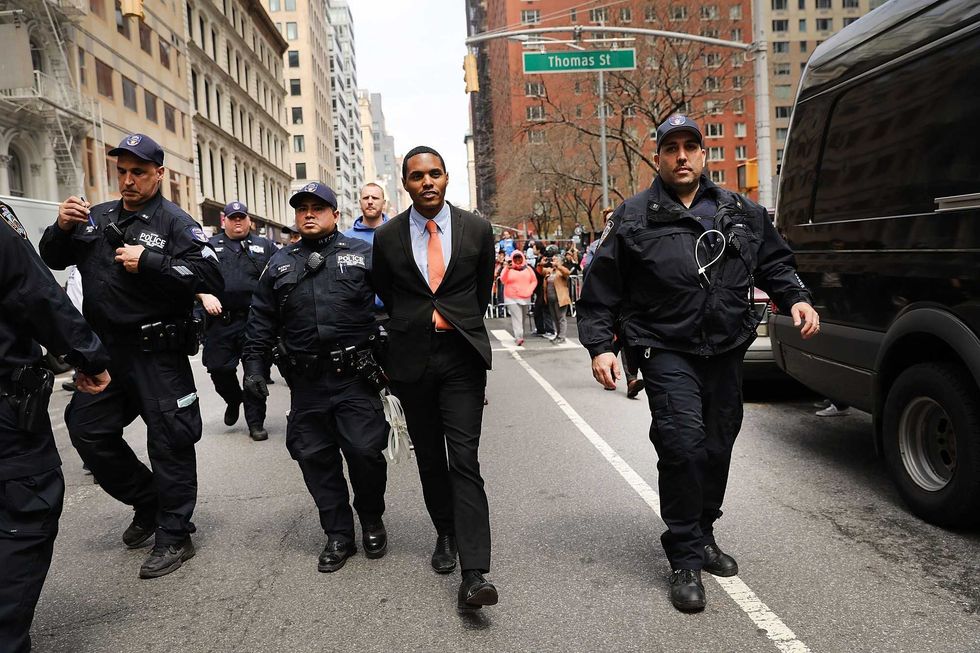 New York City Council Member Ritchie Torres is arrested with other activists at a rally demanding that the Trump administration abandon proposals to cut the Housing and Urban Development's (HUD) budget on April 20, 2017 in New York City.Spencer Platt/Getty Images
During his time serving with the city council, Torres continued to fight for better housing conditions in the Bronx as well as getting involved in other issues such as taxi medallion loans and gun violence. He also helped open the first LGBTQ homeless shelter in the Bronx.
In 2019, Torres expressed interest in running for congress and when incumbent Jose E. Serrano announced his retirement, Torres was one candidate slated to run for his seat.
At the start of his campaign, Torres was up against fellow City Council Member Ruben Diaz Jr., a pastor who was openly vocal about his opposition to same-sex marraige. The opponents, both Democrats, garnered media attention for their polarizing identities. Eventually, Torres would go on to win the Democratic nomination and later the election in his historically blue district.
Torres represents the poorest congressional district in the nation and is the first openly gay Afro-Latino member of Congress in U.S. History to do so. He has maintained the fight for the "urban poor" since taking office in Jan. 2021, committed to big issues in the Bronx like the environment and housing.
The young congressman's mother still lives in the public housing unit he was raised in and for Torres, thinking back on his mother's resilience in the face of deprivation is what motivates him.
"It's that triumph of hope that inspires me and sustains me everyday," Torres said.
District Attorney Alvin Bragg
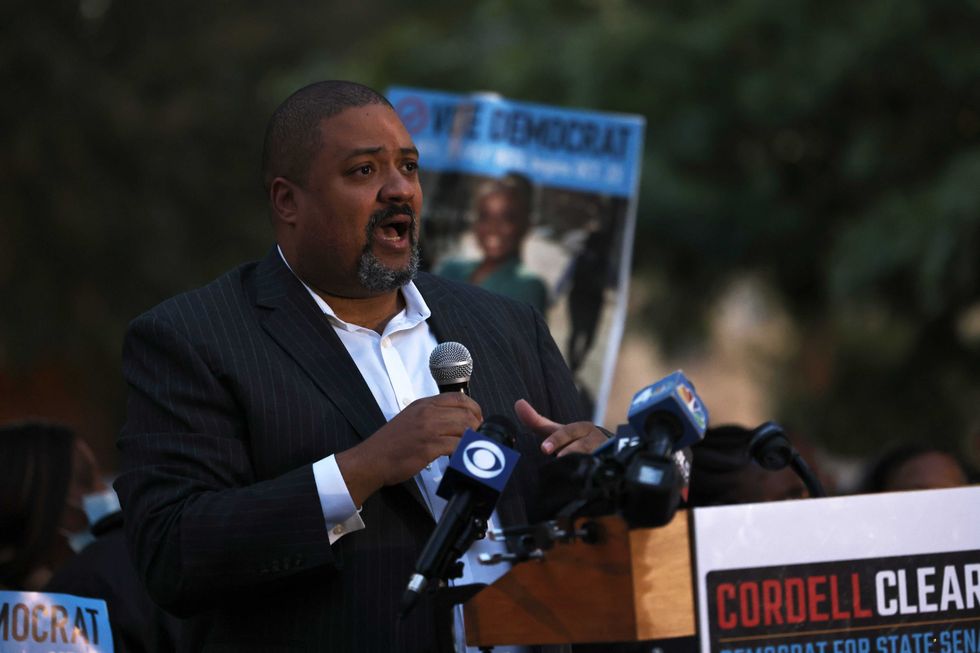 District attorney candidate Alvin Bragg speaks during a Get Out the Vote rally at A. Philip Randolph Square in Harlem on Nov. 1, 2021 in New York City.Michael M. Santiago/Getty Images
Growing up in Harlem, Alvin Bragg faced two opposite sides of the criminal justice system in incidents that resembled each other. Bragg said as a young man, three NYPD officers pointed guns at him during a stop and on different occasions, he's had guns pointed at him by people who weren't police officers.
"Those experiences really are why I went to law school and framed my professional experience working at the intersection of public safety and fairness—someone who's done gun-trafficking cases and prosecuted law enforcement," Bragg said in an interview with The American Prospect.
Bragg spent his early educational career at an elite Manhattan school, later attending Harvard University where he graduated cum laude in 1995 with a Bachelor of Arts in government. Bragg continued his education at Harvard Law School where obtained his Juris Doctorate.
Before joining the attorney general's office under Eliot Spitzer in 2003, Bragg clerked for federal judge Robert P. Patterson Jr. and later was an associate for a law firm before becoming chief of litigation for the New York City Council.
Bragg left the city council in 2009 to become assistant United States Attorney for New York's southern district. The future DA continued to move through the ranks and in 2017 was appointed as chief deputy attorney general by then attorney general Eric Schniederman. In the role, Bragg oversaw lawsuits brought by the state against notable figures like Trump and Weinstein foundations under the criminal and social justice divisions. Bragg left the role in 2018.
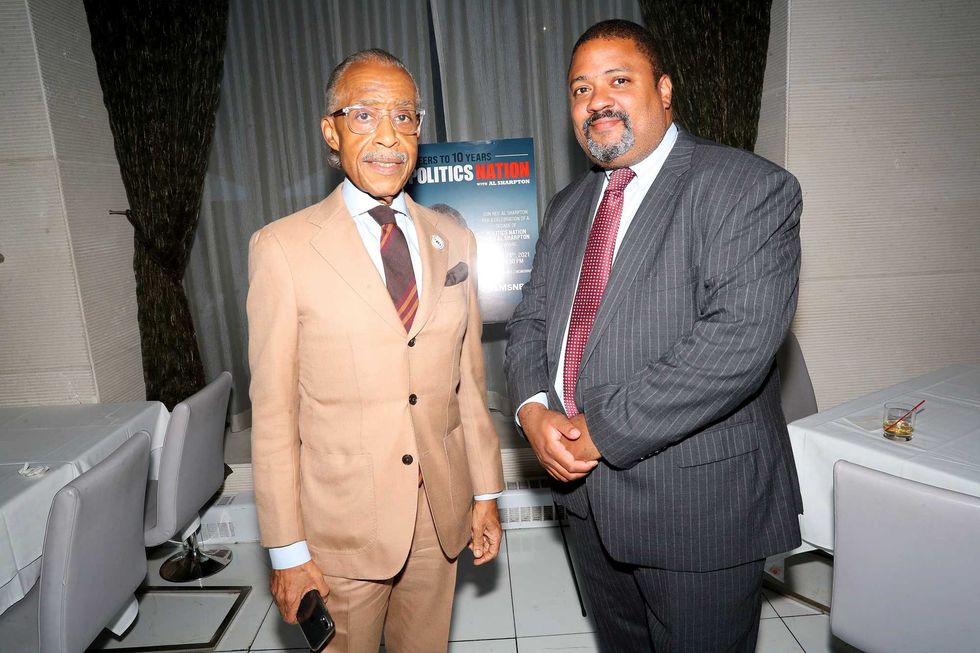 Al Sharpton (L) and Alvin Bragg celebrate a decade of "PoliticsNation With Al Sharpton" on August 24, 2021 in New York City.Photo by Johnny Nunez/WireImage
Committed to racial justice and criminal justice reform, Bragg was the co-director of the Racial Justice Project at the New York Law School where he is a professor and has represented Eric Garner and Ramarley Graham's families in civil litigations against New York City.
Bragg announced his candidacy for the Democratic nomination for New York County District Attorney in 2019 and would go on to sweep the Democratic primaries and win the election in 2021. When he assumed office in Jan. 2022, Bragg became the first African-American to be elected New York County District Attorney.
Bragg's campaign focused on fighting wrongful convictions and he plans to change the way the DA's office reviews claims of innocence as well as working on reforming criminal prosecution. For Bragg, the mission feels personal.
"I can recall my son not wanting to wear a face mask because of COVID. He was 11 and told me, very poignantly, 'I don't want to wear a mask because I don't want to be stopped by the police, lest they think I'm a robber,'" Bragg said in a 2021 interview with NBC News. "The notion that his father is going to be accountable and responsible for fairness is deeply personal to me."
NYPD Commissioner Keechant Sewell
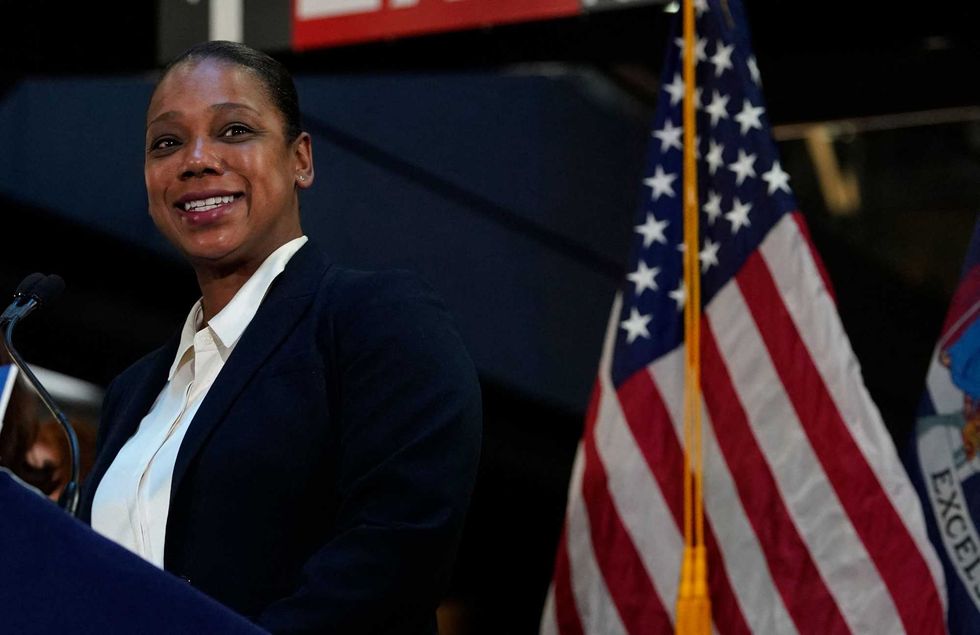 NYPD Commissioner Keechant Sewell speaks at a press conference at the Fulton Street Station January 6, 2022.Timothy A. Clary/AFP via Getty Images
In its 176-year history, the NYPD never had a female commissioner, until Keechant Sewell.
As the granddaughter of an NYPD officer and the daughter of a Marine Corps dad, Sewell said her family had a strong influence in her career.
"They absolutely taught me that service is important, humility is important, courage even in the face of fear," Sewell said in an interview with ABC News. "They taught to, no matter what I begin, make sure I finish it, even if the outcome is not what I expected."
Sewell was raised in Queens and spent her early life in the Queensbridge Public Houses. She went on to serve as a police officer in the Nassau County County Police Department's 5th Precinct.
Throughout her more than two-decade career in law enforcement, Sewell has held many roles as she moved through the ranks. Sewell was promoted to commanding officer in Nassau County's 7th precinct and later became commanding officer of the major case squad in 2016. Along with simultaneously working with the FBI on other assignments after attending the bureau's National Academy, Sewell became Nassau County Police Department's chief of detectives in 2020.
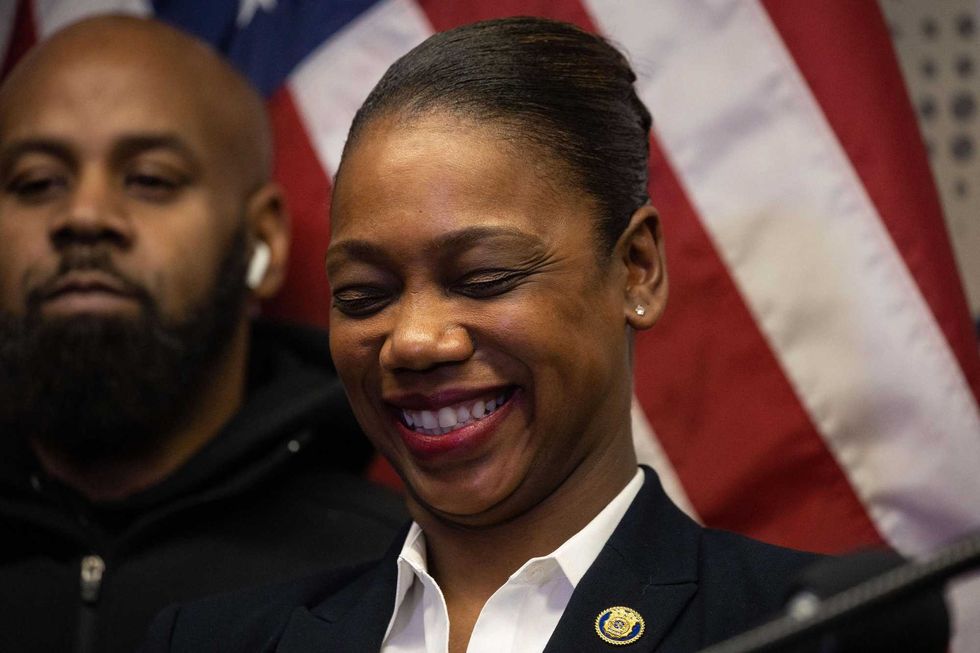 Yuki Iwamura/AFP via Getty Images
In 2021, Mayor Eric Adams announced he would be appointing Sewell as the NYPD's new commissioner, citing the law enforcement veteran as having the tenacity and emotional intelligence to excel in the role.
"The fact that he would make the decision to put a woman in this position is so significant. I don't take it lightly," said Sewell. "Representation matters to little girls everywhere. It matters to people everywhere and the fact that he gave me this opportunity means the world to me."
In January, Sewell was sworn in as not only the first woman to hold the position but only the third Black person ever in the role. Her swearing in ceremony took place in the commissioner's native Queens, a moment that felt full-circle for her.
"Coming back to the city in and of itself means the world to me," Sewell said.