


NEW YORK (1010 WINS) — The NYPD released body camera footage on Friday from two officers who shot a 25-year-old man in May that raises questions about what happened before and during the shooting of Rameek Smith.
Officers Dennis Vargas and John Echevarria shot Smith in the head after he fled from them on May 10.
The NYPD said Smith fled when they approached him. The two officers reportedly gave chase and fired 19 shots total after Smith shot at them three times, hitting Vargas in the arm.
Officials did not say why the officers stopped Smith.
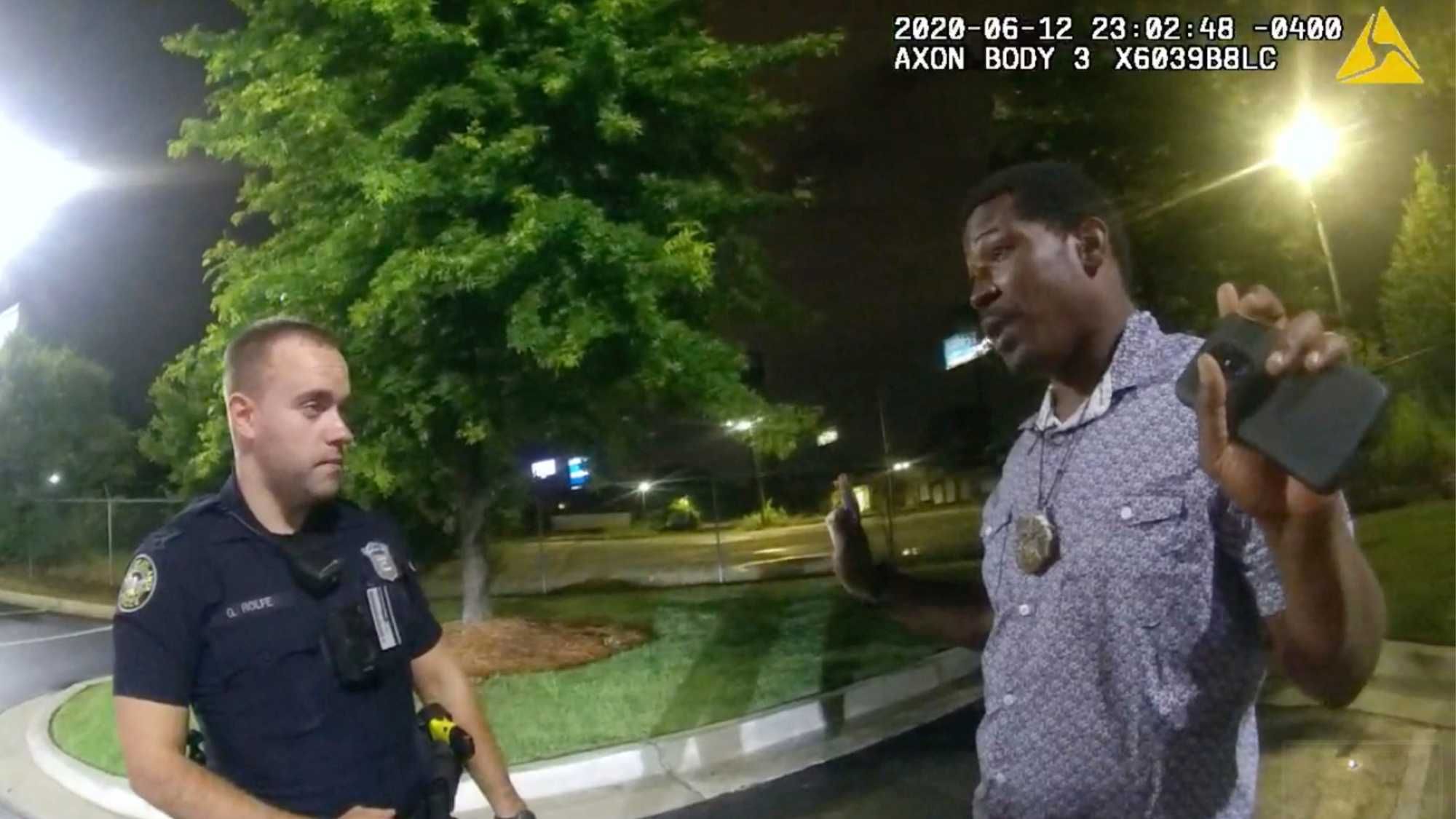
Body-worn camera footage appears to show Smith had his back to Vargas when the officer opened fire, though the video released by the NYPD is incomplete.
The footage from each officer starts with a period of silence. The body cameras are recording at all times without audio. Once an officer presses the record button, the cameras save a short amount of the video immediately preceding the press and starts recording audio. The partial lack of audio, and the fact that the NYPD didn't release any of the footage immediately following the shooting means some crucial information is not available to the public.
The video shows the officers pull over in an unmarked car. Vargas exits and approaches Smith who almost immediately runs away.
Vargas chases on foot, while Echevarria follows in the car.
Smith is still running with his back to Vargas when the officer starts shooting.
There is no discernible footage of Smith shooting or pulling out a gun.
The audio kicks in right as Vargas' gun comes into frame. Shots can be heard as soon as the audio starts, so it is unclear if shots had already been fired at this point.
When synchronized using time stamps, body camera footage from Echevarria shows he started firing after Vargas did. The audio for Echevarria's footage similarly starts after the shooting had already begun, so it's impossible to tell if shots could be heard before the police started firing.
The NYPD said officers recovered a pistol at the scene that Smith had fired three times, but the department did not release video of the officers' actions after the shooting, so there's no publicly available footage of police finding the gun.
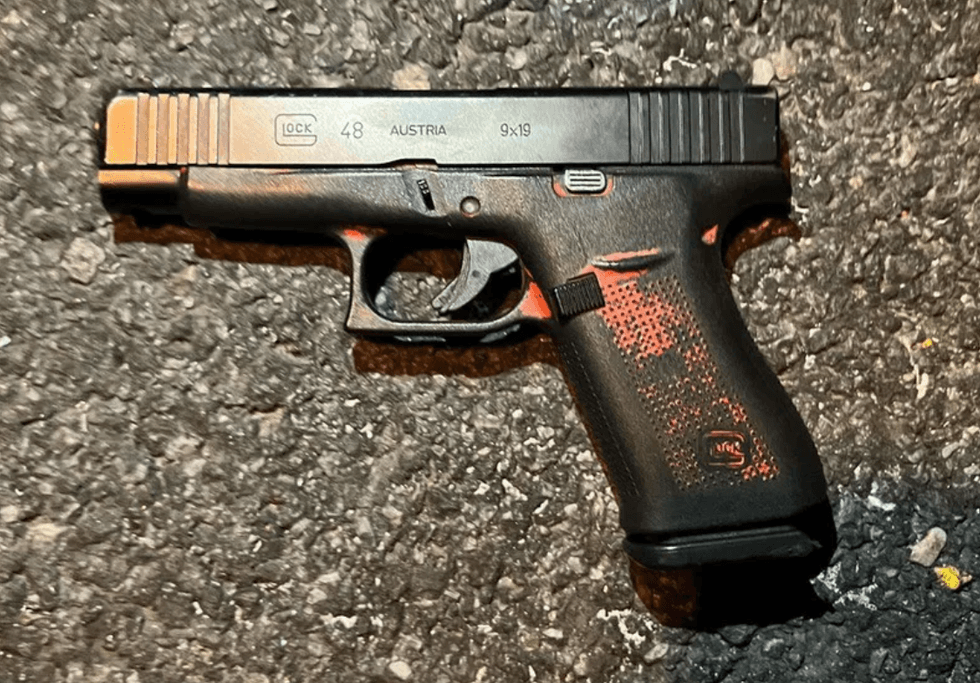 Police released an image of the gun on what appears to be pavement. The NYPD did not release video of officers discovering the gun, though.NYPD
Under NYPD policy, deadly force may only be used against a person to "protect members of the service and/or the public from imminent serious physical injury or death."
The NYPD Force Investigation Division will investigate the shooting and determine whether force was justified.
1010 WINS reached out to the NYPD and asked why Smith was stopped and if if the NYPD will release footage showing Smith's gun bring found. 1010 WINS also asked if Officer Vargas should have refrained from using lethal force given that Smith appeared to have his back turned to the officer and was fleeing when Officer Vargas started shooting. The NYPD said, "The incident remains under investigation by the Force Investigation Division."
Attorney General Letitia James' office is also investigating the shooting. New York State law obligates the attorney general to investigate all incidents in which law enforcement may have killed someone.
The Attorney General's Office did not respond to 1010 WINS' request for comment.
Rebecca Kavanagh, a New York criminal defense attorney, told 1010 WINS the video of the shooting raises serious legal questions.
According to her, police are legally only allowed to use deadly force in two circumstances — if someone is an imminent threat or if they are suspected of committing a crime involving the infliction of serious physical injury and are fleeing.
Kavanagh believes the NYPD has not yet demonstrated Vargas and Echevarria met either of these criteria. There has been no indication Smith was stopped on suspicion of committing a violent crime, and the fact that he had his back turned to Vargas when the officer started shooting could indicate he was not an imminent threat.
"Mr. Smith was running away. Courts have repeatedly held that someone running away does not pose an imminent threat even if they have a gun," said Kavanagh. "The police claim Mr. Smith fired a gun. That's not reflected on the bodycam video. Even if Mr. Smith fired a gun, he was not an imminent threat to police once he was running away."
Kavanagh also argued Smith never should have been stopped in the first place even if the officers were aware of Smith's criminal record.
"Police had no reason to stop or initiate a pursuit of Mr. Smith. No reason is given in the official police video for the pursuit except that they recognized Mr. Smith," she said. "That someone is 'known to police' or has a criminal record does not give police either reasonable suspicion or probable cause to initiate a stop, pursuit or arrest of that person."
Smith pleaded guilty to a 2020 third-degree weapons possession charge, after police found a gun on him when they searched him for jumping a turnstile.
Mayor Eric Adams used the May shooting to attack a 2019 bail reform law the day after the incident.
"The arrest was March, 2020, and for 20 months after the arrest, he remained on the streets," said Adams at a press conference. "He finally pled guilty December, 2021. So you're asking yourself, 'He pled guilty in December, 2021. Why wasn't he in jail?'"
Smith's lawyers — members of the Legal Aid Society — argued the shooting was unrelated to bail reform.
"Mayor Adams and the New York City Police Department's baseless claims that this case involves bail reform is patently incorrect and exposes the Administration's continued refusal to comprehend the scope and benefits of these reforms," said the Smith's counsel in a statement. "If anything, Mr. Smith's case underscores the need for early intervention, access to services and community-based support."
Smith was diagnosed with bipolar disorder and schizophrenia, and he was under the care of a court-mandated mental health program at the time of his death.
"Mr. Smith was released from New York City Department of Correction custody on a non-violent felony in March 2020, on consent of the Kings County District Attorney's office and the Court," said his lawyers. "Since that time, after being accepted to Mental Health Court, Mr. Smith complied with all of his obligations, attending every court appearance and consistently participating in programming to address his needs."
Vargas and Echevarria are members of the new Neighborhood Safety Teams, the controversial anti-crime unit that Adams' resurrected after they were disbanded amid controversy for pervasive excessive use of force.
While the old incarnation of the teams wore street clothes and were only identifiable by badges hanging on their necks or belts, the new teams have uniforms that are subtler than those worn by other officers but still carry NYPD markings.
The officers wear jackets with "NYPD POLICE" emblazoned on the chest and back, as well as badges worn on the chest.
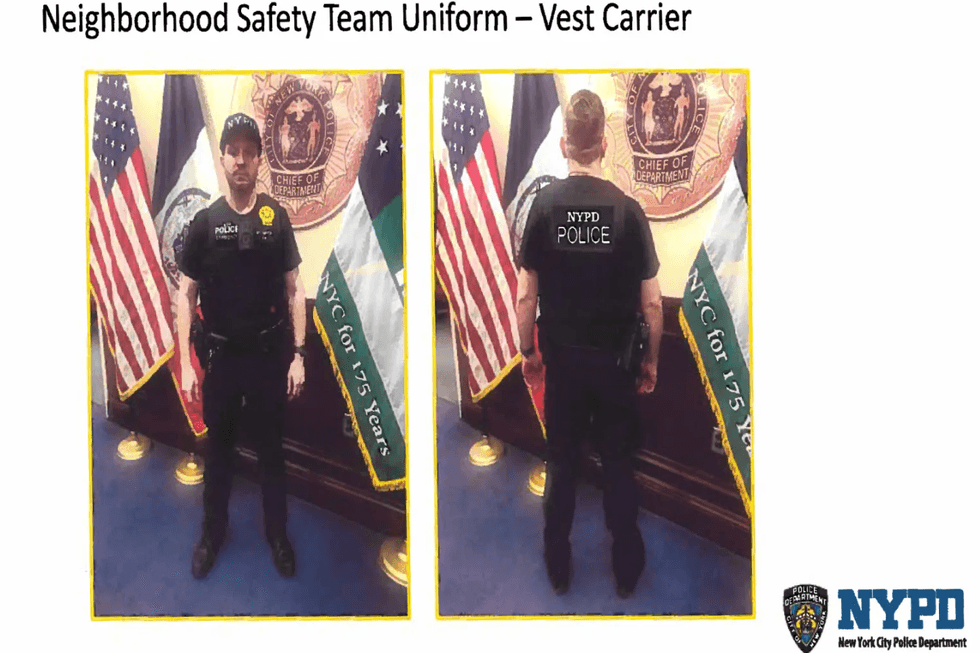 The warm-weather uniforms worn by the NYPD's Neighborhood Safety TeamsNYPD
"The idea that someone would recognize them as NYPD is not a given. That's why if Mr. Smith did shoot at the officers, there is such a good argument that he was acting in self defense," said Kavanagh. "Two people jump out of a car, it's dark and they are not recognizable as NYPD. We don't know if they identified themselves as police, because their body cameras aren't activated at that point."
Vargas, who joined the force in 2014, has a lengthy record of official misconduct.
The Civilian Complaint Review Board, the watchdog tasked with monitoring NYPD misconduct, substantiated 12 complaints against the officer.
Another 11 complaints were exonerated, and 16 complaints couldn't be substantiated or exonerated. One of those complaints left with no conclusive answer was closed due to ongoing litigation in which Vargas is named.
Echevarria, who was hired in 2013, has two substantiated complaints, four with no conclusive answer and four that were closed pending litigation.
He was also named in three lawsuits that the city settled for $205,000 in total.
Kavanagh attributed some of the potential legal issues with the officers actions to the nature of Adams' revitalized Neighborhood Safety Teams.
"These new anti-crime units have mostly been making low level arrests, and there is a lot of pressure on them to make gun arrests. So if they saw someone like Rameek, who they know has a prior gun arrest, then they would consider him low hanging fruit for a possible gun arrest even if they didn't have any reason to stop him," she said. "They're meant to be 'proactive' as opposed to responding to a crime already in action, but that doesn't mean they don't need to meet legal standards like probable cause."