

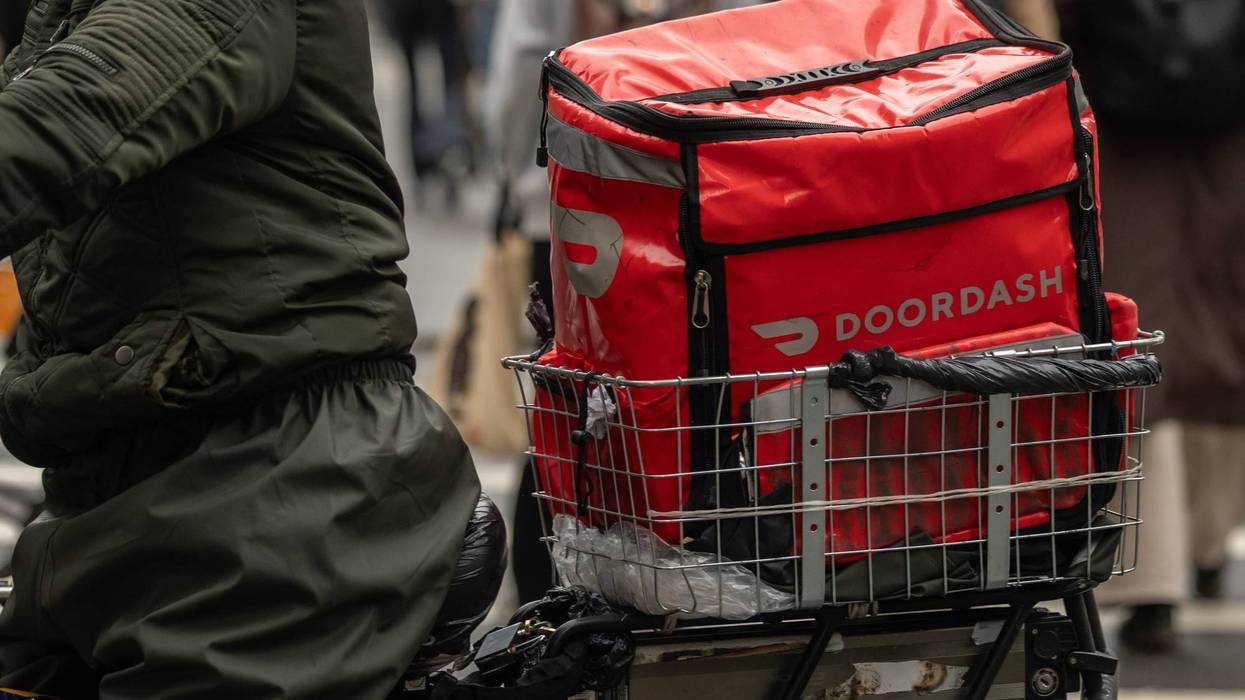

NEW YORK (BLOOMBERG) — DoorDash Inc. and Uber Technologies Inc. lost a bid to block a New York City law requiring a tipping option be presented to customers at checkout from going into effect Monday.
A federal judge on Friday denied the companies' request for a court order that would have stopped the law from taking effect on Jan. 26 while their suit against the city proceeds.
The city is requiring the suggested tip be set at 10% or higher, which the food-delivery app firms worry will cause sticker shock for customers. DoorDash has estimated it will suffer millions of dollars in losses over the next year as New York customers place fewer orders.
Uber, DoorDash and the city didn't immediately respond to requests for comment.
The court decision could bolster Mayor Zohran Mamdani's hardline stance on regulating app-based work. Earlier this month, the city filed a lawsuit against delivery tech provider Motoclick and its chief executive officer for withholding pay from workers.
The companies contend that the requirements violate their constitutional free-speech rights by restricting how the apps communicate with consumers about tipping.
US District Judge George B. Daniels said the companies' suit was unlikely to succeed because the city's new requirements weren't overly burdensome and advanced "the city's goals of enhancing cost transparency at the time of checkout, restoring customer choice, and providing protections to delivery workers."
The new requirements were enacted to counter measures the companies took in response to the city's 2023 law hiking the minimum wage for delivery workers to at least $21.44 per hour. At the time, DoorDash and Uber raised service fees to subsidize the new pay rate and moved the in-app tipping function to after checkout so upfront delivery costs would seem lower.
In the year after the companies enacted those measures, customers tipped 64% less and paid about 45% more in fees per delivery order, according to a Bloomberg analysis of 2024 data that Uber and Doordash submitted to New York City's Department of Consumer and Worker Protection. Workers who previously made half of their hourly earnings through tips saw that portion fall to just 13% in the second quarter of 2025, though their overall pay increased due to the new minimum wage.
All in all, the companies' measures deprived delivery workers of more than $550 million in tips, the city agency said earlier this month.
Similar fights between delivery services and local governments over workers' pay are playing out across the US. The companies say such requirements will negatively affect their business by forcing them to pass on additional costs to consumers, ultimately lowering demand and cutting into workers' earnings.
Grocery delivery app Instacart sued the city in December over a package of laws that set minimum wage, tipping and other pay standards for grocery delivery services.
The case is DoorDash, Inc. and Uber Technologies Inc. v. City Of New York, 1:25-cv-10268, US District Court, Southern District of New York.