



NEW YORK (BLOOMBERG) -- Kayla Cruz started hunting for jobs in the New York region after she graduated from Northeastern University last May. She's still looking.
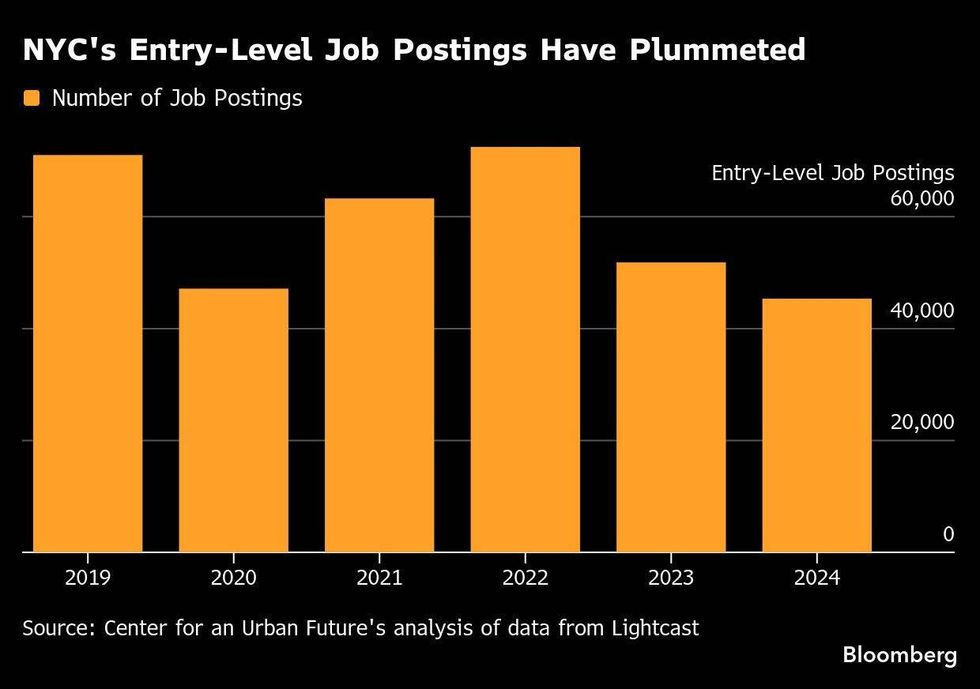
The job market for recent college graduates in New York is worsening, clouding a once-bright spot in the city's economy. The total number of available entry-level jobs in the city fell 37% between 2022 and 2024, a loss of nearly 30,000 positions overall, according to a new report from the Center for an Urban Future.
The number of paid internships has also plunged, falling from nearly 11,000 in 2019 to just under 7,000 in 2024, the report found.
Since she earned a bachelor's degree in business administration through Northeastern's Cooperative Education program, Cruz has applied for more than 600 jobs, including entry-level roles, contract positions and internships.
So far, she's only scored 10 interviews.
"I hoped with my experience and drive that I would have landed a full-time job position," said Cruz, 22, who has been working at gym operator Equinox and retailer Abercrombie & Fitch and living with her parents in Connecticut while she continues her search. "I'm also feeling stress and anxiety about whether going to Northeastern was worth it."
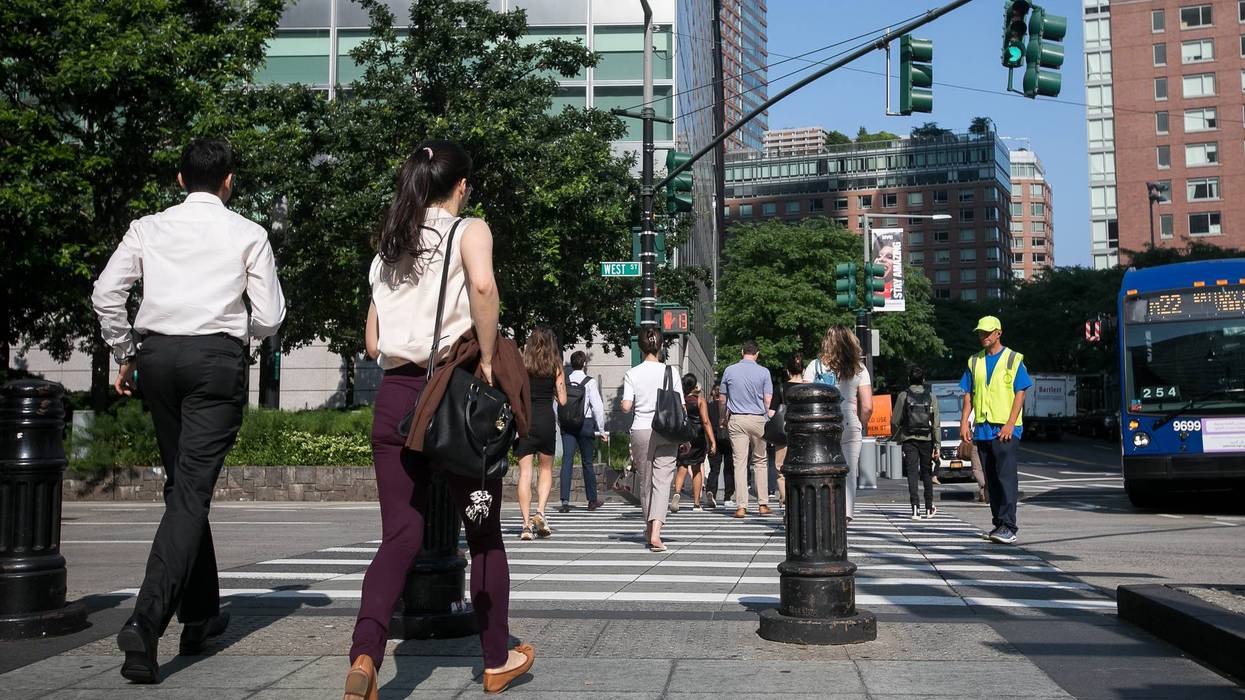
 Entry-level work in New York City has become harder to come by at the same time that the US economy has slowed.Bloomberg
Entry-level work in New York City has become harder to come by at the same time that the US economy has slowed. Concerns about President Donald Trump's trade policies and artificial intelligence have also made some businesses reluctant to hire. The unemployment rate for college-educated workers has risen over the past year, and while it remains below the national average, at 3% it is now well above pre-pandemic levels.
New York City added just 44,200 jobs in 2025, a 0.9% climb from a year earlier – and the weakest growth since the start of the Covid-19 pandemic in 2020. Hiring was concentrated in low-wage roles in education and health care, while nearly every other sector posted zero or negative job growth, city budget documents show.
Despite the decline, New York continues to attract recent grads. More than 565,000 people who graduated from college between 2022 and 2025 were working in the city as of December 2025, up from 490,000 a year earlier, according to New York City's Economic Development Corporation.
Recent data suggests unemployment rates for recent college graduates are rising faster than the overall rate of unemployment, New York City Comptroller Mark Levine said in a report issued late last year. And many of the forces making it harder for young workers in New York aren't unique to the city. Economy-wide shifts brought on by technological change are being felt in the region.
Miguel Luna, 23, graduated from City College in May with a degree in computer science, a field he thought would all but guarantee a low six-figure annual salary. But advances in the programming skills of AI clients have sharply reduced demand for the kinds of young, entry-level tech workers companies once hired en masse.
Luna, who is living with his parents in New Jersey while he hunts for work, has applied for five jobs a day, three days a week, every week since graduation.
"I just haven't really been getting anything back," Luna said. He has begun applying for lower-paying jobs in retail and security. "It just feels really, just hopeless."
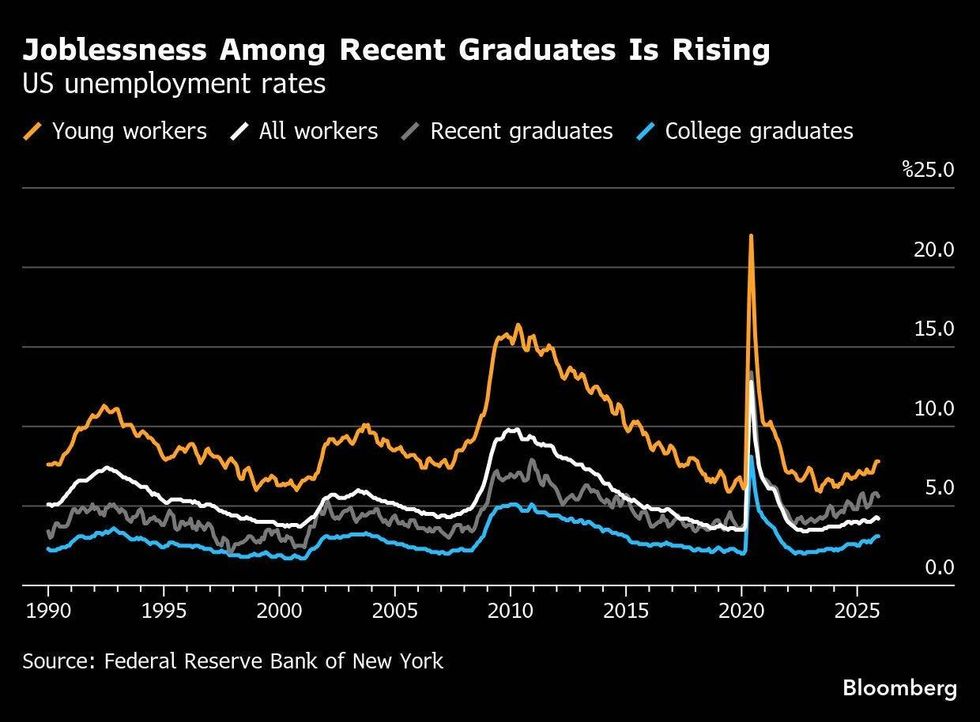 Recent data suggests unemployment rates for recent college graduates are rising faster than the overall rate of unemployment, New York City Comptroller Mark Levine said.Bloomberg
More than half of US college graduates are working in jobs that don't require degrees, according to the Burning Glass Institute, a nonprofit that researches the future of work, which has led some young workers to question the value of higher education.
Jobs in the US posted by employers on Handshake, a career-services system for college students, fell 15% over the past year, according to a report by the platform last year. And 51% of employers surveyed by the National Association of Colleges and Employers rated the overall job market "fair" or "poor" for the 2025-2026 academic year, the highest level since the pandemic, according to the NACE's most recent job outlook survey.
Last May, as Cruz and Luna were earning their degrees, Dario Amodei, the chief executive of AI giant Anthropic, argued that AI would eliminate half of all current entry-level white-collar jobs in the next five years. Roughly 244,000 New York City jobs are at risk of disappearing over the next decade because of AI, New York City's Economic Development Corporation estimated last year.
"As someone who does programming for a living, AI is really, really coming for that," Luna said.
New York's white-collar job market has been soft up and down the chain as firms evaluate how technology is impacting jobs and how they should adjust headcount, according to Dawn Fay, an operational president in New York City for recruitment firm Robert Half.
Sixty percent of US companies said they were planning to increase permanent headcount, compared with 53% of New York employers, according to a Robert Half survey of 2,000 hiring managers released in February.
"As the marketplace evolves, companies have been more measured in looking at the opportunities to grow business in this climate," Fay said. "We've certainly seen classes of interns and offers being less than they have in years past."
The changes have prompted college systems like the City University of New York, 80% of whose graduates stay in the city after earning degrees, to develop highly structured partnerships with local employers to help their students access the paid internships and early work experience employers are looking for in entry-level hires.
CUNY is asking Mayor Zohran Mamdani's administration to commit to expanding employer relationships with the university system's colleges, and to hire more CUNY students for city jobs and internships.
The majority of CUNY's students come from families with annual household incomes of $30,000 or less, and rarely have the kinds of personal connections they can leverage when looking for jobs, said Lauren Andersen, CUNY's vice chancellor for career engagement and industry partnerships.
"It is not just the passive environment," Andersen said, "where you have a piece of paper with a credential, and therefore you're assumed to get a job."
The one-two punch of AI and a tough labor market favors workers with proven skills, leaving recent grads to wrestle with an age-old quandary: how they can gain the experience employers say they want without first getting a job or internship.
"The bar for entry-level roles has gotten more competitive," said Travis Fox, the director of partnerships at Hunter College's career center. "They want them to demonstrate that they have the skills and experience to do the job before they get that first job."
More stories like this are available on bloomberg.com.