


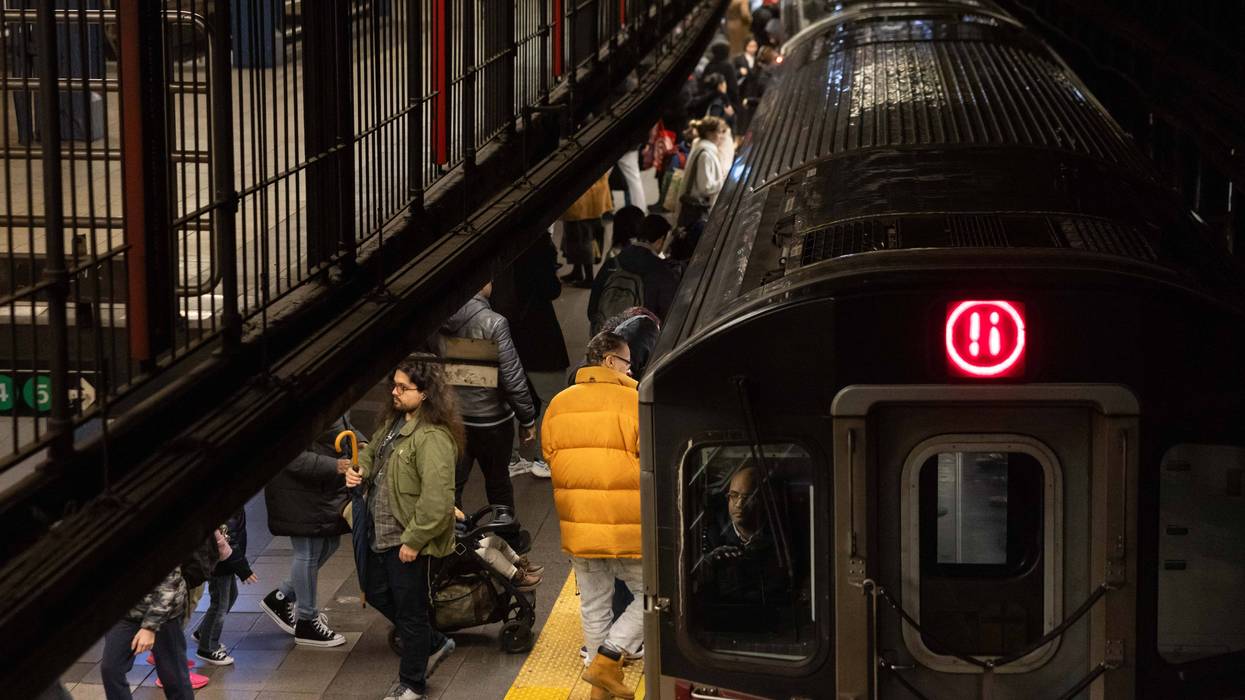

NEW YORK (BLOOMBERG) -- New York City's transit system, the largest in the US, is creating a new unit to steer a $12 billion effort to replace decades-old trains and modernize its bus fleet.
Jessie Lazarus, who led the Metropolitan Transportation Authority's shift from the MetroCard to the tap-and-go OMNY fare system, will head the agency's new Rolling Stock Program. The group, which will include about 10 staff members, will focus on performance-based specifications for manufacturers rather than being overly prescriptive on design, she said.
Given the scale of its procurement needs, the MTA aims to broaden the domestic manufacturing base and boost competition among suppliers, Lazarus said in an interview, describing the agency as "truly the market maker" that must be strategic about capital deployment and rail production capacity.
"This is one of the largest investments in manufacturing that's happening in America," Lazarus said. "And we should think about our power to structure policies that can stabilize the supplier base for the benefit of domestic public transit."
The MTA plans to buy about 1,500 subway cars, more than 500 commuter-rail cars and roughly 2,200 buses under its 2025–2029 capital program. The rolling stock initiative accounts for nearly 20% of the agency's $65.4 billion capital plan through 2029.
Many of the MTA's rail cars date back to the 1980s and are nearing the end of their useful life. Older trains break down about six times as often as newer models, according to the agency. Roughly 40% of the bus fleet will also be eligible for replacement in the coming years.
Lazarus joined the MTA in 2023 after working at Carmera Inc., an artificial-intelligence company acquired by Toyota Motor Corp. in 2021. She previously served as New York City's chief digital officer from 2014 to 2016. Lazarus holds an MBA from Harvard Business School and a bachelor's degree from Middlebury College.
More stories like this are available on bloomberg.com.


