

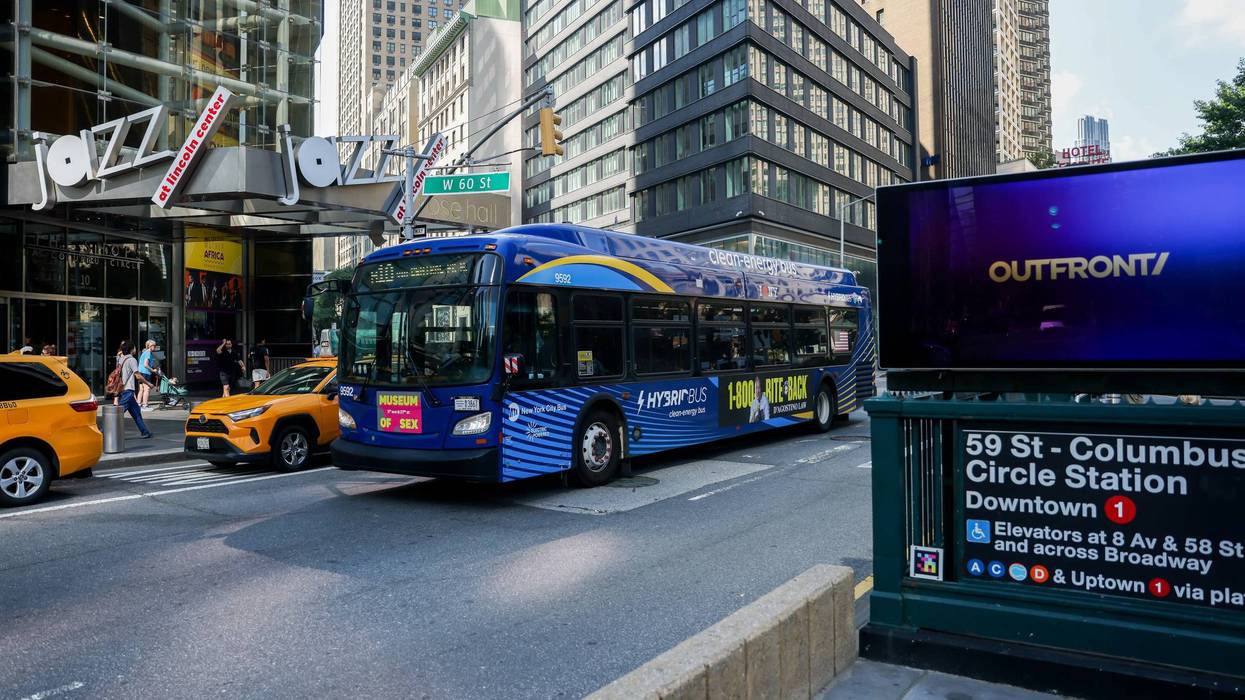

NEW YORK (BLOOMBERG) -- New York State and City officials are working to increase the speed of public buses, with a goal of cutting riders’ travel times by up to six minutes on about 50 priority routes.
The new initiative, called Next Stop: Fast Buses, Better Service, calls for more dedicated bus lanes, traffic signals that prioritize buses, expanded all-door boarding, and investments in newer buses and amenities to improve service, according to a report.
It’s a joint effort between Mayor Zohran Mamdani’s administration, the state-run Metropolitan Transportation Authority — which operates the city’s transit network — and Governor Kathy Hochul’s office.
New York City is one of the world’s most traffic-clogged urban areas, with city buses moving at an average eight miles per hour, according to the report. It’s a quality-of-life issue that transit advocates, community groups and elected officials have been seeking to improve.
New York City buses provide about 2.75 million daily trips along 1,600 miles of city streets, carrying more passengers each day than those in Los Angeles, Chicago, San Francisco and Philadelphia combined.
“For too long, our buses have been stuck in traffic instead of keeping pace with the city that never sleeps,” Mamdani said in a statement Wednesday. “We’re investing in faster, more reliable buses because New Yorkers deserve a transit system that respects their time.”
While the city and state will allocate resources to improving bus service, the program doesn’t include Mamdani’s campaign push to eliminate fares on New York City buses. Such a move would require city and state funds to replace about $900 million of bus revenue the MTA anticipates collecting this year.
Instead, the focus is on making buses faster and giving working New Yorkers more time back as they commute to jobs, schools and appointments. Some neighborhoods don’t have subway or commuter-rail service and must rely on buses. About 75% of bus riders are people of color, and 76% live in households earning less than $100,000 a year, according to the report.
‘Affordability Agenda’
“If we save a bus rider just two minutes to work today, that’s 40 minutes of their life back in just a month, and eight hours of riders’ lives back in just one year of commuting to work,” Mike Flynn, Commissioner of the city’s Department of Transportation, told reporters during a briefing. “This is a key part of our administration’s affordability agenda.”
The strategy focuses on giving buses the infrastructure to move through traffic more efficiently. Currently, only about 7% of city streets with bus routes have dedicated bus lanes. Expanding bus lanes and busways, installing transit signals that enable traffic lights to stay green longer as buses approach, and allowing all-door boarding on buses will boost speeds.
The improvements could increase bus speeds by 20% along 50 priority corridors across the five boroughs, saving riders up to six minutes on one-way trips.
State and city officials are also seeking to develop five rapid bus routes, with one implemented along Flatbush Avenue in Brooklyn by 2030.
The MTA will also need newer buses to help meet these goals. Agency officials plan to spend $1.4 billion on 2,500 new buses that would replace 40% of the existing bus fleet.
Along with speed, the plan also aims to improve the rider experience. It calls for 300 new bus shelters by 2028 and the installation of seats at 875 bus stops in 2026, with the same number to be added annually to meet the goal of universal seating by 2035.
More stories like this are available on bloomberg.com.