


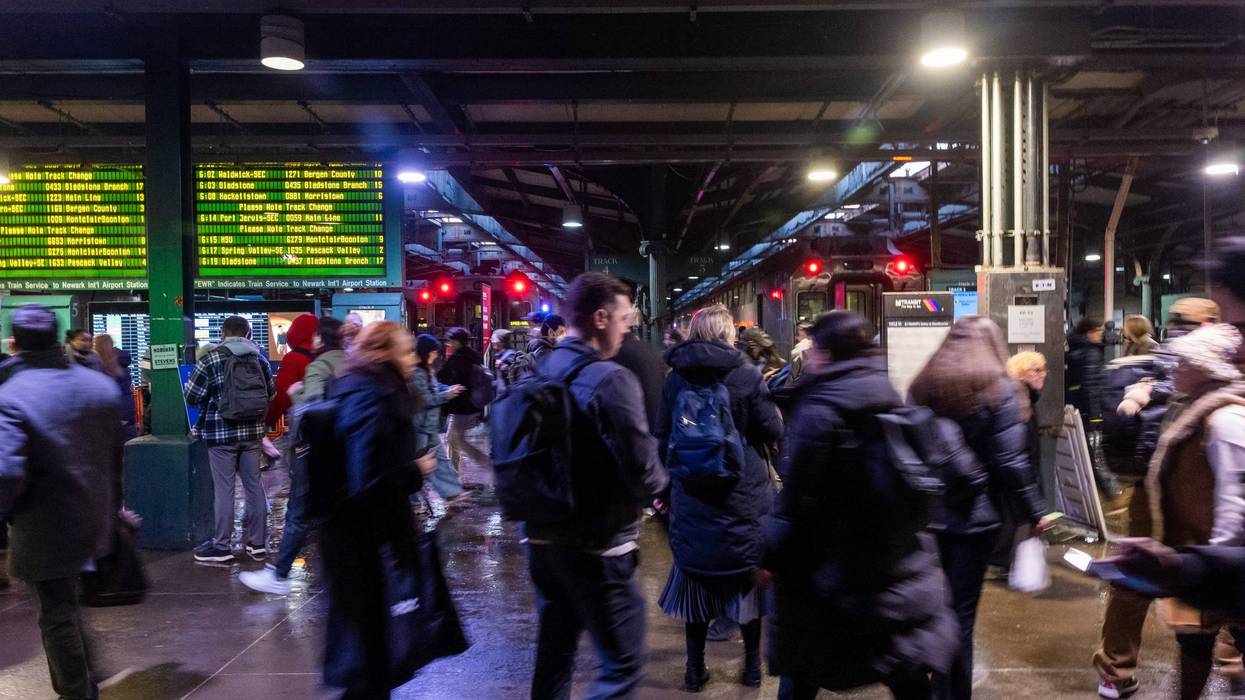

NEW YORK (BLOOMBERG) -- Danny Wild is a senior coordinator for digital operations at Major League Baseball's office in Manhattan and he's experiencing what can best be described as commuter misery.
While some colleagues enjoy spring training in sun-dappled Florida and Arizona, he's one of thousands of New Jersey commuters coping with extensive delays as Amtrak and New Jersey Transit reduce service so workers can transfer wires and electrical systems to a new bridge over the Hackensack River.
Wild's troubles this week began in Secaucus, a critical NJ Transit hub where, because of the bridge work, there are fewer trains heading into New York than normal. Despite his best efforts to avoid crowded cars and platforms, he has at times been forced to squish into cramped trains.
"We all just squeezed in and stood in the aisles," said Wild, who relies on NJ Transit to get him to the office from his home in Rockland County, New York – a two-hour journey on a normal day.
The bridge project, which is just one component of a massive, yearslong effort to upgrade the infrastructure along one of the nation's busiest commuter corridors, is expected to continue through mid-March, with regular schedules set to resume on Sunday, March 15.
To help ease the resulting congestion, NJ Transit is asking customers who are able to work from home to consider that option "to the greatest extent possible during this time period," according to the transit agency's website.
For now, that's a no-go for Wild, who said he needs to be in the office five days a week.
Getting Creative
As in-office mandates become more common among employers in the city more than five years after the Covid-19 pandemic, they're coming up against infrastructure that can make getting to work smoothly a challenge.
Aging bridges, tunnels, signals and wiring have contributed to delays and cancellations on the rails that link Manhattan to the New Jersey suburbs.
The work on the Portal North Bridge that's causing the commuting chaos is part of the Gateway Program that's building a new rail tunnel beneath the Hudson River and repairing a more than 100-year-old tube to improve service and boost capacity along Amtrak's Northeast Corridor.
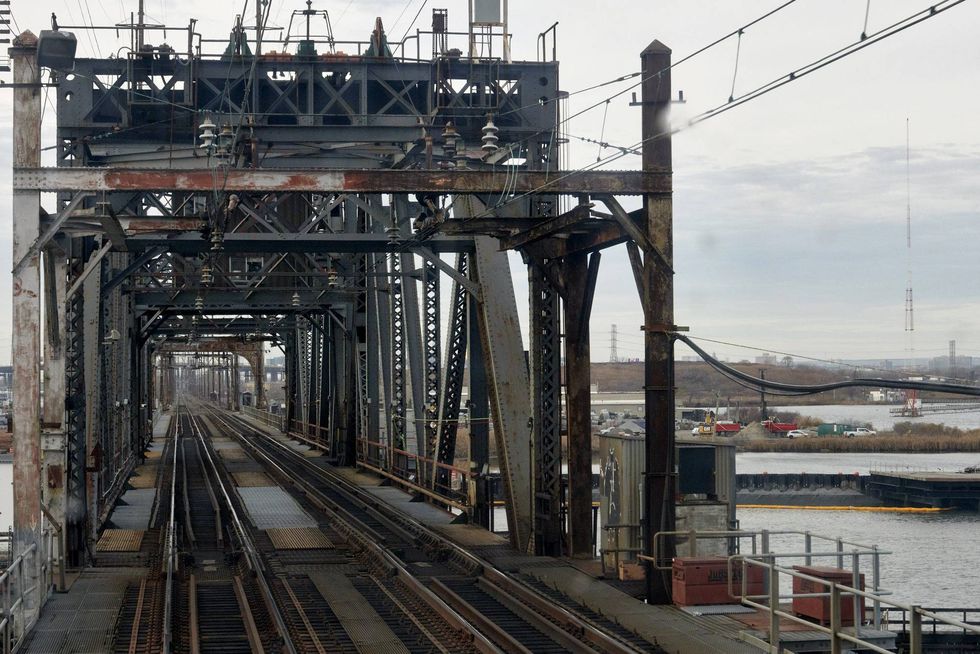 The Portal Bridge near Newark, New Jersey.Gabby Jones/Bloomberg
"We understand that a four-week adjustment to rail schedules is an inconvenience for many customers. Changing long-standing commuting patterns — even temporarily — is disruptive. We don't take that lightly," a spokesperson for NJ Transit said in an emailed statement.
The agency said replacing the 116-year-old bridge while maintaining service is complex work and schedule adjustments are necessary to improve the unreliable infrastructure. It's an "investment that will benefit riders for generations," according to the statement.
NJ Transit said it communicated the planned service changes to riders well in advance and has arranged for cross-honoring with PATH, NY Waterway and NJ Transit buses.
Many workers are getting creative in their quest to navigate the bottleneck caused by the bridge work. Some are waking up earlier to beat the morning rush, while others are racing to book seats on commuter buses before they sell out.
Wild said he has been using an AI tool called nypenn.live to predict which track a train will arrive on, knowledge that could help him beat the crowds to the platform.
Boxcar, a private bus service that has routes from New Jersey to New York City, has seen a 30% jump in bookings this week.
"We haven't added buses yet, but we will," Boxcar Chief Executive Officer Joe Colangelo said. "Boxcar is pacing additions to protect service quality and make sure operations can handle the load. We expect to announce increases shortly."
Choke Point
Matt Kulper, a 38-year-old worker in the tech industry, commutes from Westfield, New Jersey, to Hudson Square in Manhattan. He said this week's service changes have been "frustrating," as they come on top of the "wishy-washy schedule that's New Jersey Transit on a regular day."
Kulper said he is required to go into the office four days a week. Many other employees at his company are affected by the rerouting, he said.
"It has been a lot of trial and error trying to navigate the new schedule this week," Kulper said. "We're all just dealing with it the best we can."
New Jersey's Hoboken PATH station has emerged as a particular choke point. Customers surged into the station during the morning rush on Thursday, with a crowd of commuters waiting to board trains to lower Manhattan stretching from the station's lower-level platform up the stairs. A PATH worker in a bright green reflective vest shouted into a bullhorn, directing passengers into less-crowded cars.
Destiny Marie, a 29-year-old legal assistant, said her employer wants her in the office five days a week. The train-service changes have added about 30 minutes to what is normally an hour-long commute from her home in Bayonne, New Jersey, to Midtown this week.
"I'm very frustrated and annoyed," said Marie. "You just kind of have to go with it."
More stories like this are available on bloomberg.com.