



NEW YORK (BLOOMBERG) -- The High Line Hotel in New York’s Chelsea neighborhood has tested positive for the bacteria that causes Legionnaires’ disease, according to the hotel workers’ union.
The report comes about a week after the department said there was no longer an elevated risk of Legionnaires’ disease from an unrelated Upper East Side outbreak that killed seven people and sickened scores of others.
The city’s health department received a complaint about the maintenance of a cooling tower at the hotel on Thursday, William Fowler, a spokesman for the department, said in a statement. The last date of inspection at this tower was July 1.
“Protecting the health and safety of New Yorkers is our top priority,” Fowler said. “We are taking the appropriate steps to look into this matter and ensure local laws and regulations are being followed.”
Representatives for the High Line Hotel declined to comment. The hotel, where a standard room rate ranges from $360 to $550 a night, is owned by the Brodsky Organization and MCR Hotels.
The Hotel & Gaming Trades Council said the union learned on Thursday that a July 23 test of the site’s cooling tower found a rising level of living Legionella bacteria, a spokesperson for the group said. The union, which represents nearly 40,000 hotel and casino employees in New York and New Jersey, requested that employees be allowed to leave the High Line Hotel over health and safety concerns, but management refused, according to the spokesperson.
“Our union proactively surveyed the entire unionized hotel industry, and while the vast majority have been cooperative and acted in the best safety interests of workers and guests, this hotel has unfortunately been a glaring and disturbing exception,” said Rich Maroko, president of the hotel union.
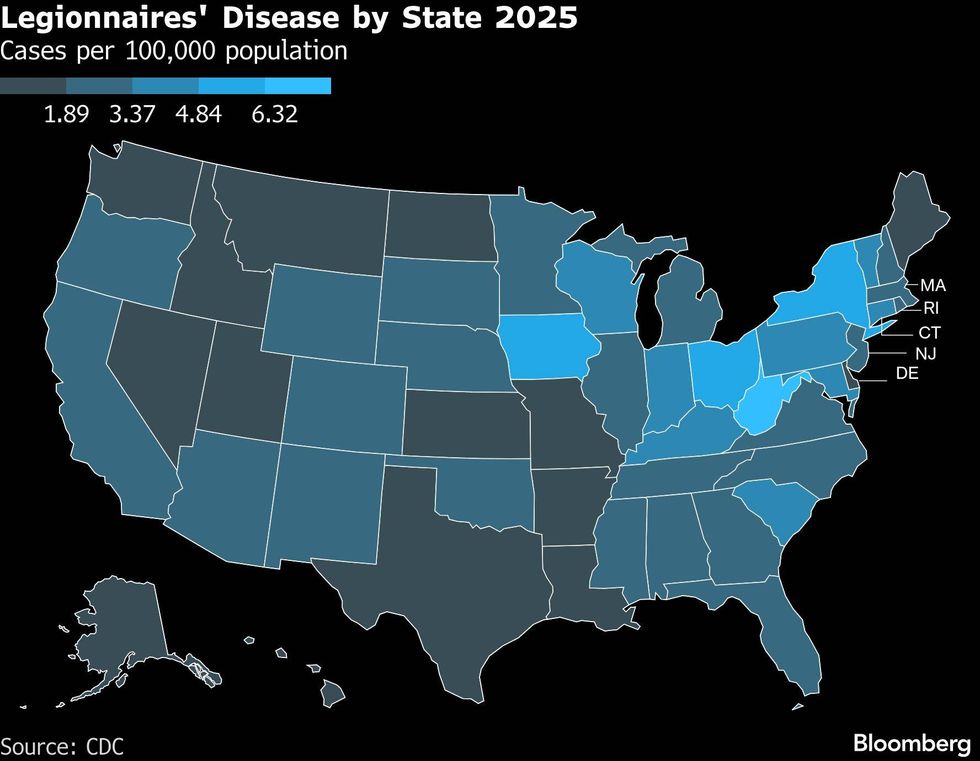 Legionnaires' disease by state 2025via Bloomberg
Legionella bacteria grow in warm water found in cooling towers that sit on top of buildings and help regulate the temperature of an HVAC system. Infected towers can emit a mist that can cause Legionnaires’ disease in people. The bacteria can sicken people who breathe in infected mist and cause pneumonia-like symptoms, according to the US Centers for Disease Control and Prevention.
Most people who are exposed don’t become sick. The illness has an incubation period of up to two weeks. Older adults, people with weakened immune systems or chronic conditions, and current or former smokers are at greater risk. New York state typically reports 200 to 800 infections annually.
More stories available on bloomberg.com.