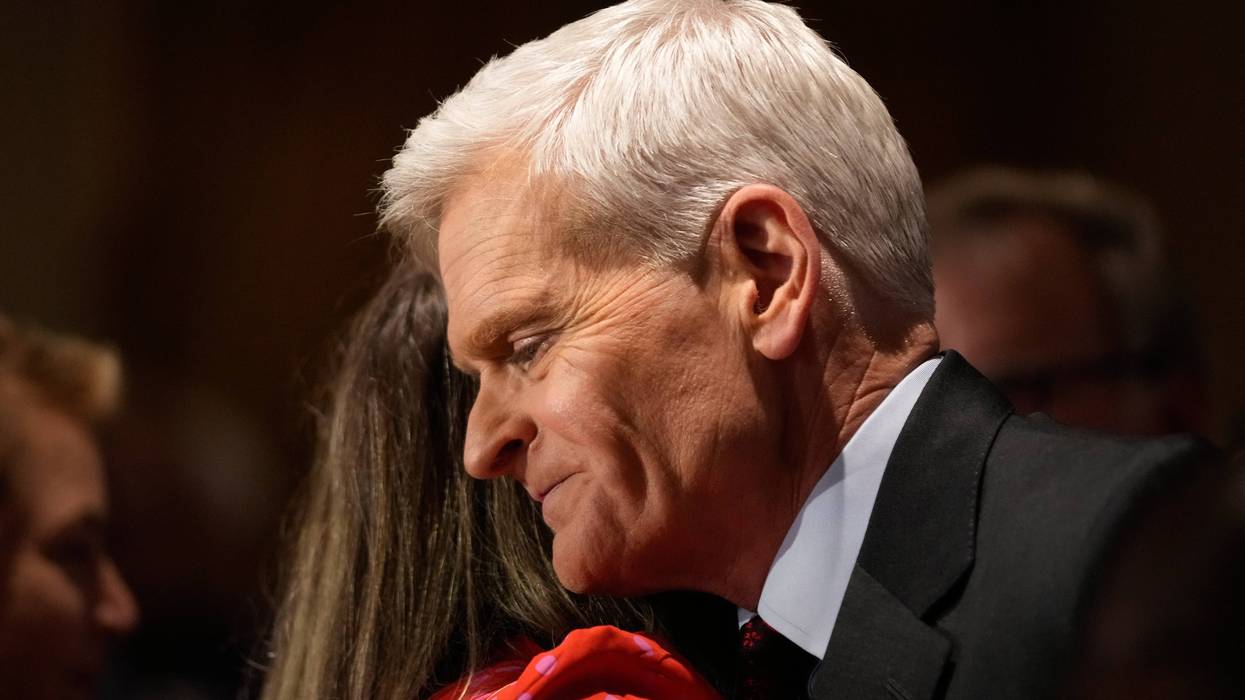


NEW YORK (1010 WINS) -- NYPD Chief of Department Terence Monahan is taking on a new role after nearly four decades with the department, as senior advisor to Mayor Bill de Blasio's COVID-19 recovery team.
De Blasio announced his plan to appoint Monahan Senior Advisor for Recovery and Safety Planning at the end of February. Since the news broke, Monahan has already been out meeting with community members and business leaders to determine how to help New York City recover from the pandemic.
In an interview with 1010 WINS' Juliet Papa, Monahan discussed his new role, New York City's recovery and his time with the NYPD, including his experiences during the George Floyd protests last year.
Listen to Monahan's interview above, or read it in full below:
PAPA: I do have to tell you, seeing you when you made the announcement with Mayor de Blasio and you were wearing a suit, it was actually kind of jarring. Because I've never seen you like that. What was that like for you?
MONAHAN: It was weird to actually be out wearing a suit. I'm so used to this uniform. I've loved it, I've worn it almost every day for 39 years, so wearing a suit is going to be different. It's going to cost me a little money going out there and buying some new suits.
First of all, your title is "Senior Advisor for Recovery and Safety Planning." What does that mean to you?
It means my job is to help get this city back on its feet. To get businesses to come back, make them feel safe. You know, we have to deal with the realities of crime in New York and the perceptions of crime in New York. We need people to feel comfortable riding the subway, we need businesses to feel comfortable, to have their employees come back into their buildings. There's a social and moral responsibility for a lot of companies to come back to the city, to get things going, so these small businesses that have closed down can reopen. So that we can have the economic development that the city deserves, and we can go back to what New York was. It's going to take some time but we have to start moving in that direction now.
How do you do that? Are you physically meeting with business leaders or company presidents, or are you walking around in neighborhoods? Tell me what you are really doing to speak to people to get them back to work.
It's a combination of both. I've spoken to leaders of a lot of different real estate companies already, about what they need. They're all anxious to come back. They want their people back, they want them to come back, they're concerned about safety. I'm physically going to go out to locations with them, see what agency needs to step up and help. It can't always be the police. It's got to be the Department of Homeless Services, it's going to be Mental Health, it's got to be worker protection people. Everybody's got to come in and give their part to do whatever is necessary to make these companies feel safe.
Working with people at the Times Square Alliance, they have a tremendous project going on right now dealing with the homeless within Times Square, working together, getting to know the people that are out there on a one-to-one basis and getting them into the services they need. And they're doing that hand-in-hand with our Homeless Services people. So this is what I want to do. I'm going out with them talking to them, and I'm listening, what do they need? And then we've got to act. There's got to be more than talk. There's got to be action.
You're very aware, gun crime is up but gun arrests are up, recovery of guns is up. There's a lot of mental health issues on the subway. Just these random, violent attacks. From my experience out there, and talking to people, this is what concerns people. Are you getting the same thing from company leaders and business leaders about their employees being safe, or is it just the perception of doing business in the city that's the issue?
No, it's the employees being safe. They're concerned, they read the papers too. Look, there is crime, there's the reality of gun violence, specifically Brooklyn, there's the Bronx…. [But] if every crime makes it onto the front page of the paper, it's going to seem like a city of 8.6 million is having a massive crime wave every day. Subways, there have been some tremendously horrific incidents, but crime in general in the subways is way, way down.
So we have to deal with issues, and a lot of it's quality-of-life issues, what people see each and every day. I think that is what's more important to business people right now. How do I deal with that quality of life that's going on around their store? If there is a person who has a mental problem that's walking around in their neighborhoods, and is homeless, how do we get the services to that person to get them off the street? You have to understand, what people don't see, is the human side to all these other individuals. Something that drove them into that condition. Well, we have agencies whose job it is to get to that cause and find a solution. Like was done in CompState with crime I think every agency has to be held just as accountable.
What do you think the city as a whole then needs to do? Going forward, what the recovery team is going to do? Do they have to get a message out to New Yorkers, do they have to change a perception?
That perception that it's not safe to come back has to change. It can't just come from the police, it can't just come from City Hall. It's got to come from the leaders around our city. It has to come from the business owners. They have to have that feeling of comfort which is what I'm going to do, explain to them exactly what's going on, let the know that we're going to be there, whatever city agency, whether it's the police or whatever, they need to be able to get that message out to their people that it's safe.
If there's conditions that they want to identify, well show me the conditions and we can work on it. Don't just say, 'I read about it in the newspaper so it must be bad.' We have to be on the ground looking at conditions. I have a team coming with me… that I'm going to be sending out on a regular basis to see what the conditions are, along with myself, and then get the people involved, fix those conditions, and then have the business owners there take a look, see, there's a difference. Something has happened.
How many meetings have you had so far? How often are you meeting to discuss all of this?
Every Friday we have a meeting over at the mayor's office. We're going over what we're doing week-by-week. What the economy looks like going forward. Obviously getting the money from the federal government has helped a lot in what we're looking to do moving forward. We discuss whatever safety issues or concerns. I will go through a litany of things that we're dealing with, whether it's peddlers on the streets, the homeless, the crime issues. The feelings of people is part of what I always discuss with the mayor and we see where we move forward next.
And there's an aggressive agenda to get people to feel comfortable, to be out there and as things reopen, to show it, to magnify it that yes, the city is coming back. Every step you see is another step forward to recovery, to normalcy. The vaccinations are getting close, we're talking about 5 million by June. We can really start to reopen a lot.
I saw that you did a walkthrough around Broadway. What did you think about seeing all these, you know, Times Square is so full of life, more people are coming back, but all those theaters are closed. What was that like for you seeing that, and when do you think we'll see tourists back here?
I've been seeing Times Square like this for the last year. You know, we were there on New Year's Eve, which was probably one of the most surreal events I've ever been in my life. It's an empty Times Square. But seeing some people starting to come back, some of the businesses starting to open, it's a great sign. I feel during the summer you're going to see a lot more people back. I've spoken to a lot of hotel owners and they're telling me April, May, that they're looking to reopen, to get things back, moving. So I think by the summer, slowly you're going to get it. The biggest push is going to be getting Broadway up and running again. I know the mayor has a lot of different meetings, initiatives… on what Broadway needs to reopen. Once you see Times Square and Broadway going, I think that sends the message out that we're on our way back.
You talk about this coming summer, but this past summer for you was pretty tough. You were out there with protesters. You took a knee with protesters. What went into that decision for you to do that? Why did you feel you wanted to do that?
That wasn't something I thought about. That was a reaction to an incident that was going on. I'd just been through three days where cops were under heavy attack from people, where everything was a struggle, any time you made an arrest, it became a fight. Large protests, down at Washington Square. They had gotten down there, for the most, part peacefully.
As they were leaving, there was a confrontation between hundreds of protesters and a line of around 15 cops. I'm standing there, the crowd is advancing on the cops, bottles are getting thrown at us. And it was the first time in the course of those protests that a leader from the group came out, and they came out with a microphone, they came out with an amplifier, and they were talking to the crowd, telling them to back up, backup, this isn't what it's about. It's not about fighting the police. It's about unity and getting the message across. The crowd kept on coming on him, he came for me, asked me for help.
I went into the crowd, I gave my speech. He asked if I would kneel together with him, for unity and peace, and that's exactly what I did. After I did that, the crowd cheered, the confrontation ended, and they went on their way. It was the right thing to do at that moment.
And then, on the Brooklyn Bridge, you were attacked. There was violence there. What do you think people need to know about what police officers are dealing with in those kinds of situations?
There are groups that are out there that are just looking to attack the police. They hide within the peaceful protests, they utilize large groups to be able to attack the police and try and get a cop on a video doing something wrong. It's just a tactic that they utilize. That day on the bridge, all they wanted to do was hurt police. And that's exactly what they did. My two guys got their heads cut open by a woman on the bridge, the lieutenant on the bike gets knocked off his bike… another officer was knocked out cold. Guy jumped on top of him and started beating the heck out of him. And that was just pure attack on police. That's something that's unacceptable. The cases are still going to court, they're both still out on the streets which to me is unacceptable. So it's something that, if the few small amounts of people that are whittling to do violence on the police are taken care of in the criminal courts system, I think we'd move a lot smoother.
You're winding up this career next Friday. What do you think has been the most gratifying aspect, or if there is, perhaps, a moment that stays in your mind about what your career has been about.
If you go back to 2014, after Ferguson, after Garner, all these demonstrations we had back then, I'll never forget on New Year's Eve, I'm with a group of around 40 or 50 marching through the streets, cursing at us, telling us how horrible we were, how horrible the police were. That group ends up leaving at around 10:30 at night. At that point I go up to Times Square where there are 800,000 people. And as I walk through that crowd, all I heard was thank yous, thank you for being there, thank you for being the police. And it's something that I always try to give out to the cops is that, we always see the negatives when you're out on policing, a lot of times, but there's so many positives. There are more and more people that support you than those that detract from you. Always remember why you took this job and who it is that you're actually working for to help and that there's much more support than you'd ever believe.
What do you want to accomplish in this next chapter?
I want to, by the end of the year, see Times Square so crowded I can't walk through it. Every theater open. I want to be able to go to Yankee Stadium as they're winning the World Series this year. I want to see normalcy. I want to see normalcy. I want to be able to go to a restaurant that's full, not be able to get a table because it's too full. Maybe stand at a bar and have a beer somewhere. I want life to be back as we know it. Though it may not happen overnight, I want to at least see the progress getting towards that direction.