


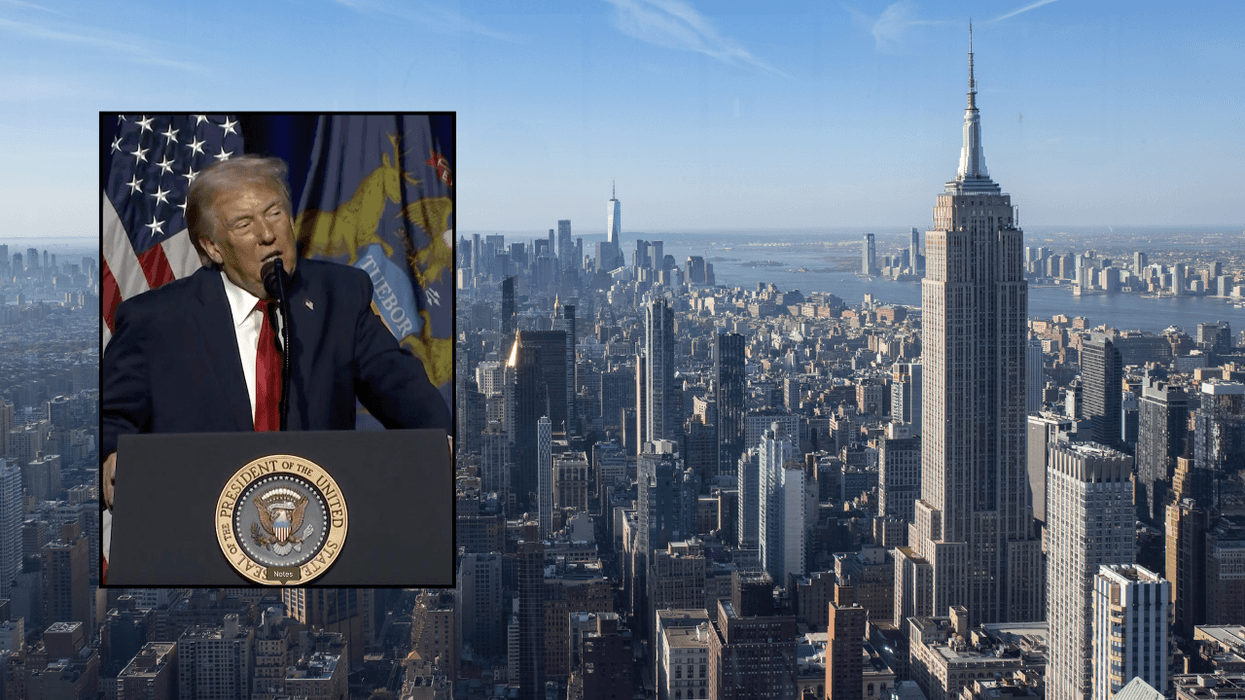

NEW YORK (BLOOMBERG) — President Donald Trump said he would cut off federal funding to so-called sanctuary cities at the end of the month in the latest escalation over immigration policy with Democratic jurisdictions.
Trump said his administration had also given "90-day notices" to states like California who would bill the federal government to defray costs associated with caring for new migrants.
"Additionally, starting February 1, we're not making any payments to sanctuary cities," Trump said, delivering an economic address in Detroit. "They do everything possible to protect criminals at the expense of American citizens, and it breeds fraud and crime and all of the other problems that come."
Washington provides money to states and cities that fund a range of programs and activities including health care, education and infrastructure. It was unclear which payments the administration was referring to and a White House spokesperson declined to comment further.
Trump's remarks are the latest example of the administration trying to use the federal-government purse strings to punish local governments that disagree with its positions on everything from diversity and inclusion practices to immigration enforcement. They also come as cities and states across the US are beginning to roll out budget plans for the upcoming fiscal year.
The federal government recognizes 12 states, four counties, 18 cities and the District of Columbia as "sanctuary jurisdictions," according to a list published on the US Department of Justice website.
Trump has threatened funding for such localities before. In April, the president posted on social media advocating for a halt in distributions. And during his first administration, the White House attempted a similar step which was blocked by federal judges.
Chicago Mayor Brandon Johnson called Tuesday's funding threat "blatantly unconstitutional and immoral." He added that the nation's third-largest city will challenge the matter in court. "We will be relentless until we restore every dollar."
In Denver, a spokesperson for Mayor Mike Johnston called the move "nonsense," noting the president doesn't have authority to withhold Congressionally appropriated dollars. While San Francisco's City Attorney David Chiu echoed the sentiment.
"We have already taken legal action to protect our federal funding, and we will continue to do so," he said in an emailed statement.
The White House and the mostly Democratically-led states and local governments have been sparring over policy differences for months, with many resisting Trump's mass deportation policies. Most recently, the administration has sent dozens of immigration officers to Minnesota, seizing on cases where Somali immigrants are accused of defrauding federal social safety net programs.
On Tuesday, Trump pitched his deportation effort as a panacea that could help reduce prices and shrink the federal deficit, saying fraud perpetrated by immigrants was "bleeding American taxpayers absolutely dry."
He also told attendees he would also seek to "revoke the citizenship of any naturalized immigrant from Somalia or anywhere else who is convicted of defrauding our citizens."
Democratic officials, including Governors Tim Walz of Minnesota and Gavin Newsom of California, have denounced instances of fraud but accused the administration of pursuing a political vendetta against their states by cutting funding from vital programs.
Economic Agenda
Trump's announcement comes as he seeks to sell his economic agenda to a public that has grown increasingly frustrated with the cost of living — in part by making a flurry of policy announcements that have generated headlines but so far have not been fully realized.
Earlier, the president said he would outline "even more plans" to address affordability in the coming weeks and pledged to drive down oil prices further.
"I'm going to provide much more detail about our housing policies, so that every American who wants to own a home, will be able to afford one," Trump said.
The president said his efforts would include a plan to be unveiled later this week for a "health care affordability framework" that would reduce premiums and drug costs — and a speech the following week at the World Economic Forum in Davos to detail his efforts to ban institutional investors from purchasing homes and cap credit card interest rates.
Still, Trump is facing increasing pressure to match his rhetoric with tangible action, and convince voters he's focused on their pocketbook concerns.
Open enrollment for Obamacare plans is expected to end later this week without a deal to extend critical subsidies, while the White House has done little to flesh out announcements that he would ban institutional home purchases or force credit card rate cuts. Similarly, Trump touted a threat to impose a 25% tariff on Iran's trading partners during his address, claiming the policy — which the administration has not yet explained or implemented — was already in effect.
It was about a half hour in before Trump mentioned the word "affordability," which has become a Democratic rallying cry. He declared that prices are going down and that economic indicators were good.
The speech before an audience of around 500 people detoured through some of his favorite topics, including airing grievances about the 2020 election results, mocking former President Joe Biden, criticizing Republican lawmakers who oppose his agenda and complaining about transgender women in sports.
Swing State Push
His trip to Michigan — a swing state that narrowly backed him in 2024 — follows travel to Pennsylvania and North Carolina in recent weeks and is part of an ongoing White House effort to win back voters ahead of the midterm elections.
Ahead of his remarks, Trump toured a factory that produces Ford Motor Co. F-150s and touted the company's previously announced plans to expand manufacturing operations in the US.
Michigan is dealing with one of the highest unemployment rates in the nation, though it trended downward in the second half of last year. Michigan's jobless rate was 5% in November, down from 5.5% in April, according to data from the Bureau of Labor Statistics. But that was partially driven by a shrinking labor force, with more than 55,000 fewer people in Michigan's workforce over the same period.
Inflation in the Detroit metro area picked up in December after trending downward in prior readings. The consumer price index advanced 2.1% year-over-year, according to BLS data. University of Michigan researchers expect inflation to rise to the 2.9%-3% range in 2026 as tariffs work their way into consumer prices.
More stories available on bloomberg.com.


