


NEW YORK (1010 WINS) -- In New York City, if someone calls 911 regarding a mental health crisis, there's an 86% chance the person who shows up is a police officer, not a mental health clinician or paramedic.
That's the reality despite the launch of a pilot program, B-HEARD five years ago under former Mayor Bill de Blasio. The program is meant to send mental health professionals for 911 calls instead of having police involved in certain non-violent crises. Advocates believe the program has not lived up to its promise. However, that characterization is one the city disputes, pointing to recent funding increases and a newly appointed deputy mayor overseeing the effort. The debate now sits at the center of Mayor Zohran Mamdani's campaign, which promises a $1.1 billion effort into a Department of Community Safety that the program B-HEARD falls under.
The Promise vs. The Reality
B-HEARD launched in 2021, sending teams of EMTs and mental health clinicians, without police, to certain 911 calls flagged as mental health emergencies. But, five years later, advocates say the promise hasn't caught up to the need.
"This has been a pilot... created in 2021 under then-Mayor de Blasio, and we are here five years later still talking about the big gaps that still exist in the program, " said Jonathan Chung, director of Public Policy and Advocacy for NAMI-NYC. “We would love to see the program operate citywide — unfortunately, it is only operating in about 40% of the city. "
The math tells the story. Last year, the city logged 47,656 mental health-related 911 calls in the areas where B-HEARD operates, but only 11,968 of those calls were even eligible for a B-HEARD response. And within that smaller pool, the teams still couldn't respond to every eligible call.
A January 2026 analysis by the city's nonpartisan Independent Budget Office confirms the scope of the gap: B-HEARD is currently operational in just 31 of the city's 78 NYPD precincts, which is only about 40% of the city. The IBO's data points to a specific mismatch: two of the areas with the highest rates of mental health-related 911 calls are Midtown South and the Chinatown/Little Italy/Bowery area, which have never been part of B-HEARD's service area at all. The IBO also mentioned a complicating trend: citywide call rates have actually dropped significantly since the program's launch back in 2021, though the office cautioned that doesn't necessarily mean fewer New Yorkers are in crisis. This could be linked to people being served by other city mental health resources instead.
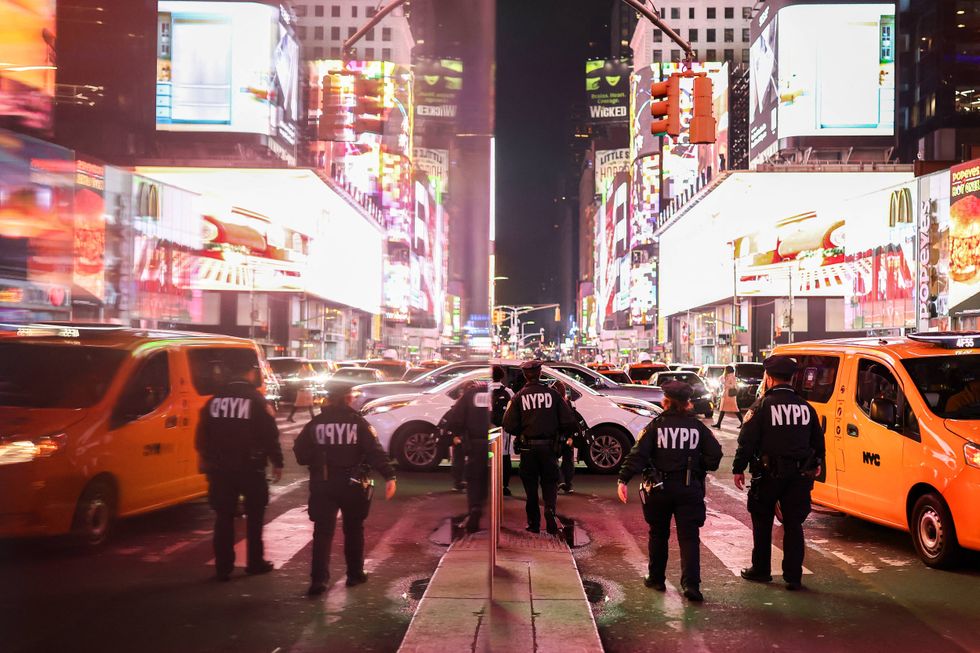 Midtown South is among the areas with the highest rates of mental health-related 911 calls.CHARLY TRIBALLEAU/AFP via Getty Images
Dr. Ayesha Delany-Brumsey, commissioner of the Office of Community Safety, said the coverage numbers reflect real growth, even if the program isn't where the administration wants it yet.
"We started this program in three precincts... we're in 31 precincts and the surrounding areas, " Delany-Brumsey said. "But we're still not covering the whole city. We know that the program does good work and there's significant promise here, but it's not where we want it to be.”
However, Chung thinks the core issue that is putting B-HEARD behind is staffing.
"There just comes a point where you do not have a sufficient staff level to operate, and unfortunately, in the places that they are already operating, you know, we do not feel that there is enough staff just for that alone, " Chung said.
"You can't build on a program... staffed right now by teams of EMTs and social workers. That's the real heart of the work," Delany-Brumsey said. "That isn't to say that we're ignoring the fact that hiring mental health professionals for EMTs is, of course, a challenge both in New York City as well as nationally. " She added that the program has grown from four teams a day to 18 teams a day since it launched.
Other advocates argue the problem runs deeper than staffing.
"B-HEARD is widely understood to be a failed program, " said Yul-san Liem, deputy director of the Justice Committee. "It has not meaningfully reduced police involvement in responding to mental health calls.”
Liem's organization, along with the DRUM racial justice group and dozens of others in a coalition called Correct Crisis Intervention Today, argues that B-HEARD should just be phased out completely and a new program needs to be put into place that favors a fully non-police crisis response system. They believe the program should first study others around the country, especially the ones that are working successfully.
The Human Cost
The stakes of a 911 response to a mental health emergency going wrong have played out publicly in New York City.
In 2024, Win Rozario, a 19-year-old Bangladeshi American, called 911 concerned during a mental health crisis at his family's home in Ozone Park, Queens. Within two minutes of arriving on March 27, NYPD officers Salvatore Alongi and Matthew Cianfrocco shot Rozario five times as he began to approach them holding a pair of scissors. Rozario was tased multiple times and his mother pleaded for officers to not shoot at her son. He was pronounced dead at a hospital.
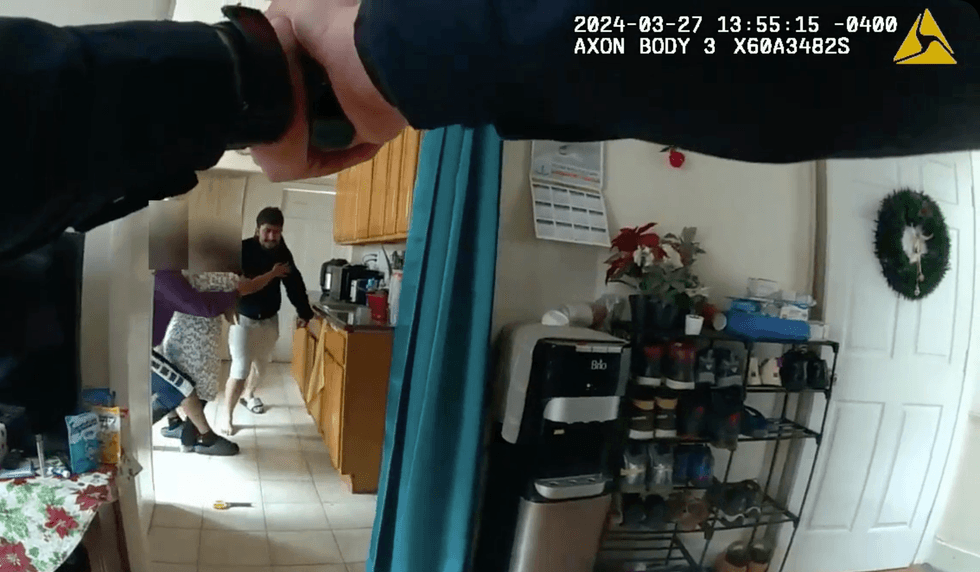 The shooting of Win Rozario was captured on police body-cam footage.New York Attorney General's Office
According to community organizers, it was the first time the NYPD had killed someone in New York's South Asian and Indo-Caribbean community.
"There's no proper mental health infrastructure in New York City for people to receive the care that they need, which is deeply concerning," said Simran Thind, Racial Justice and South Queens organizer for DRUM, who has worked closely representing the Rozario family.
Earlier this year, a somewhat similar case occurred in Queens. On Jan. 26, the family of 22-year-old Jabez Chakraborty, who has schizophrenia, called 911 asking for help after he began breaking glass in his home. The NYPD responded to this scene. According to police, Chakraborty grabbed hold of a kitchen knife and charged towards officers when they then opened fire. Chakraborty survived the four shots, but was severely injured. His family has since accused the NYPD of mistreatment after the shooting, including being asked about their immigration status, a potential violation of the city's sanctuary city law, that is still under investigation.
A review by the outlet THE CITY found that officers who had completed Crisis Intervention Training, a program designed to help de-escalate encounters with people in crisis, have shot or tased someone during a 911 mental health call at least eight times since 2019. Six of those cases ended with the person's death. Advocates point to these cases as evidence that training alone hasn't solved the underlying problem. The NYPD has said it remains committed to expanding CIT training department-wide.
Among them was Kawaski Trawick, a 32-year-old man killed by the police department after responding to a 911 call involving mental health issues.
"We worked very closely with the family of Kawaski Trawick, who was killed in his own home by two crisis intervention trained officers, " Liem said. To advocates, cases like his are proof that training alone doesn't fix the underlying problem.
"The NYPD is the wrong agency to be responding to people who need care, " Liem said.
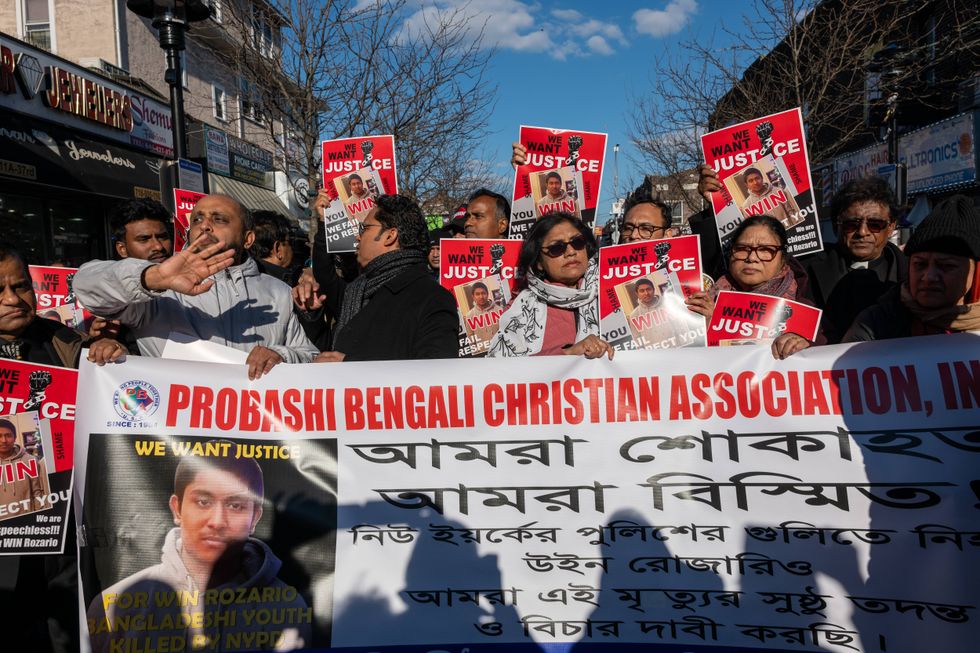 Activists, members of the Bangladeshi community and others turn out for a demonstration and vigil for Win Rozario on March 29, 2024 in New York City.Spencer Platt/Getty Images
Mamdani's Response
Following the Chakraborty shooting, Mamdani visited him in the hospital and reviewed police body camera footage of the incident. He responded with a sense of urgency surrounding his campaign promise: a new Department of Community Safety that would shift mental health response away from the NYPD.
"In meeting with the family, in visiting Jabez at the hospital, and in viewing this footage, it is clear to me that what Jabez needs is mental health treatment, " Mamdani said. "We are talking about a family that is enduring the kind of pain that no family should, and an individual that has lived with schizophrenia for many years, and we have known of the need of a department of community safety prior to this moment. This only highlights the urgency of that need. "
The mayor was then asked further about what his proposed department would do differently in a case like Chakraborty's where someone is in crisis and holding a knife.
"What these policy options include are various co-response models involving teams of behavioral health specialists, peer experts, and of course police so they can intervene when the need arises, " Mamdani said. "As I've said, when there is a violent situation such as with a weapon, NYPD will be on the scene."
In March, Mamdani appointed Renita Francois as deputy mayor for community safety, an interim office tasked with coordinating the city's mental health crisis response programs, which includes B-HEARD, while the fuller Department of Community Safety is built out. Chung said the funding so far falls way below the expected $1.1 billion Mamdani pledged on the campaign trail, landing closer to $200 to $300 million.
"We wanted to make sure that this was going to be something that addressed the entire continuum, " Chung said, arguing that crisis response is only one piece of what's needed. In addition, he believes more crisis stabilization centers, mobile treatment teams, and peer support is necessary and that doesn't currently exist at scale in the city.
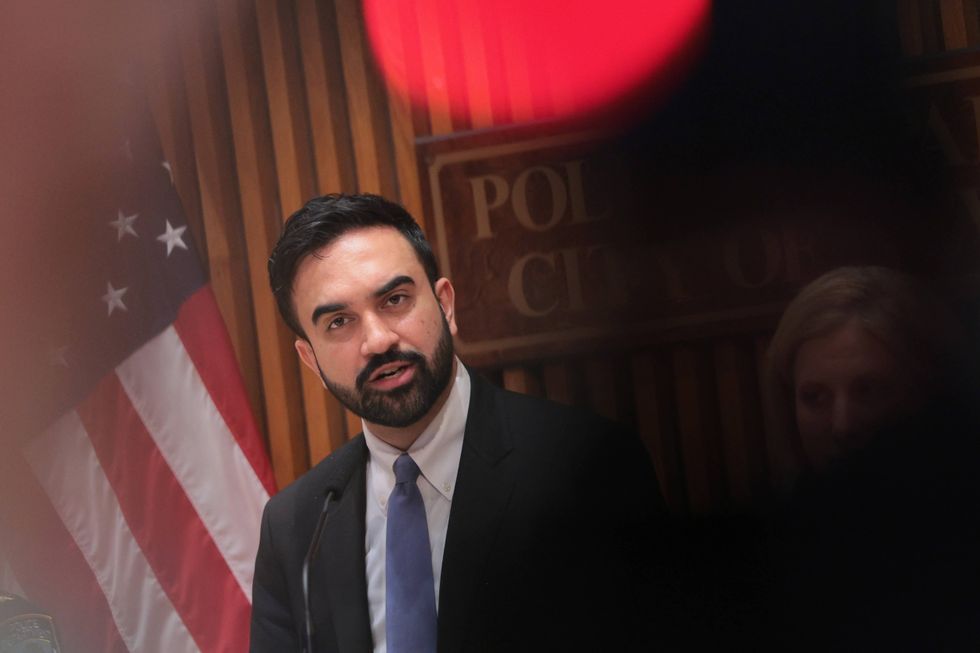 Mayor Zohran Mamdani speaks during a press conference at NYPD headquarters.Michael M. Santiago/Getty Images
Delany-Brumsey described the Office of Community Safety, which she leads, as within the Mayor’s Office for now, with the explicit goal of eventually becoming its own independent city agency. Her office's mandate extends beyond B-HEARD, also covering gun violence prevention and responses to domestic and gender-based violence and hate crimes.
When asked for a timeline on that expansion, Delany-Brumsey, who is just over two months into the role, said the administration is trying to balance speed with a durable foundation.
"We've already started looking at how quickly we can expand... we're trying to move quickly, but also thoughtfully, " Delany-Brumsey said. "We want to make sure that we are building a really strong foundation so that this is the kind of program that will outlast all of us in our roles."
Looking Elsewhere for a Model
As New York tries to figure out its own path forward, one of the country's highest achieving cities with a 911 mental health crisis response model is Denver. The city's STAR program sends a mental health clinician paired with an EMT, meaning no police are involved at the scene. However, the 911 calls are labeled as low-risk meaning they’re non-urgent incidents where there is no immediate threat to life, safety, or property.
"The biggest thing is having a fourth response option in the field that is not necessarily police officers and or an ambulance or the fire department, " said Tandis Hashemi, STAR's operations manager in Denver.
Hashemi said a large share of STAR's calls actually come from police or EMS themselves, redirecting a scene once they’ve determined it doesn't require a law enforcement response. But she cautions that no city can simply copy another's program wholesale.
"I think the most important thing is to really identify the needs of the community, " Hashemi said, adding that every city's approach should be shaped around its own specific gaps and resources.
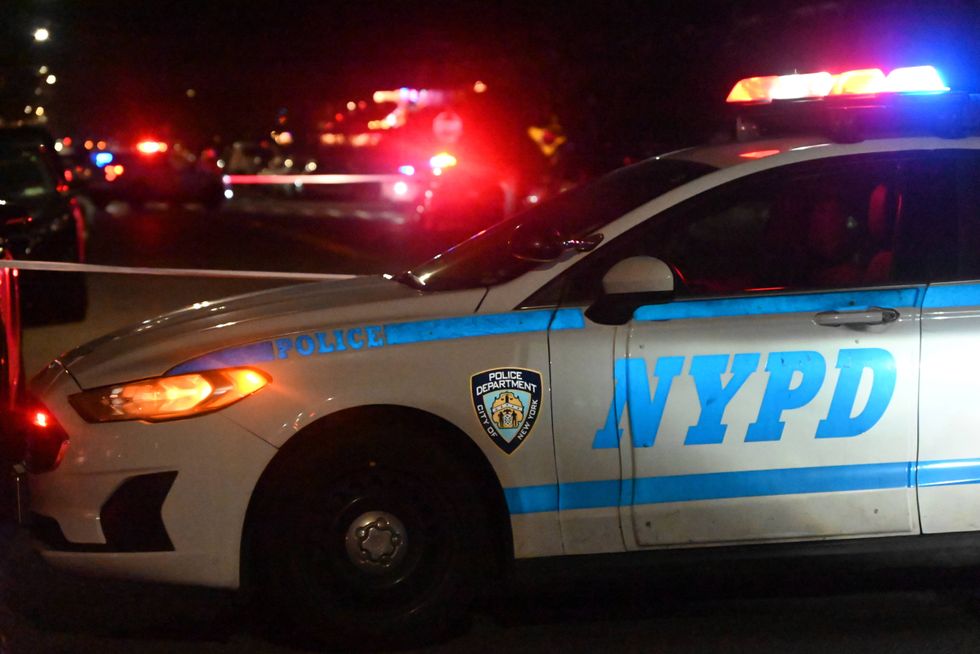 1010 WINS reached out to the NYPD and the Mayor's Office for comment on the criticisms raised by advocates in this story. The police department did not respond to that request for comment.Kyle Mazza/Anadolu via Getty Images
Delany-Brumsey said that type of cross-city learning is definitely a key aspect of how her office operates. In a previous role, she helped launch a national initiative studying non-police crisis response programs across the country.
"There's no reason to reinvent a wheel that's already been built, " Delany-Brumsey said, pointing to Denver's STAR program and similar models nationwide. But she noted New York's scale sets it apart from nearly every other city attempting this kind of reform. "New York is a really exceptional system. We have a massive 911 system and we're obviously a city of nearly 9 million people. We look very different from other jurisdictions, but that doesn't mean that we can't learn from the good work that's happening all across the country. "
Where Things Stand
1010 WINS reached out to the NYPD and the Mayor's Office for comment on the criticisms raised by advocates in this story. The police department did not respond to that request for comment.
Six months into his term, Mamdani has increased funding for B-HEARD and appointed a deputy mayor to help oversee the city's broader mental health response strategy. What's not in dispute is the central number: when someone calls 911 in a mental health crisis in New York City, it's still overwhelmingly a police officer, not a clinician, who responds first.
"We're not starting from scratch," Delany-Brumsey said. "This program right now is still responding to thousands and thousands of New Yorkers and providing exceptional care when we are there. We're able to keep more than 40% of the people that we respond to, we're able to avoid having to take them to hospitals, we're connecting them with care in the community, in their schools.”
She recalled visiting a high school early into her position overseeing the program, where a B-HEARD team spent more than an hour with a student who had made comments about self-harm. After building trust with the student, B-HEARD was able to work with the school and the student's family. "There's gaps," Delany-Brumsey said, "but there's these moments of incredible... an inflection point that can happen in people's lives when they show up."
The city says the growth is coming. Advocates say it can't come fast enough. Only time will tell which version of B-HEARD New York actually gets.