
NEW YORK (1010 WINS) — The MTA will be targeting homeless outreach at eight subway stations where it’s found the “vast majority” of homeless New Yorkers seek shelter, the MTA’s safety chief said Monday.

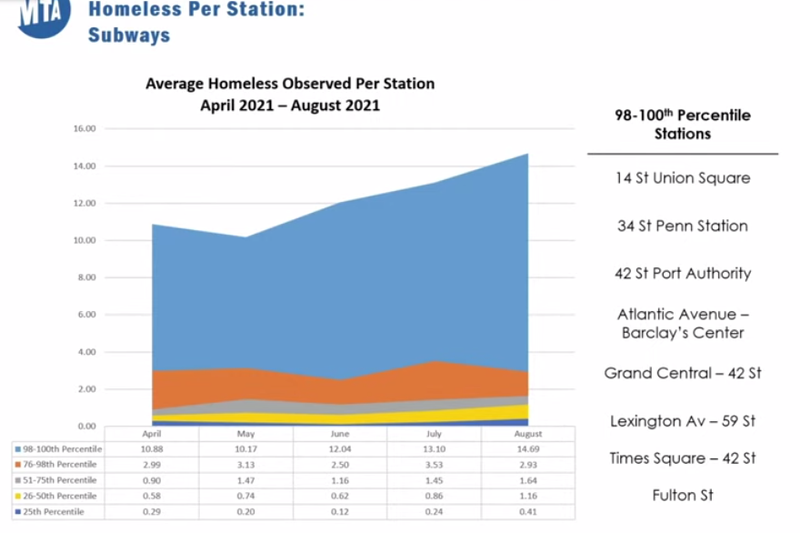
While the overall number of homeless sheltering subways has remained relatively stable over the summer, the targeted eight stations have experienced a concerning uptick, according to MTA Chief Safety Officer Patrick Warren.
“The vast majority of the homeless that we see in the system are sheltering at those 8 stations — so again that allows us to focus our resources at those stations,” Warren said at an agency committee meeting Monday.
These eight stations have experienced a 44% increase in homelessness over the summer months, with an average of 14.7 people seeking shelter inside this August — up from an average of 10.2 homeless people in May.
The stations are all major transit hubs and all but one are located in Manhattan, including 14th Street-Union Square; 34th Street-Penn Station; 42nd Street-Port Authority; Atlantic Avenue-Barclays Center, among others.
The rest of the system has seen a negligible difference in homeless populations during that window, according to MTA data.
Warren said that the MTA has been undergoing a monthly survey of the homeless New Yorkers because the city’s annual winter count — the Homeless Outreach Population Estimate (HOPE) — was inefficient in helping understand where people were actually taking shelter in real-time.
“The problem with the HOPE count is it is just a one-point-in-time count which is interesting at the moment but we usually don’t get the result until four months later,” Warren said.
The MTA will be able to collect data on homelessness by the hour using its own system, Warren said — though he did not clarify what kind of outreach the MTA would prefer in the system. The MTA has called for the city to direct more police to address subway homelessness, a method advocates have opposed as harmful.
“This is particularly valuable because this is a data-driven approach to understanding where the homeless are and how we can support them, provide outreach to an at-risk group,” Warren added. “We can use our scarce resources by targeting using information like this.”
The MTA on Twitter encouraged riders to request homeless assistance through an online portal on its website.
"Hello there, like you we're heartbroken to see so many individuals using our system for shelter and we need specific information to send help," the agency tweeted.
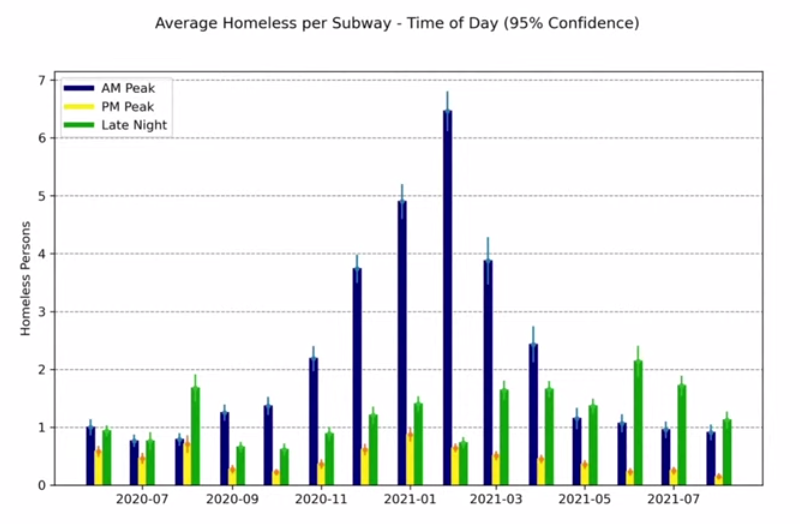
The MTA’s own figures show a decrease in the number of people seeking shelter in subway cars since the cold winter months, when the MTA counted eight homeless people seeking shelter per train— mostly during the morning rush hour. That number dropped to about three people in August, according to MTA data.