



What you need to know:
• In New York City, the rat population is about 25% the size of human population – that's about 2 million rats!
• They begin mating at two or three months old and produce litters of about a dozen "pups" every two months.
• Research continually shows that rats have highly evolved cognitive and emotional capacities.
• Detailed research clearly shows rats cut deals and trade different favors with one another (they follow "tit-for-tat" when trading grooming for food and food for grooming); know when they've forgotten something; dream of a better future (just as humans do); display empathy for other rats by reading pain in their faces; save drowning rats rather than eat chocolate; play, laugh, and like to be tickled; tell you they're happy by relaxing their ears; regret what they didn't do and recognize what might-have-been; and free familiar trapped rats from being restrained.
• Rats don't sweat like humans or pant like dogs. They can also overheat very easily.
• Their tails help them release excess body heat when they are hot.
Rats actually do have hair on their tails. They also have very short and stubby bristles on their tails.
• These tiny hairs help them to keep their balance. The hairs stick to things helping the rat cross narrow paths or climb around. Rats will wrap their tails around things when they are climbing or trying to balance on something, and the little sticky hairs are just an added bonus.
• Their tails are reminiscent of snakes – humans have an ancestral fear of snakes dating back hundreds of thousands of years.
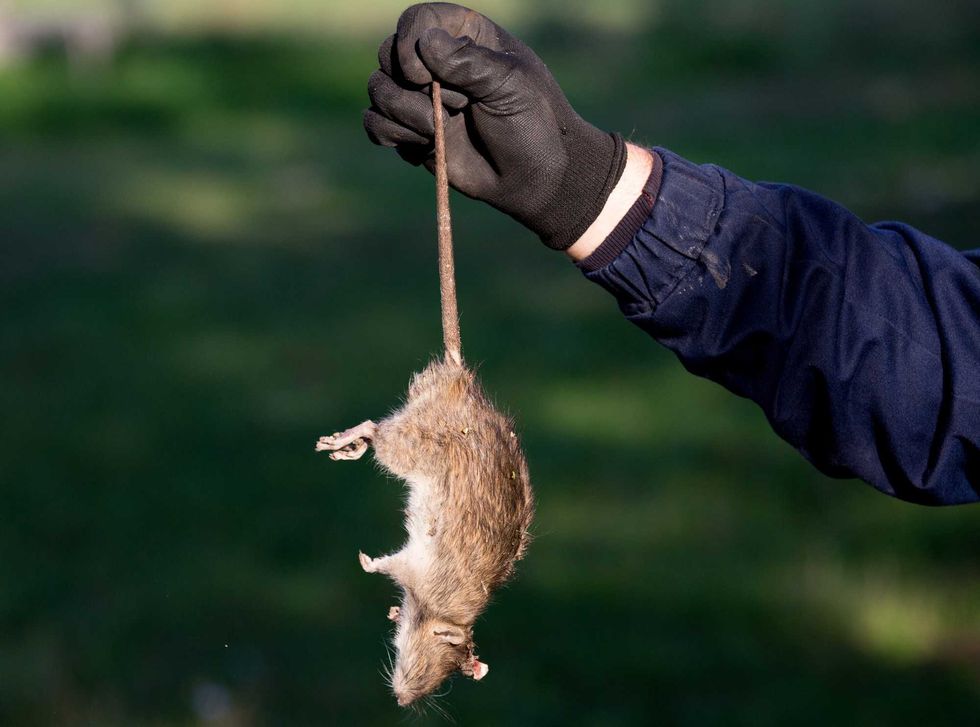 Farmer with protective gloves holding dead rat for tail on farm. Rodenticide concept in agricultureGetty Images
What the experts are saying:
• Dr. Robert Corrigan has over 30 years of experience as a self-proclaimed "ratologist."
• He says that despite their appearance, rat tails - and most other rodent tails do have hairs on them. They're just "sparse."
• He also believes that the repulsion and fear felt by most humans is psychological due to the way that rodents move and the similarities to snakes, especially in the dark.
In this inaugural episode of "Your Weirdest Fears," listen as host Larry Mullins sits down with "ratologist" Dr. Robert Corrigan to discuss the rationality behind the fear of rodents and why their tails might just be one of their most important assets.