



NEW YORK (BLOOMBERG) — New Jersey Transit is about to take the world stage. The question is whether it will be able to handle the spotlight.
The rail system is gearing up to shuttle 40,000 fans to each of eight World Cup soccer matches being held at New Jersey’s MetLife Stadium over the course of a month starting in mid-June. Riders, including foreign visitors, will rely on it as a vital link to one the biggest global events of the year, and its performance will serve as a proxy for the nation’s logistical capability as a co-host.
Yet just before the games are set to begin, NJ Transit is struggling to manage regular service.
In the past few weeks alone, a series of mishaps and snarls resulted in commuter chaos that left passengers furious. Two separate fire incidents on Amtrak infrastructure on different days halted train service in and out of New York’s Penn Station, with the most recent episode last Friday causing delays that stretched into the weekend.
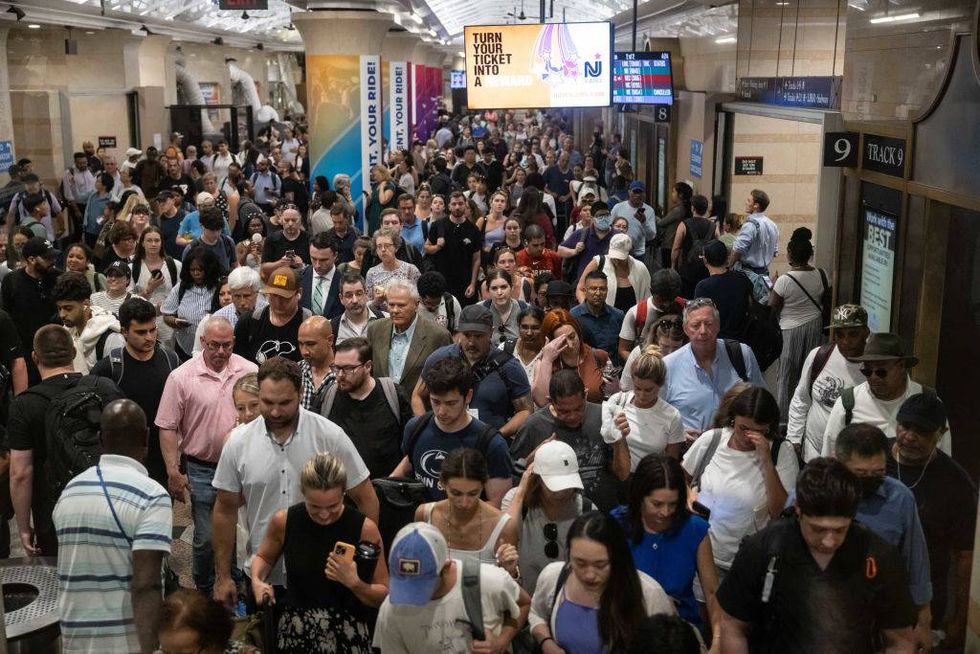 Weekday commuters at the New Jersey Transit train platform at Penn Station in New York.Bloomberg
For regular riders, it’s what they’ve come to expect from an aging system running on creaky infrastructure and prone to breakdowns. But the World Cup’s arrival raises the stakes. Spectators who will be shelling out $98 for a round trip to the Meadowlands will expect smooth service. For many fans, it may be their best option.
Transit officials point to years of preparations, including planned service add-ons, rail improvements and contingencies that they say will allow NJ Transit to meet the moment. Experts warn that the risk of major disruptions can’t be entirely eliminated, with the onset of summer heat only adding to the stress.
“Even the best-laid plans oft go awry because it is equipment failure that is interacting with an aging infrastructure,” said Alex Ambrose, a senior policy analyst focusing on transportation and climate issues at New Jersey Policy Perspective, a think tank that works to advance economic, social and racial justice. “Having more trains can only do so much when you have some of the oldest infrastructure in the country trying to get it there.”
'Far Behind'
While the dilemma of aging infrastructure is a US-wide issue, it’s compounded in the New York area, one of the country’s busiest rail passages.
The problem stems from the antiquated rail system owned by Amtrak, the national carrier, which is the platform that serves its trains as well as NJ Transit’s into Manhattan. Overhead electrical lines called catenary wires droop in very hot weather, causing meltdowns that suspend service or force major delays on both passenger rail lines, according to Ambrose. Pantographs, arm-like mechanical devices that attach to the electrical wires and transfer power to trains, need to be upgraded, she said.
“The world will get a glimpse of how things operate in our interstate transit system — which is far behind places like in Europe or East Asia — and showcases the comparatively low investment that the US has made in comparison to those other countries in public transit versus car-based transportation,” said Sarah Kaufman, director of the NYU Rudin Center for Transportation.
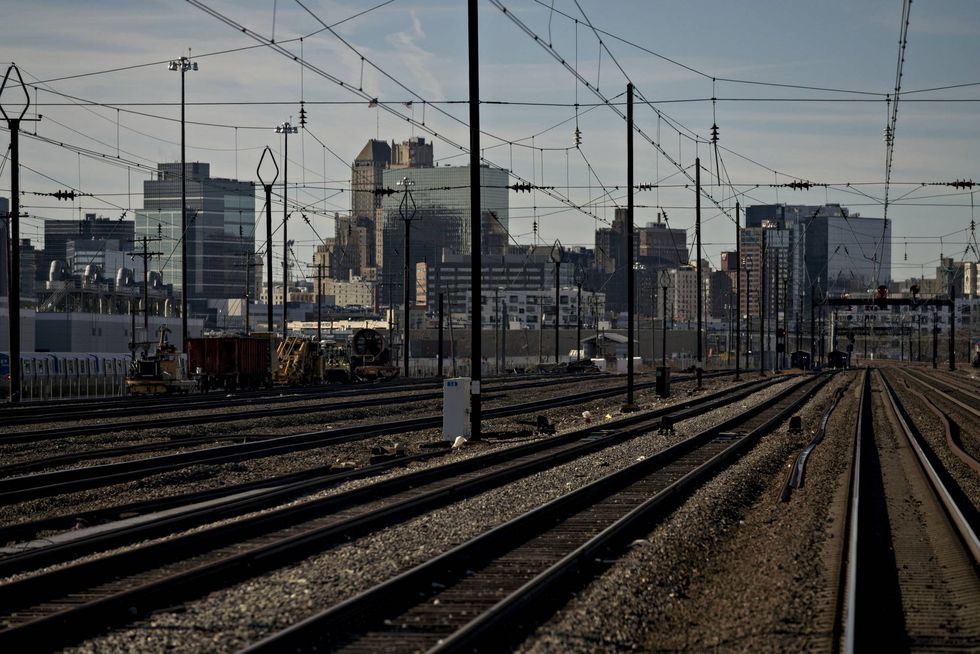 Catenary wires and train tracks on Amtrak’s northeast corridor line in Newark, New Jersey.Bloomberg
Adding to the challenge is the potential for another major sporting event to coincide with the World Cup games. The New York Knicks basketball team is playing in the NBA Finals in Madison Square Garden — which sits above Penn Station — for the first time since 1999. If the series goes to a sixth game, it will be held June 16, when France and Senegal go head to head at MetLife. The resulting travel mash-up could get complicated.
It was never going to be easy transporting tens of thousands of soccer fans between Manhattan and New Jersey. With parking prohibited at MetLife for security reasons, and taking a taxi or ride-share likely meaning sitting in long lines, rail has emerged as a go-to option. Fans also have the option of taking a $20 round trip FIFA shuttle bus from three locations in midtown Manhattan and also from Clifton, New Jersey, although those vehicles may run into heavy traffic.
Game Plan
NJ Transit’s plan for the World Cup involves running more trains and restricting New Jersey-bound service from Penn Station to MetLife for four hours before a match, and allowing only people attending that day’s contest to board trains. It has also developed contingency plans in the event of major service disruptions. The agency would run buses from loading areas near Penn Station that would take people to the matches.
“NJ Transit has been working closely with our transportation partners for two-plus years in preparation for the FIFA World Cup, and we are confident in the plans that have been developed to move large numbers of customers safely and efficiently,” Jim Smith, NJ Transit’s chief communications officer, said in a statement.
Amtrak, for its part, will increase maintenance employees and rescue locomotives at major locations to deal with possible service issues quickly. Gery Williams, Amtrak’s chief operations officer, said the agency is “fully committed to ensuring a safe and seamless World Cup experience,” citing $30 million spent to improve infrastructure and address specific locations that could be at risk with heavy usage.
New Jersey officials have asked regular commuters to adjust their work schedules or work from home on match days. In New York on Thursday, Mayor Zohran Mamdani and Governor Kathy Hochul outlined their own plans to accommodate the anticipated tourist surge, which they hope will bring an economic boost to the region.
Rick Caston, a New Jersey commuter who works in construction management and commutes into Manhattan from Red Bank five to six days a week, plans to avoid heading into the city on match days or will take the Path train, another commuter line, instead.
“I think it’s great,” Caston, 64, said about the tournament. “But the change of service is atrocious.”
Despite all the planning, demand for World Cup rail passes has been tepid so far, even after a cut in price following widespread pushback. Fans purchased about 21,350 World Cup rail tickets as of Friday morning, according to NJ Transit’s Smith. That’s just 6.7% of the 320,000 rail passes available during all eight matches at MetLife, though many prospective passengers may be waiting to buy their tickets closer to the start of play.
Success with Swifties
As challenging as the logistics will be, NJ Transit is no stranger to shuttling large crowds. MetLife is home to both the New York Giants and the New York Jets football teams and the commuter rail regularly carries football fans to games at the stadium. Riders also praised the agency in 2023 when it shuttled 80,000 passengers without any major problems to three Taylor Swift concerts during a Memorial Day weekend.
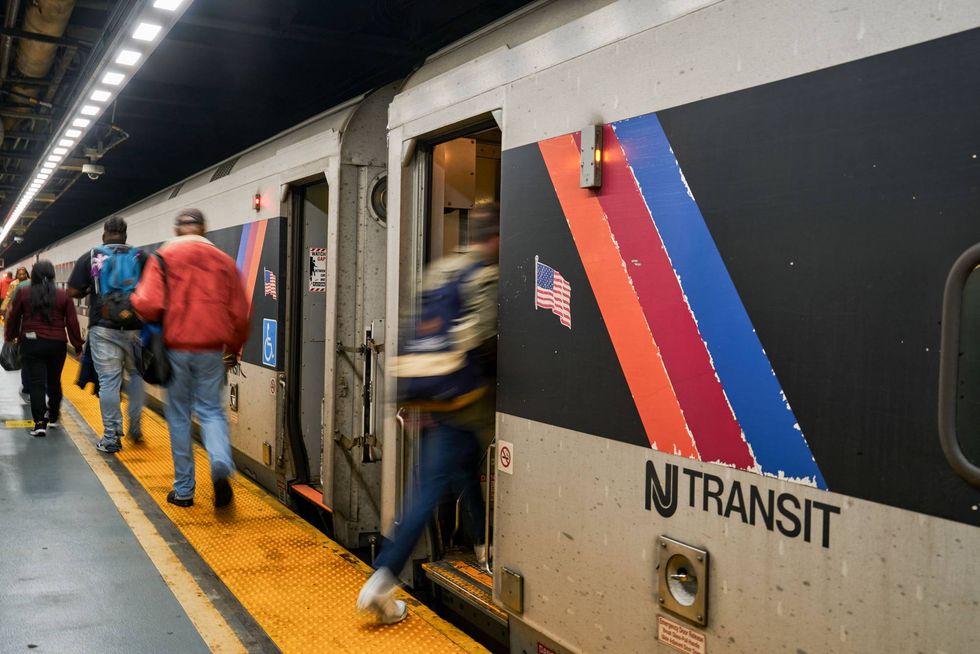 NJ Transit train.Bloomberg
“It’s not something they’re not accustomed to dealing with, but obviously this will be unique and it will be a challenge,” said New Jersey state Senator Patrick Diegnan, who represents Middlesex County and chairs the Senate Transportation Committee. “I have confidence they know what they’re doing.”
Daily riders who have had their commutes blown up by glitches and delays might have a different assessment. In addition to the recent troubles, NJ Transit rail service struggled amid major snowstorms in January and February, and during the transfer of wires and electrical systems to a new Portal North Bridge over the Hackensack River. On-time performance across the rail system decreased year-over-year in the first four months of 2026, according to NJ Transit data.
“The delays have never been worse in the past two months,” Caston, the New Jersey commuter, said.
For Ambrose of the New Jersey Policy Perspective, it’s not a case of if, but when the rail line will suffer another disruption. Likely heat waves in the weeks ahead won’t help.
“It’s inevitable that we’re going to see more transit breakdowns this summer,” Ambrose said. “Heat waves are going to happen. They already have happened this year and they’re going to continue to happen.”
For World Cup fans who scored hot tickets, the hope is that getting to the match won’t turn into a hot mess.
More stories available on bloomberg.com.


