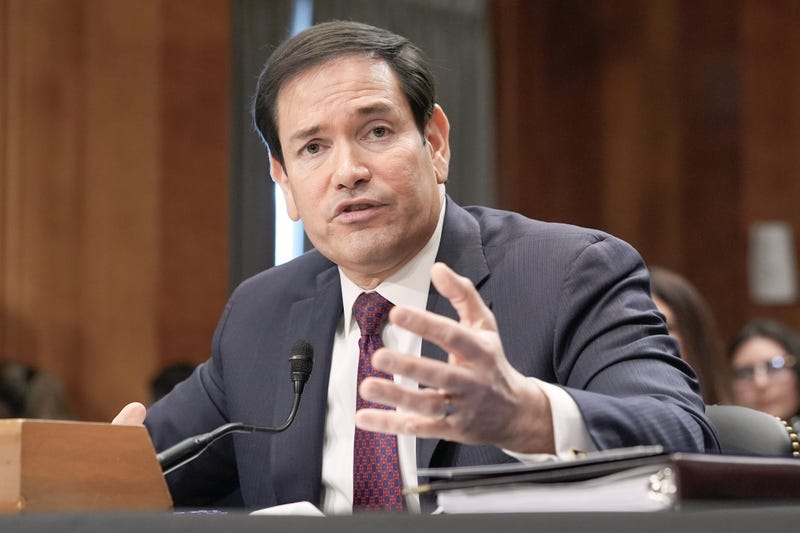
MUNICH (AP) — An annual gathering of top international security figures that last year set the tone for a growing rift between the United States and Europe opens Friday, bringing together many top European officials with U.S. Secretary of State Marco Rubio and others.
The Munich Security Conference opens with a speech by German Chancellor Friedrich Merz, one of 15 heads of state or government from European Union countries whom organizers expect to attend.
The many other expected guests at the conference that runs until Sunday include Ukrainian President Volodymyr Zelenskyy and Chinese Foreign Minister Wang Yi. In keeping with the conference's tradition, there will also be a large delegation of members of the U.S. Congress.
“Trans-Atlantic relations have been the backbone of this conference since it was founded in 1963 ... and trans-Atlantic relations are currently in a significant crisis of confidence and credibility,” conference chairman Wolfgang Ischinger told reporters earlier this week. “So it is particularly welcome that the American side has such great interest in Munich.”
At last year's conference, held a few weeks into U.S. President Donald Trump's second term, Vice President JD Vance stunned European leaders by lecturing them about the state of democracy on the continent.
A series of Trump statements and moves targeting allies followed in the months after that — including, last month, his later-abandoned threat to impose new tariffs on several European countries in a bid to secure U.S. control of Greenland, a semiautonomous territory of NATO ally Denmark.
With Rubio heading the U.S. delegation this year, European leaders can hope for a less contentious approach more focused on traditional global security concerns, though a philosophically similar one. Rubio will face a heavy lift if he wants to calm the waters, however.
“In the end it’s about trust: do we trust each other as partners and can this lack of trust be repaired?” said Claudia Major, a senior vice president at the German Marshall Fund in Berlin. “Particularly Greenland has been a fundamental change for Europeans. That one NATO ally threatens another NATO ally has deeply affected European trust in the trans-Atlantic relationship.”