

The Tigers don't spend like they used to, and that's probably a good thing. But you can no longer say they don't spend to win. You can say they spend prudently, perhaps more shrewdly, certainly less impulsively. But you cannot say they don't spend enough.
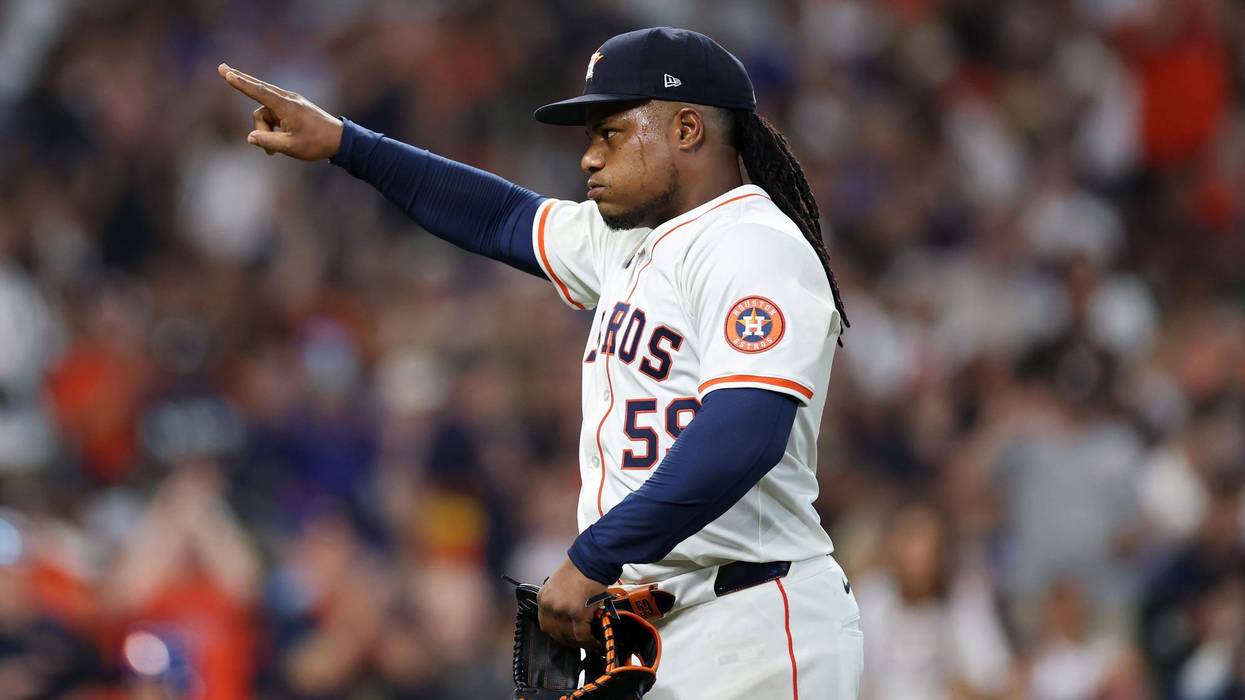
The Tigers of yesteryear might have already signed Tarik Skubal to a market-setting mega-extension, reaped the early rewards and then swallowed the diminishing returns. The Tigers of today instead signed Framber Valdez to a three-year, $115 million contract that both makes Valdez the highest-paid left-lander in MLB history and protects the Tigers against his decline and Skubal's likely departure next winter.
Valdez has won the most games in the majors while posting a 3.20 ERA over the last five years. The Tigers will be paying handsomely for his age-32, 33 and 34 seasons. Every big contract is a risk. But in the case of Valdez, the risk is somewhat reduced by his repertoire. He doesn't rely on overwhelming velocity or pitch in a way that portends a sudden plunge. It feels like an arm, and an investment, that should age well.
Skubal deserves all the money coming his way when he hits free agency next offseason. He's the best pitcher in baseball at the peak of his powers, which is worth whatever the Dodgers or Yankees or Mets say it is. An eight-year $400 million deal is well within his reach. A few franchises are built to endure the downside of that pact in, say, 2031 when Skubal is age 34 and no longer worth $50 million a year for the next four seasons. The Tigers realistically aren't one of them.
Are the Tigers built to endure the loss of Skubal? That's a fair and legitimate question for a club that was 22 games over .500 the last two seasons when Skubal pitched and exactly .500 when he didn't. And it's impossible to answer without knowing how potential pillars like Jackson Jobe, Kevin McGonigle and Max Clark develop over the next couple years. But with Valdez in the fold through at least 2027, when he can opt out of his deal, the Tigers are certainly better positioned to keep winning in Skubal's wake.
No, Chris Ilitch doesn't cut checks like his late father Mike, who was chasing a championship at all costs in his final years. Ill-advised contracts for fringe and fading stars like Justin Upton and Jordan Zimmermann ballooned Detroit's Opening Day payroll in 2017 to about $200 million, a high-water mark for a franchise that was already sinking. It was the sixth year in a row that the Tigers had one of MLB's five largest payrolls and the 10th out of the last 11 years in which they ranked in the top 10.
In the past two years, the Tigers have died on the doorstep of the ALCS. In the past two days, they took on about $70 million in salary for 2026 as they aim to break through the Division Round wall. They are hunting their first World Series since 1984. With Skubal's salary locked in at $32 million after he beat the Tigers in a historic arbitration hearing this week, Detroit's Opening Day payroll is projected to be about $215 million, which will rank right around the top 10 in the sport and leave the rest of the AL Central crying poor in the dust.
We can't really say that the Tigers are spending more than ever before. Adjusted for inflation, their hefty payrolls in the 2010's still exceed by a pretty good margin what they're spending now. ($200 million in 2017 equates to about $265 million today.) We can say they are once again spending with a purpose. The Tigers have invested about $254 million into their roster this offseason, per Spotrac, seventh most in the majors between the Yankees and the Cubs.
Theirs is not an offseason beyond reproach. Scott Harris is placing a massive bet on his offense improving from within, and proving him right. If it doesn't -- if the same names really do equal the same team -- you can no longer assume that Harris won't splurge on a bat at the deadline. He already parted with a high draft pick to sign Valdez, who was attached to a qualifying offer. That's one of the upshots here. Conservative to a fault as the Tigers climbed into contention the past two years, Harris has earned some benefit of the doubt.
To be fair, Harris said all along that he would spend when the time was right. The Tigers took a big swing last winter on Alex Bregman, who was coming to Detroit until the Red Sox swooped in with a payday that he couldn't refuse. He cashed in, opted out and left Boston after a year for a long-term deal with the Cubs. The Tigers might come to the same end in two years with Valdez, but the stability of his arm over that stretch should be well worth the possibility of an early exit.
The Tigers exited early the last two Octobers. With Skubal and Valdez atop their rotation, they could be as tough an out as any team in the American League this year. They have also fortified a bullpen that wobbled last season, especially down the stretch. Perhaps the pitching staff will be strong enough to lift an offense that's merely average if some of the concerning trends from the end of last season continue into this one. (And there were plenty.) Ideally, Harris will add help where the club needs it.
The Tigers don't really get credit for adding Skubal's salary; they had no other choice after he and Scott Boras obliterated Detroit's $19 million offer. They do get credit for bolstering the team around him, especially when it was widely presumed that they would only reach back into their pockets if they beat Skubal in arbitration. They didn't sign Valdez as an excuse to turn around and trade their best player. That's what a cheap organization might do.
Can no longer say that about the Tigers.