


Media release provided by SCDNR.
CHARLESTON, S.C. — The South Carolina Department of Natural Resources (SCDNR), in partnership with Coastal Conservation Association (CCA) South Carolina and Steven’s Towing Company, has deployed a decommissioned Navy torpedo recovery vessel (TWR-8419), known as the HAZAR, as part of the state’s Marine Artificial Reef Program.
The vessel, abandoned for more than four years, was recently removed from the marsh following an SCDNR investigation that resulted in the arrest of the responsible party.
Before deployment, the HAZAR underwent an extensive environmental cleaning process led by Steven’s Towing. Crews removed all fuel, fuel cells, hydraulic fluids, motors, and any other materials that could pose a risk to the marine environment. This labor-intensive effort ensured that the vessel was environmentally safe and ready to serve as a productive reef structure.
The TWR-8419 (HAZAR) was deployed on Sunday, December 7 at the Y-73 reef site off the South Carolina coast. Planning and coordination remained tentative throughout the process, as the final deployment decision depended entirely on weather and ocean conditions.
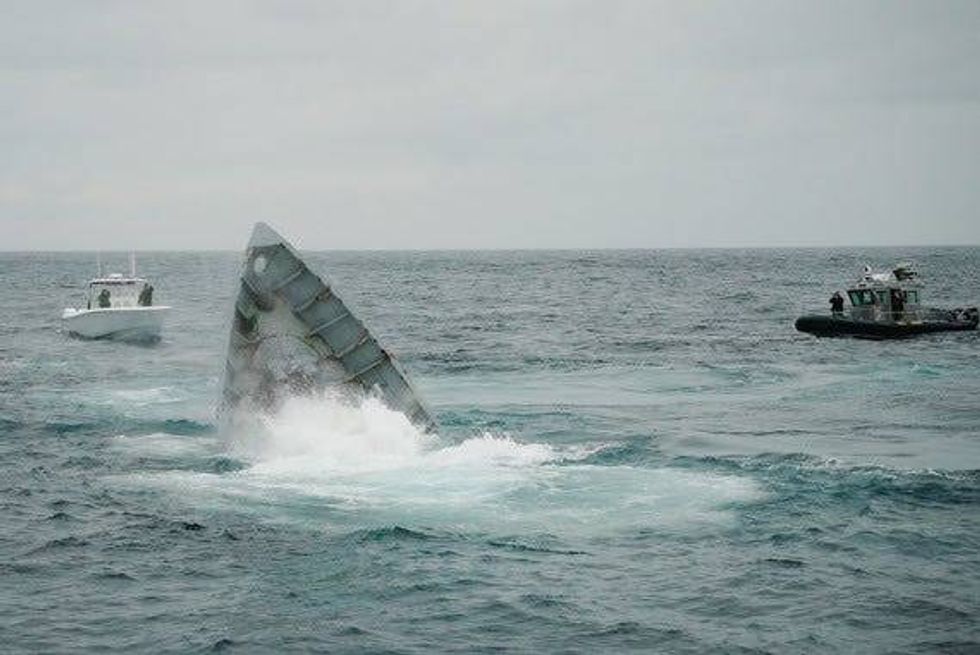 The TWR-8419 was deployed on Sunday, December 7 off the South Carolina coast.SCDNR
This project is partially funded through support from CCA South Carolina and marks the 25th reef deployment completed through the longstanding partnership between SCDNR and CCA. It also marks the 612th artificial reef deployment completed by SCDNR. Artificial reefs provide critical habitat for marine life, enhance recreational fishing opportunities, and contribute to the overall health of South Carolina’s coastal ecosystem.
“CCA South Carolina, its members, supporters, and partners are dedicated to creating and enhancing vital marine habitat and healthy fisheries along South Carolina’s coast — provide one, and you sustain the other,” said Scott Whitaker, executive director of CCA South Carolina. “Reefs of this nature benefit species ranging from the snapper-grouper complex to highly migratory species, providing a wide abundance of fish and marine life, making it a true destination for recreational anglers and diving enthusiasts for decades to come. The curating and deployment of this reef is a testament to the state and the people of South Carolina’s enviable marine conservation heritage and recreational anglers’ role in the wise stewardship of our marine resources. We are honored to be a part of such a unique opportunity.”
State Senator Chip Campsen, a longtime conservation champion and author of South Carolina’s abandoned vessel law, collaborated with SCDNR to make the HAZAR an artificial reef. “This is exactly what responsible stewardship looks like—protecting our marshes by removing a dangerous derelict vessel, holding the owner accountable under the new law, and then using that recovered asset to strengthen our offshore reef system. It’s a triple win for the environment, for coastal protection, and for the people of South Carolina.”
Senator Campsen continued, “SCDNR’s work converting the HAZAR from an environmental threat into a marine habitat is a shining example of how good policy, good science, and good governance come together. I am proud of the SCDNR leadership and the entire team for seeing opportunity where others only saw a problem."
“This project reflects the very best of conservation partnership,” said Dr. Tom Mullikin, SCDNR Director. “Through collaboration with CCA South Carolina and Steven’s Towing, we’ve turned an abandoned vessel — once an environmental liability — into a valuable habitat that will benefit marine species, anglers, and coastal communities alike. It’s a powerful reminder that when we work together, we can transform challenges into opportunities for stewardship and sustainability.”