

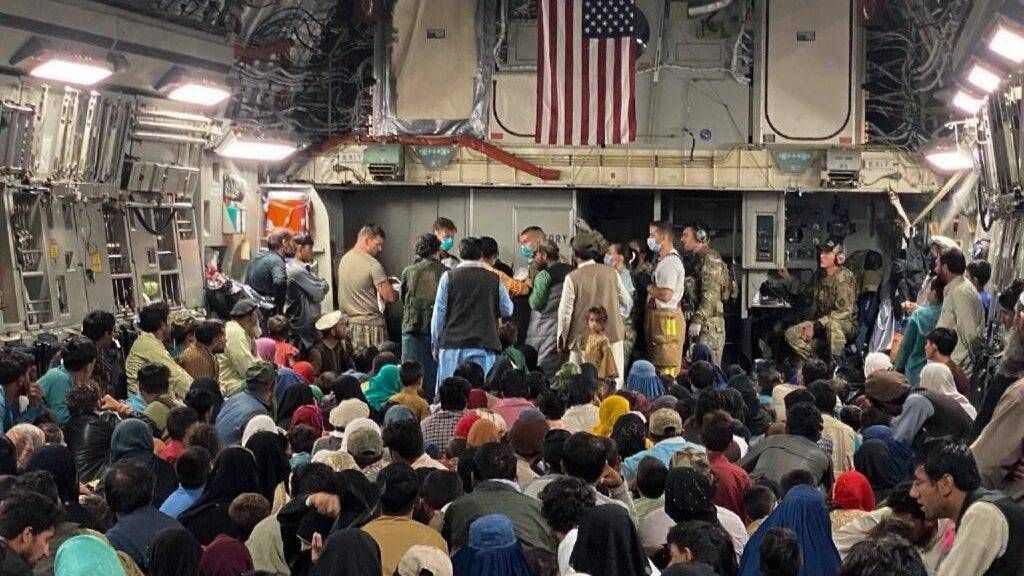
In less than a week, the U.S. Military has evacuated over 100,000 U.S. citizens, Special Immigrant Visa applicants, and at-risk Afghans from Afghanistan in one of the largest airlift operations in history. In addition to the logistical challenges, the extraordinary movement comes with medical complications as well.
In support of Operation Allies Refuge, numerous U.S. Army health clinics across Germany have volunteered medical experts to help with patient care requirements of evacuees at Ramstein Air Force Base, Germany.
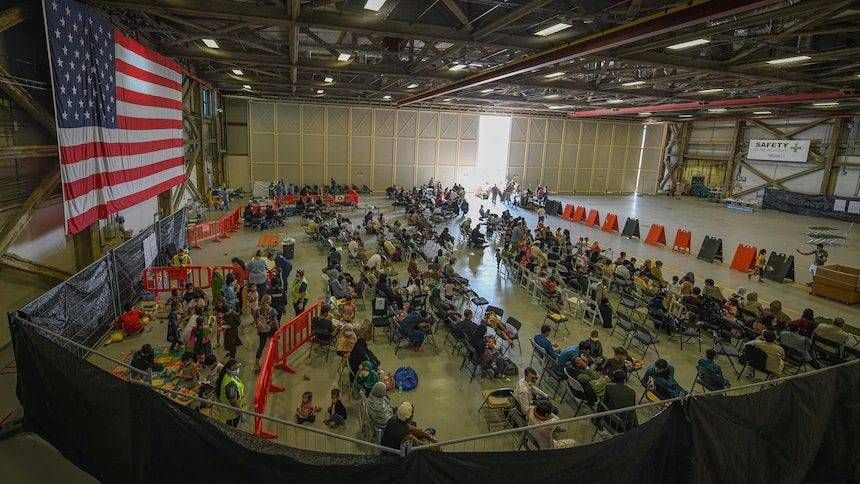
“In the span of only a few long days, Ramstein Air Base transformed into U.S. European Command’s primary evacuation hub supporting one of the largest, most complex humanitarian airlift operations in history,” said U.S. Air Force Brig. Gen. Josh Olson, 86th Airlift Wing Commander. According to Ramstein Air Base, as of Aug. 27, more than 18,700 evacuees have come through Ramstein Air Base from Al Udeid Air Base, Qatar and Kabul airport, Afghanistan with more than 4,100 evacuees departed to the U.S.
U.S. Air Force Lt. Col. Michelle Hufstetler, a registered nurse with the 86th Medical Group at Ramstein Air Base, described operations as a gamut of ailments, from coughs to cancer.
“The primary goal is to deliver safe, effective, quality care to the evacuees so they're as healthy as they can be as they're going through the (evacuation),” said Hufstetler, who is also the medical team lead at one of the medical tents supporting care for Afghan evacuees at RAB. “We set up this Sunday night (Aug. 22) and started seeing patients the same night.”
Although efficient, the medical response has been demanding due to logistically supporting a mission of such scale.
“The challenge is that (medical operations) were not already set up, so we're constantly (adapting),” said Hufstetler. “We're still learning what we need, depending upon the needs of the patients.”
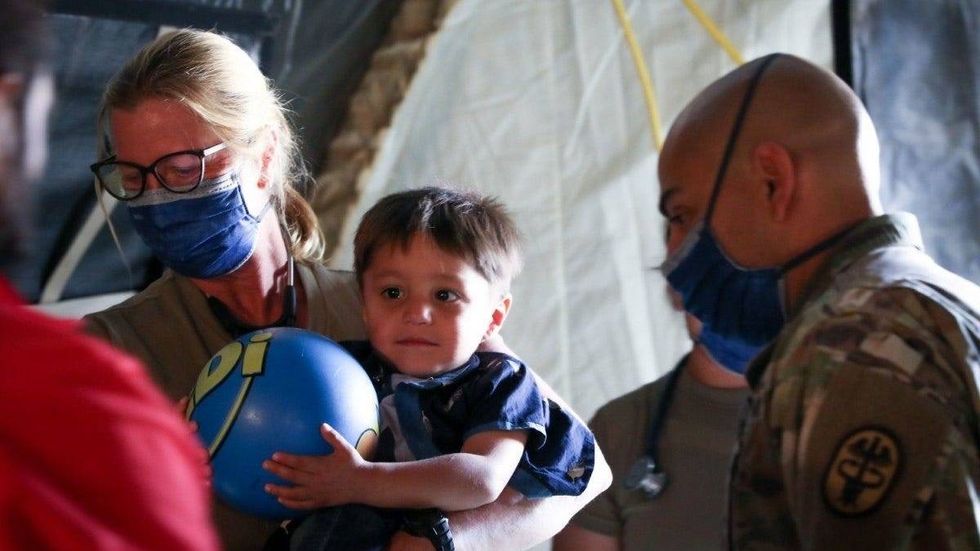 U.S. Army Lt. Col. Kimberly Byers-Lund (left), a family physician and Army reserve-component Soldier, and U.S. Maj. Jesus Chaves, chief nursing officer, evaluate an Afghan evacuee child as part of a medical team supporting Operation Allies Refuge at Ramstein Air Base, Aug. 26.U.S. Army/Marcy Sanchez
Working alongside U.S. Air Force medical professionals and others, Soldiers and Army civilians from U.S. Army Health Clinics Baumholder, Kaiserslautern and Wiesbaden, rallied to support the operations.
“So my role as a healthcare specialist is to help (evacuees) to the best of my knowledge as they come to our tent,” said U.S. Army Pfc. Caleb Jones, a healthcare specialist assigned to U.S. Army Health Clinic Baumholder, part of the Landstuhl Regional Medical Center Health System.
For over a week, Jones has volunteered to support medical operations at Ramstein Air Base, augmenting military medical forces from the 86th Medical Group, based out of Ramstein Air Base.
“We’re seeing every evacuee that needs medical care, it doesn’t matter how small (the ailment) is,” explains Jones, a native of Blanchester, Ohio. “It’s our duty to put their needs above everything else.”
Eye-opening, is how Jones describes the evacuation efforts, partly because he personally avoided a life of political oppression, poverty, and continued war.
“I was born in Vietnam, so I understand what they are pursuing (by leaving Afghanistan),” said Jones, who was adopted by an American family when he was only a toddler. “That could have been me in their shoes. So I take (the mission) personal, and every patient who I see, I give it 101 percent (effort) to help them.”
“We have eight personnel doing 12 hour-shifts, assisting with the medical needs and care,” explains U.S. Army Sgt. 1st Class Robert Baird, a healthcare specialist and U.S. Army Health Clinic Baumholder Detachment Sergeant. “We’re helping in the transportation process by providing that clinical care for them to be able to get on that airplane and continue their journey.”