


Louisiana lawmakers approved a bill making it a crime to lie about having served in the military or to exaggerate one’s military service.
The “stolen valor” bill got unanimous support from both chambers after being sponsored by Sen. Caleb Kleinpeter (R-Port Allen) a Marine Corps veteran.
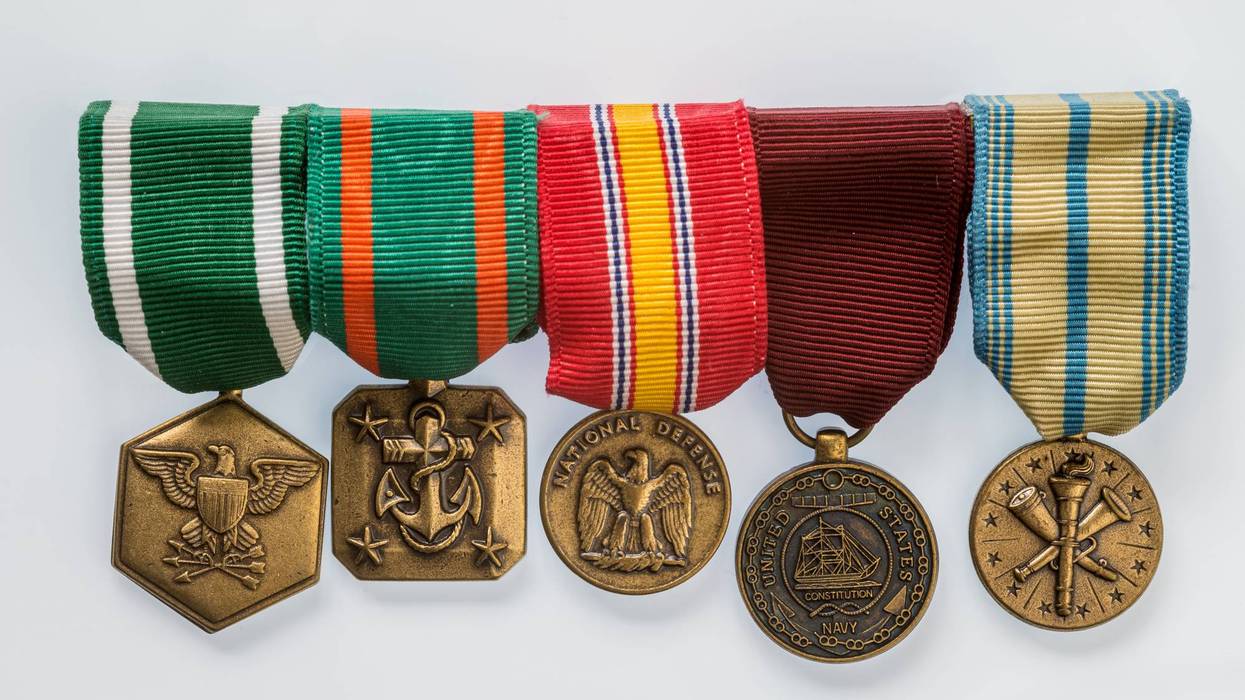
Senate Bill 51 will make it punishable for any false claims of military service or awards claimed by civilians, veterans or current service members. An “award” means any medal, service ribbon, ribbon device, badge, rank insignia or other honor awarded by the armed services or reserve forces of the United States or the national guard of any state, according to the bill.
The bill document also states that falsely claiming any of the following unearned military honors would result in a $5,000 fine and up to a one-year prison sentence: the Congressional Medal of Honor, Distinguished Service Cross, Navy Cross, Air Force Cross, Silver Star or Purple Heart.
A civilian who commits the crime of fraudulent representation of military service would be fined up to $1,000.
The Louisiana bill is now headed to Gov. Jeff Landry for signature.
The legislation follows a 2025 Louisiana Supreme Court decision removing a judge due to questions about her military service, which brought to light that Louisiana did not have its own "stolen valor" law.
The issue of lying about military service has been happening for generations, though.
George Washington, who called it “lies of honor,” wrote in 1782 of the appalling practice of impersonating a decorated serviceman.
“Should any who are not entitled to these honors have the insolence to assume the badges of them, they shall be severely punished,” he said.
In 1948, after World War II, Congress enacted the first “stolen valor” law, making it a federal misdemeanor to wear unearned medals and decorations.
On Dec. 20, 2006, due to concerns over veterans returning from Iraq and Afghanistan, then President George W. Bush signed the Stolen Valor Act of 2005, which broadened the law’s provisions to criminalize the false representation of oneself as having received any U.S. military decoration or medal. It added a penalty of a fine and imprisonment for up to six months, unless the deception concerned the Medal of Honor, in which case imprisonment could be for up to one year, according to the Wisconsin Briefs from the Legislative Reference Bureau.
While “stolen valor” is currently a federal crime, according to the National Conference of State Legislatures, only 15 other states have adopted a law to make it a state-level crime. Those states include: California, Connecticut, Florida, Illinois, Iowa, Kentucky, Missouri, Nebraska, Nevada, New Jersey, New York, Ohio, Oklahoma, Tennessee and Texas.