

Trademark filings by a mysterious "Enchanted Parks" which surfaced over the weekend -- sparking wild speculation about the fate of several Six Flags including St. Louis -- point potentially to a REIT (real estate investment trust) which already owns downtown's landmark City Museum.
The new patent applications by "Enchanted," below, are in classifications for both the parks as a place of business and for the merchandise sold in them. Often, the marks seem to align only with the water park or resort sides of existing Six Flags properties, leaving the adjoining roller coaster parks unmentioned.
For instance, in the Kansas City market, "Oceans of Fun" is listed in the filings, but the "Worlds of Fun" dry park is not. A similar split appears in New York state, where the "Great Escape Lodge" indoor water park and hotel is listed, but the main "Great Escape" theme park isn't.
Michigan's Adventure also appears in the filings. While that park features coasters, its WildWater Adventure water park is widely considered the primary draw. This reinforces the theory that the potential buyer is specifically targeting water-heavy assets.
In many cases, a physical separation would need to take place. Currently, Hurricane Harbor St. Louis shares an entrance and admission with the main theme park. Any sale would force construction of a new gate and perimeter.
 Listings of trademarks filed that match with Six Flags parks. While the park is called Michigan's Adventure, the trademark request is for Michigan Adventure. It is currently only referred to in the non-possessive while in conjunction with the water park.US Patent and Trademark Office
Who is "Enchanted Parks"?
The filings are registered to an entity called "Enchanted Parks," whose website previously briefly redirected to Innovative Attraction Management (IAM), a company headquartered in Orlando.
IAM appears to be an upstart. Its website says it was founded by former Disney World employees. The company recently assumed management of "Water Safari" in upstate New York. Its other park is called Diggerland USA, which has construction machinery that families can ride in.
IAM's website states it is "actively seeking to acquire high-performing water and amusement parks" to expand its portfolio.
Who's been its backer on those two previous deals?
EPR Properties, the Kansas City-based real estate trust mentioned earlier, lists both Water Safari and Diggerland USA as assets that it ultimately owns and has signed a management agreement with IAM to operate.
EPR, too, is listed as owner of several standalone waterparks which it has a deal with Six Flags to brand as Hurricane Harbor and operate. EPR owns and outsources the Darien Lake and Frontier City theme parks to Six Flags.
So, Six Flags and EPR have a deep relationship.
EPR also owns City Museum in St. Louis and contracts with Premier Parks to manage it. Premier Parks, then, operates the Elitch Gardens amusement park in Denver for a property owner named Kroenke.
But the apparent parsing of brand names in these Enchanted trademark filings raises the question: Is Six Flags Entertainment signaling that water attractions are now non-core to its primary mission?
Martin Lewison, a business management professor at New York's Farmingdale State College, known nationally as "Professor Roller Coaster," says the logic of a split sale is plausible.
"It's possible that Six Flags finds the dry park business profitable and the water park less so, and so they want to shed it," Lewison tells KMOX. He adds, about the pattern in the filings, "I and everyone else have been scratching our heads about... why the water parks and not [the dry parks]?"
Six Flags, once the rumors began loudly clicking up the coaster lift hill, released this quote to multiple media outlets: "We have been actively reviewing our park portfolio and are committed to making decisions that strengthen the company and position us for profitable growth."
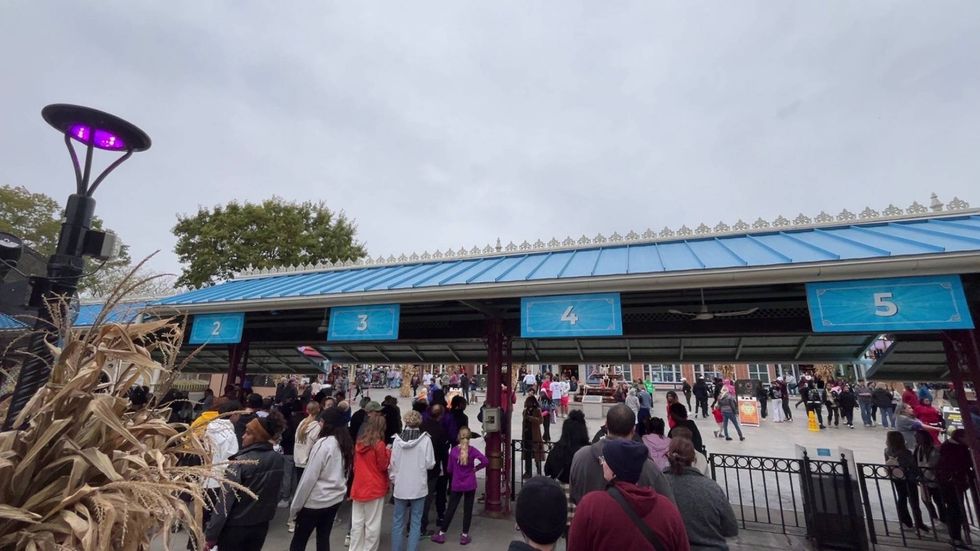 Crowds line up for a Fright Fest night at Six Flags St. Louis in 2025KMOX/Michael Calhoun
Why Would Six Flags Sell St. Louis?
If Six Flags is indeed looking to streamline, it aligns with recent corporate messaging after its merger with Cedar Fair. In the November earnings call, Executive VP and CFO Brian Witherow said the amusement giant must become more "strategic in allocating investment dollars."
He said parks that had been modestly profitable "mini cash cows" under the predecessor companies are no longer sacred cows unless they demonstrate they can take a dash of upgrade and become big time producers.
The bottom 30% of Six Flags and Cedar Fair parks have been under review.
"Getting the portfolio smaller and more nimble is a priority," Witherow said. "We're going to look at the parks where our returns are the greatest and the other parks we'll look to monetize and use those proceeds to reduce debt."
Six Flags America in Maryland is already closed permanently and a redevelopment means California's Great America could close by 2027.
Potential Alternatives: A Busch Homecoming?
If an Enchanted transaction doesn't end up happening, who else might have the expertise and capital to both acquire and run these parks?
Lewison points specifically to Herschend Family Entertainment, the owners of Silver Dollar City in Branson and Dollywood in Tennessee. He notes that Herschend proves regional operators can scale up successfully.
"For a long time, they've only had two or three parks... and they've recently tripled in size," Lewison explained, referencing the acquisition of a series of parks that includes Kentucky Kingdom and Wild Adventures. Amusement parks are "seen as a growth industry, and I can see certain investors saying, 'Hey, if there's an opportunity, let's take advantage of it.'"
 Ebay
Ebay
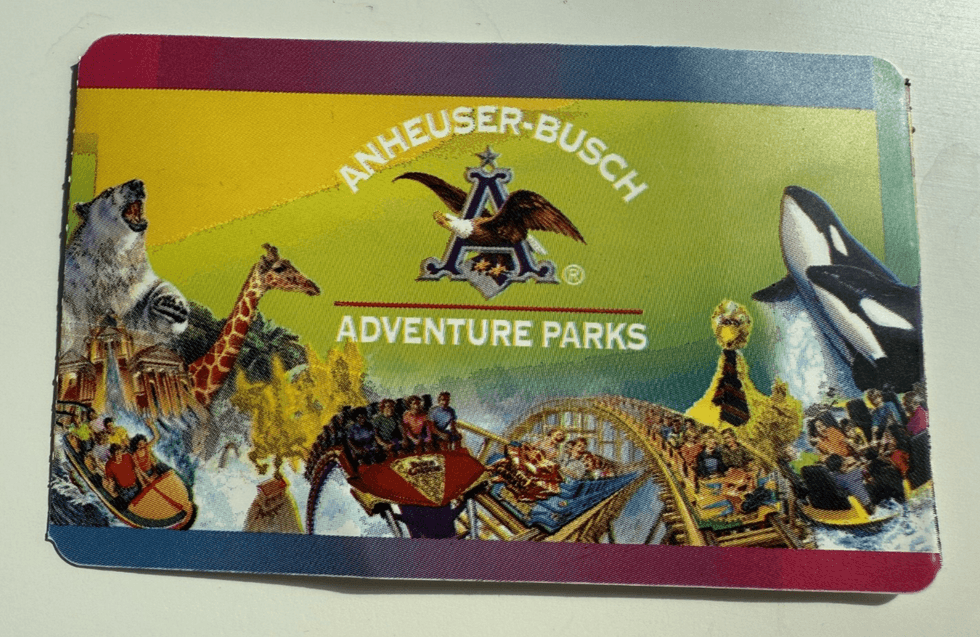
Another alternative prospect could involve United Parks & Resorts. Pre-2009, the owner of SeaWorld was called Busch Entertainment Corporation and was part of the St. Louis-based Anheuser-Busch Companies.
InBev sold the parks to focus on its core business of beer to and pay debt. But United continues to own the Busch Gardens theme parks, keeping a family name alive that is inextricably linked to St. Louis history.
A hypothetical "Busch Gardens St. Louis" would mark a strategic expansion for United Parks, which, besides a Sesame Place, hasn't opened a new domestic park since the Busch days. United's U.S. portfolio currently targets high-traffic "destination" markets like Orlando and San Diego.
However, the St. Louis region offers unique synergies that could complement a nature-focused theme, like the renowned Saint Louis Zoo developing its massive new WildCare Park safari in north St. Louis County. The Cardinals already routinely draw millions in from a large catchment area. Lambert Airport is a hub and has multiple transatlantic routes again.
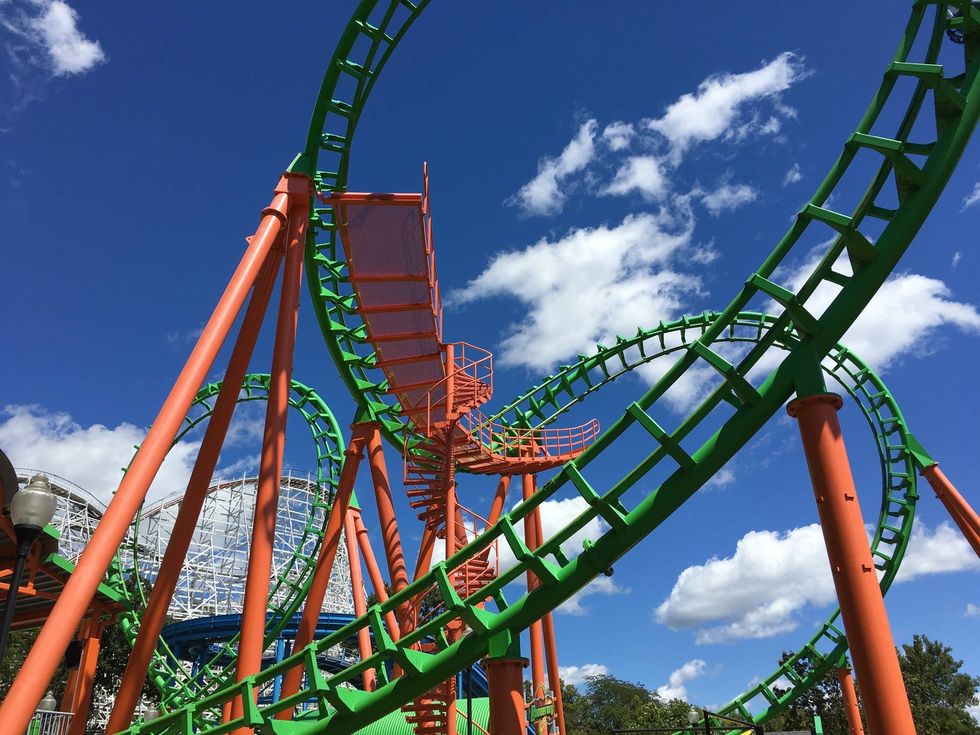 Boomerang and The Screamin' Eagle are seen at Six Flags St. LouisKMOX/Michael Calhoun
Lewison notes that for an up-and-comer, like what Enchanted/IAM appears to be, running both sides of the Six Flags park here could be a game-changer.
"St. Louis might be the gem," he told KMOX. "It might be their new flagship theme park for their new chain, for all we know."
While he admits that losing the "Six Flags" name on one of the chain's original three parks would be a "sad sort of ending," he argues that a sale like the patent filings hint at would be far better than the alternative.
"The truth is, this is better news than hearing that someone is going to tear down the park... and they're going to build condominiums," Lewison said.