

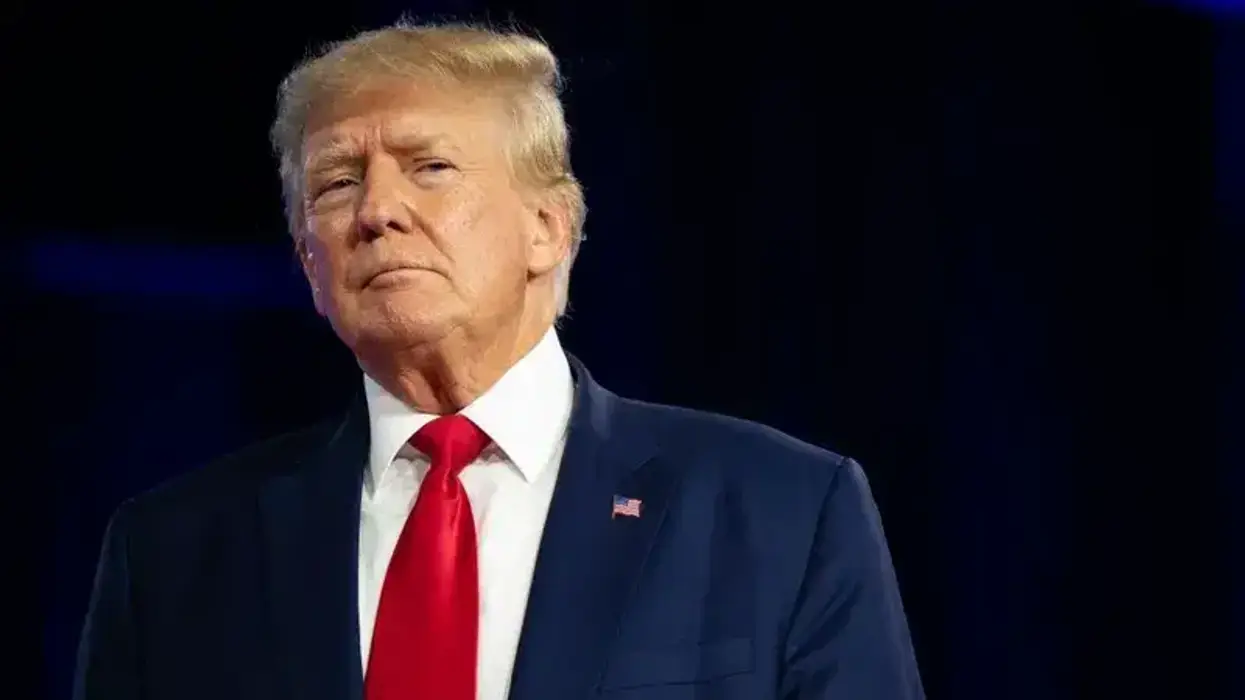

President Donald Trump said Sunday, "I'm not joking" about trying to serve a third term.
How can Mr. Trump breach a constitutional barrier? Well, there are methods with which you could do it, Trump said in a telephone interview with NBC News. We asked KMOX legal analyst Brad Young, partner at Harris, Dowell, Fisher & Young.
Megan: Brad, what about the 22nd Amendment here?
Brad: The 22nd Amendment is the preeminent barrier to any person, whether it's Trump or anyone else, running for a third term. Now remember, obviously before our time, but Franklin Roosevelt famously served multiple terms, including, I think he died during his fourth term. And so because of that, the 22nd Amendment was proposed in 1947, to limit presidents to only serving two terms. And this was ratified and became a part of the Constitution in 1951. And it literally states, and I quote, no person shall be elected to the office of the president more than twice, unquote. So that is obviously a barrier.
Megan: What about that word elected? Because I understand there are some other possibilities that people are floating out there as to how this might work.
Brad: You're right.
The way that I believe that this is being framed, if it's having any serious discussions at all in the White House, the way it's being framed is that current Vice President J.D. Vance, could run for president, and Trump could be the vice president....and therefore, if J.D. Vance would resign, and Trump would then take over the presidency. He was not elected as president, and therefore would not violate the 22nd Amendment. But the problem with that is, is that if you look back at the 12th Amendment, the 12th Amendment to the Constitution says, and again, and I quote, no person constitutionally ineligible to be president can be vice president. So at this point, if President Trump is ineligible to be the president because he's already served two terms, then he would also be ineligible to be the vice president under the 12th Amendment. So I don't know that this is getting any serious discussion in the White House. It may be one of those things that President Trump likes to throw out there and talk about to stir up the news community. But from a legal perspective, I see virtually no possibility that he could run for a third term.
Megan: I guess a lot of this also comes down to how you interpret the Constitution, correct? Whether you interpret it very strictly, or whether you look at the intent.
Brad: Correct. And that's always, and that's such a great question, Megan, because that's always the give and the take when it comes to constitutional analysis. Whether you use the literal words, or whether you look at the historical context, or whether you look at how words mean and grow and evolve over time. Those are all different philosophies of how the Constitution is interpreted. And if President Trump were to try to run for office for a third term, all of those philosophies would be on display when this moved through the courts.