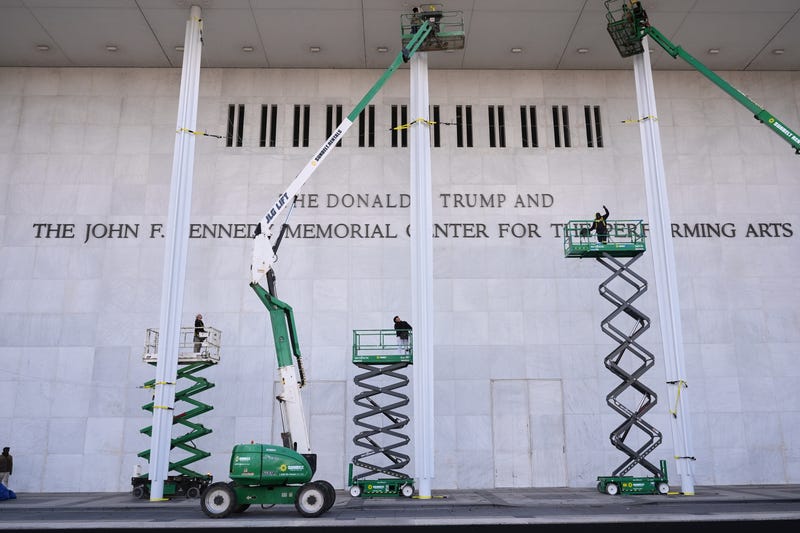
The Kennedy Center is ending the year with a new round of artists saying they are canceling scheduled performances after President Donald Trump's name was added to the facility, prompting the institution's president to accuse the performers of making their decisions because of politics.
The Cookers, a jazz supergroup that has performed together for nearly two decades, announced their withdrawal from “A Jazz New Year’s Eve” on their website, saying the “decision has come together very quickly” and acknowledging frustration from those who may have planned to attend.
Doug Varone and Dancers, a dance group based in New York, said in an Instagram post late Monday they would pull out of a performance slated for April, saying they “can no longer permit ourselves nor ask our audiences to step inside this once great institution.”
Those moves come after musician Chuck Redd canceled a Christmas Eve performance last week.
The announcements amount to a volatile calendar for one of the most prominent performing arts venues in the U.S. and cap a year of tension in which Trump ousted the Kennedy Center board and named himself the institution's chairman. That led to an earlier round of artist pushback, with performer Issa Rae and the producers of “Hamilton” canceling scheduled engagements while musicians Ben Folds and Renee Fleming stepped down from advisory roles.
The Cookers didn't mention the building's renaming or the Trump administration but did say that, when they return to performing, they wanted to ensure that “the room is able to celebrate the full presence of the music and everyone in it,” reiterating a commitment “to playing music that reaches across divisions rather than deepening them.”
The group may not have addressed the Kennedy Center situation directly, but one of its members has. On Saturday, saxophone player Billy Harper said in comments posted on the Jazz Stage Facebook page that he “would never even consider performing in a venue bearing a name (and being controlled by the kind of board) that represents overt racism and deliberate destruction of African American music and culture. The same music I devoted my life to creating and advancing.”
According to the White House, Trump’s handpicked board approved the renaming. Harper said both the board "as well as the name displayed on the building itself represents a mentality and practices I always stood against. And still do, today more than ever.”
Richard Grenell, a Trump ally whom the president chose to head the Kennedy Center after he forced out the previous leadership, posted Monday night on X, “The artists who are now canceling shows were booked by the previous far left leadership,” intimating the bookings were made under the Biden administration.
In a statement Tuesday to The Associated Press, Grenell said the ”last minute cancellations prove that they were always unwilling to perform for everyone — even those they disagree with politically," adding that the Kennedy Center had been “flooded with inquiries from real artists willing to perform for everyone and who reject political statements in their artistry.”
There was no immediate word from Kennedy Center officials about whether the entity would pursue legal action against the latest round of artists to cancel performances. Following Redd's cancellation last week, Grenell said he would seek $1 million in damages for what he called a “political stunt.”
Not all artists are calling off their shows. Bluegrass banjoist Randy Barrett, scheduled to perform at the Kennedy Center next month, told the AP he was “deeply troubled by the politicization” of the venue and respected those who had canceled but feels that “our tribalized country needs more music and art, not less. It’s one of the few things that can bring us together.”
President John F. Kennedy was assassinated in 1963, and Congress passed a law the following year naming the center as a living memorial to him. Scholars have said any changes to the building's name would need congressional approval; the law explicitly prohibits the board of trustees from making the center into a memorial to anyone else, and from putting another person’s name on the building’s exterior.
___
Associated Press writers Steven Sloan and Hillel Italie contributed to this report.