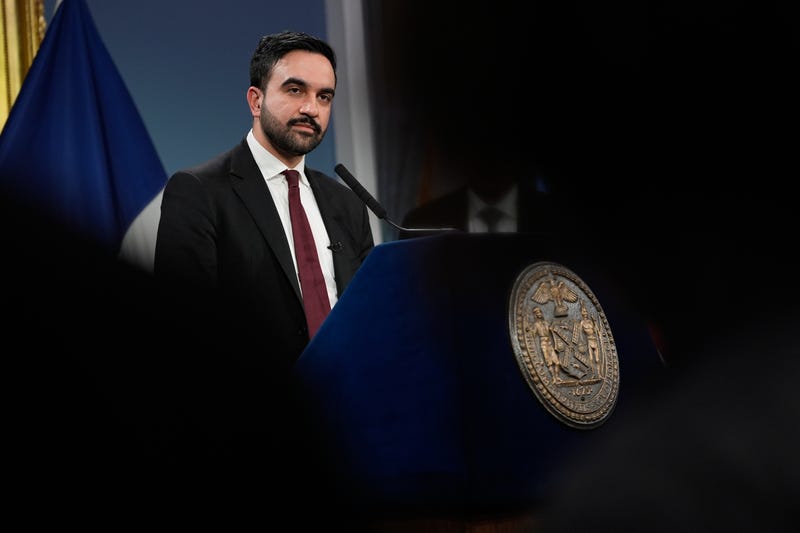
NEW YORK (AP) — New York City Mayor Zohran Mamdani says the city will resume clearing makeshift homeless encampments, promising to take a more humane approach to a practice he previously criticized.
Mamdani paused the previous mayor’s policy for clearing encampments days after he took office in January, arguing that it did not do enough to get people into housing.
But the Democrat on Wednesday said his new approach — led by the city’s homeless services department, rather than police, and involving days of sustained outreach — will be more successful.
“We will meet them looking to connect them with shelter, looking to them with services, looking to connect them with a city that wants them to be sheltered and indoors and warm and safe. And that is something that I believe will yield far better results,” he said at an unrelated news conference.
The decision came as at least 19 people have died outside over several days of brutal cold in the city, prompting concerns about the city's response. There is no evidence that anyone who died had been living in encampments, according to the mayor's office, which has conducted an aggressive campaign to coax homeless people into new shelters, heated buses and warming centers.
Still, the spate of outdoor deaths has posed an early test for the Mamdani administration, raising questions about whether the city could have done more and refocusing criticisms about the new mayor's relative lack of managerial experience.
Mamdani’s predecessor, Eric Adams, touted sweeps of makeshift encampments as a centerpiece of his efforts to restore order to the city. Led by police and sanitation crews, the efforts drew fierce protests from homeless advocacy groups and yielded mixed results; while most encampment sites were not re-established, only a fraction of those targeted in the sweeps accepted temporary shelter.
Under the new approach, the mayor's office said the city would first post a notice that the encampment will be cleared and then send homeless department outreach workers there every day for a week to guide people into social services.
City sanitation workers would then dismantle the encampment on the seventh day, with the hope that people would have cleared out of the area. Police officers would be present as observers, a spokesperson said.
David Giffen, the executive director of Coalition for the Homeless, said his organization was “blindsided” by the announcement, which he decried as a “political response” that would do little to help homeless New Yorkers.
Rather, he said, the efforts would fray trust between the city’s outreach workers and unsheltered residents, potentially resulting in more deaths during the next extreme weather event.
“When a city worker shows up and throws out all your belongings, you’re not going to trust that person the next time they show up offering you a place to sleep inside,” Giffen said.
New York City Council Speaker Julie Menin, a Democrat, called Mamdani's move “an important step forward.”
“Allowing New Yorkers to stay on the street during extreme weather is inhumane,” Menin said in a statement, adding that after oversight hearings at the Council, "it was clear that the City needed to take a closer look at how this policy was being implemented. Protecting lives must remain our top priority.”