


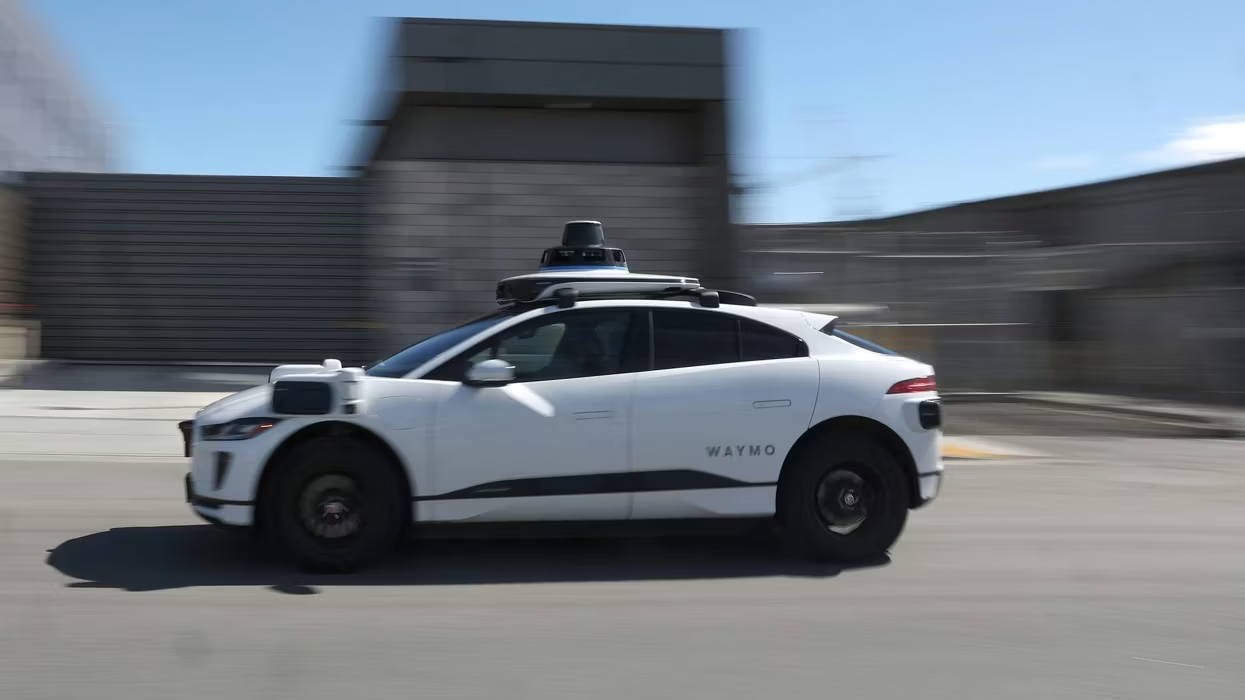

Waymo, the self-driving car company owned by Google parent Alphabet, has acknowledged that its robotaxis can hand control to remote human drivers when they encounter unusual or complex situations on the road.
The disclosure came from Waymo's chief safety officer, Mauricio Peña, who said the company uses remote assistance as a backup when vehicles face scenarios they cannot immediately resolve on their own. While some of those remote operators work in the United States, others are based overseas, including in the Philippines.
Waymo emphasized that its vehicles are designed to operate autonomously and that remote drivers do not continuously control the cars. Instead, they step in selectively to help the system navigate rare edge cases, such as unexpected construction zones or unusual traffic patterns.
The admission adds to growing scrutiny over how much human labor supports systems marketed as autonomous. Technology analysts note that many artificial intelligence products rely on large networks of human workers, often contractors, who monitor, label data, or intervene when automated systems fall short.
The role of human oversight varies across the self-driving industry. Tesla, which has promoted plans for a robotaxi network, still requires human safety monitors to sit inside each vehicle during testing and early deployments. The company has said those monitors are necessary to ensure safety while its software continues to evolve.
Waymo currently operates commercial robotaxi services in several U.S. cities, including Phoenix, San Francisco, and Los Angeles, and has announced plans to expand further. The company says safety remains its top priority and that remote assistance is part of a layered approach that includes extensive testing and regulatory oversight.
There were no reports of injuries or crashes connected to the use of remote drivers discussed by Waymo. Federal regulators continue to monitor autonomous vehicle deployments, and companies are required to report serious incidents to the National Highway Traffic Safety Administration.
LISTEN on the Audacy App
Tell your Smart Speaker to "PLAY 1080 KRLD"
Sign Up to receive our KRLD Insider Newsletter for more news
Follow us on Facebook | Twitter | Instagram | YouTube