


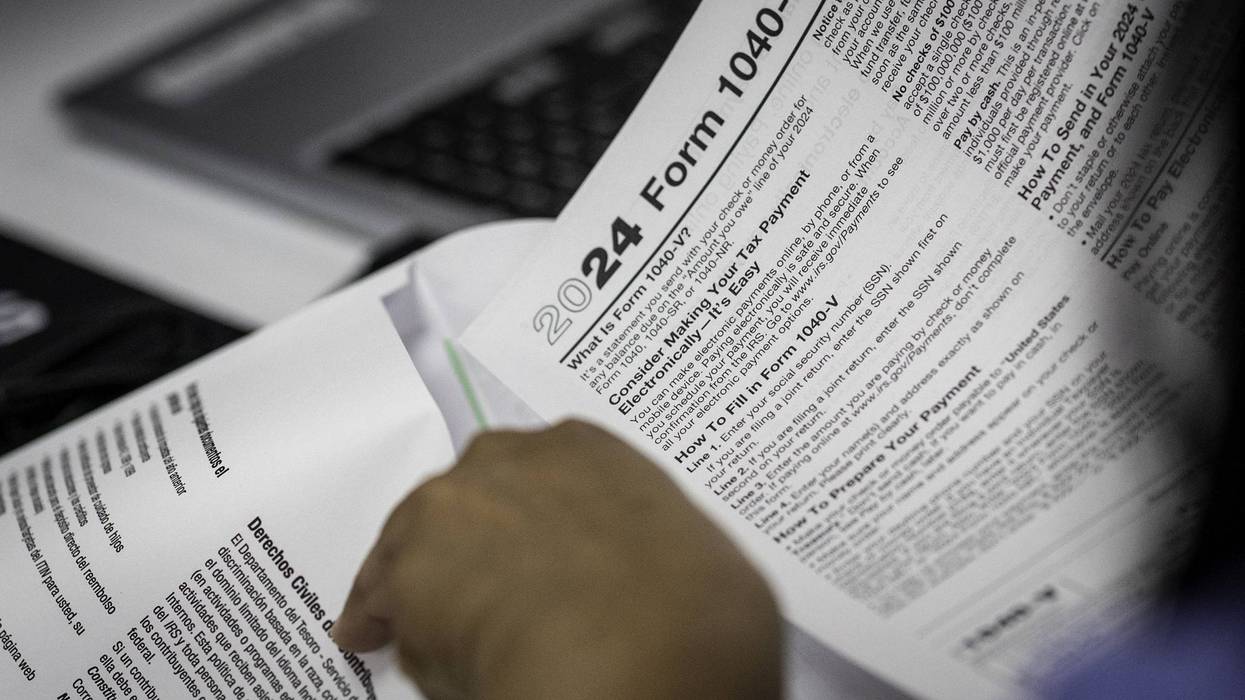

Last year, Congress passed the measure known as the "One Big Beautiful Bill Act," and as people file their taxes, they are finding changes as a result. The IRS has laid out the changes on its website.
Carolyn Newham, J.D. General Counsel and Corporate Secretary at Communities Foundation of Texas, says the most substantial change is an increase to the standard deduction.
People filing singly can now deduct $16,100; single heads of household can deduct $24,150; couples filing jointly have a standard deduction of $32,200.
"Unless your itemized deductions are higher than those amounts, the standard deduction is a great resource to help people lower their tax burden," Newham says.
But Newham also says the bill includes the option to add an "above the line" deduction where people filing single can now deduct up to an additional $1,000 and couples can deduct $2,000 for making a cash donation to charity.
"We know people are supporting charities because they care deeply about the missions and purposes of the organizations support, but it's really helpful to know there's also something to encourage them, to benefit their taxes, to lower their burden and an opportunity to really claim credit for that wonderful work they're doing and how thoughtful they're being for their community," she says.
Newham says the change makes the process "much more clean" instead of having to sift through itemized deductions.
"Tax law and tax bills are never fun to navigate," she says. "This is a very clean, very simple way for people to be both charitable and benefit from some of the tax law's provisions. That actually is encouraging people to still give to charity and benefit from it."
Tax rates still range from ten to 37 percent, but the income levels for each bracket have been adjusted to inflation. Newham encourages people to check with a financial professional to see how they might make themselves more "tax-efficient."
"The income levels have been adjusted, so we always encourage people to start off the year by knowing what has changed for the upcoming year," she says. "A lot of these things will be adjusted year over year, so it's not only what you see for 2026. Those numbers will continue to evolve for 2027, so it is always good to start your year with looking at, 'What do we anticipate our income tax bracket being,' and not waiting until the end of the year to make decisions."
Working for a non-profit, Newham says she knows a lot of people will wait until the end of the year to make donations. She says that gives donors a chance to get a more complete look at their own finances while still making a donation that would apply for that year's taxes. But she says while working on this year's taxes, people can also start looking how they can be "thoughtful and creative" on how they can start planning next year's taxes.
"You do want to have a horizon look at, 'Okay, knowing what I know now about how my taxes shaped up last year, what are some thing things I can do to really benefit from these changes, so I know they're coming and can plan accordingly,'" she says.
Communities Foundation of Texas says it has managed more than 1,400 charitable funds and awards more than 5,000 grants for non-profits in the state every year. The organization says it has provided $3 billion in grants since launching in 1953 and provided $712 million through "North Texas Giving Day" since 2009.
"Our job is really to encourage charitable giving and support non-profits," Newham says. "We serve a 20-county area (around Dallas-Fort Worth) to really help donors think about how to be thoughtful about their charity, what great organizations are out there serving the community, and how can we support non-profits who are trying to connect with donors who will care about their mission?"
Newham says a donation can help people save money on taxes while also helping a non-profit they believe in.
"That's the win-win, right? That's what we all rely on to make our communities operate and provide not only critical services like food banks but also cultural opportunities like museums and art performances," she says. "There is so much that enriches and benefits a community through the non-profit space. What greater way could we serve that than making sure donors and non-profits know how to connect with each other and best utilize the resources available to them?"
More information about Communities Foundation of Texas is available at https://www.cftexas.org/.


