

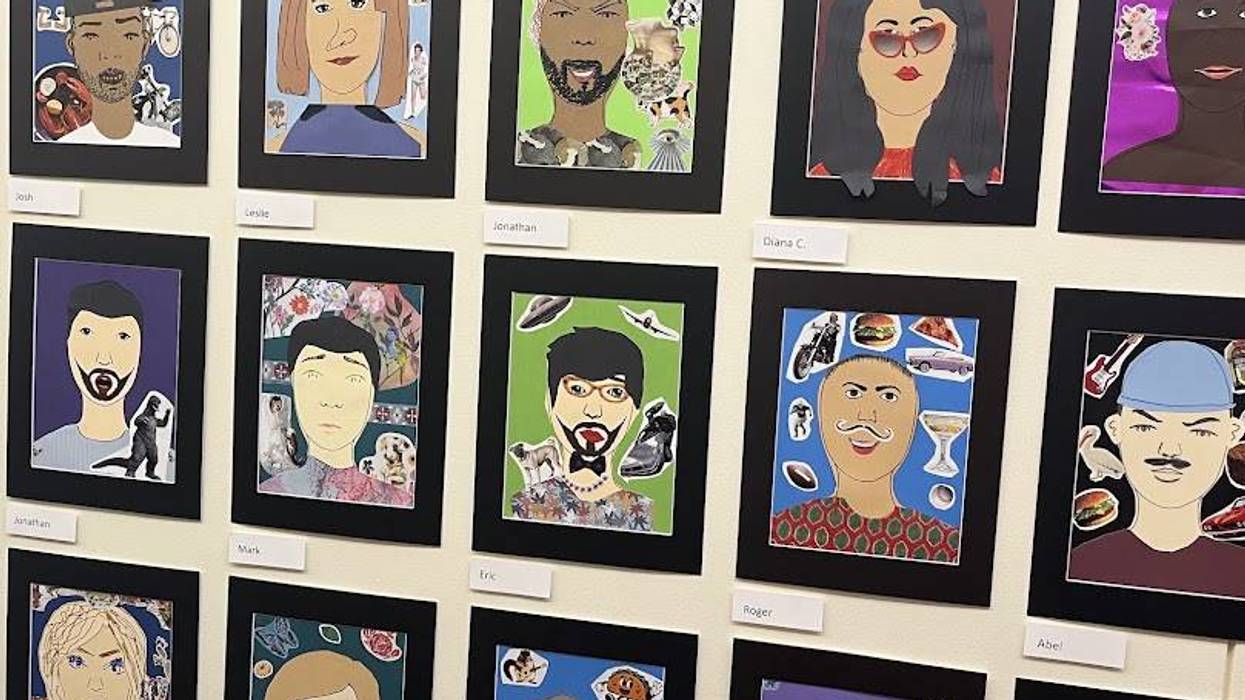

A rehabilitation center in North Texas has started working with the Dallas Museum of Art to help survivors of brain injury advance in their recovery. The Centre for Neuro Skills hosted a showcase of patients' self-portraits at its location in Irving.
"In each portrait, you'll see patients sharing how patients want you to see them," says Jay Meaders, director of residential rehabilitation. "What you see on the wall is what they want you to know."
Meaders says the self-portraits give patients a chance to describe themselves outside of their injuries. He says the self-portraits aim to prompt viewers to ask questions about the person.
"They could engage in a way where they got to choose different pieces of art to represent how they want to be seen," Meaders says. "In that process, they're actively thinking, 'Who am I?' 'Where am I in my stage of recovery?' 'How do people see me, and how do I want them to see me?' What does that really mean as they put it together piece by piece from their eyebrows to the things they love to do and their hobbies."
Meaders says the activity can also help patients rebuild physical and social skills after a brain injury. He says crafting a self-portrait is a complex process that requires different parts of the brain to work together, which can lead to a more complete recovery.
"When you're looking at firing new connections and neuroplasticity, art therapy and recreation therapy really engage parts of your brain that other types of activity don't," he says.
Some people drew musical instruments or sports they enjoy. Others drew favorite foods, pets or activities like fishing or basketball.
"I like the portrait because I like the Dallas Cowboys, and I like to cook a lot," says Eldridge Roberts. "This is who I am. I don't feel bad because I had a stroke. Things happen."
Roberts says the Centre for Neuro Skills has helped him start walking again instead of relying on a wheelchair, and his work on his self-portrait has kept him busy first thinking about the most important things he would want to include, choosing materials and then using his hands to craft the portrait itself.
"It helps me advance and get back to where I was," he says. "I love it. Thank God for a place like this. I was in a wheelchair, now I'm on a walker, and I'm close to going home."
The Dallas Museum of Art says this is the organization's first partnership with the Centre for Neuro Skills. Melissa Brito-Alvarez, manager of access programs and resources, says the museum started with a series of workshops to help participants refine skills and develop ideas.
"The workshops' end goal is to display work in a public setting," she says. "We want everyone to end up with something they're very proud of. I always start a new partnership with the theme of identity. Especially for someone going through a medical journey, identity can be shifting. We talk about how artists show their own identity, so we have sort of a self-reflection. What are things you would want to include in your art project?"
Brito-Alvarez says the museum also works with other groups on art shows. The museum works with the Bachman Rec Center on a therapeutic recreation program for adults with disabilities. The Dallas Art Museum also keeps special hours to allow people with different needs to visit.
"We really try to make the whole process and design accommodating. We think about how many staff do we need to accommodate everyone down to the type of scissors we use for folks working on their fine motor skills," she says. "I keep tabs on how we can support their journey and remove the barriers we can."
CNS' Roberts cites research showing group interventions including art have been connected to reduced depression and anxiety for brain injury patients. He says 45 minutes spent working on art can reduce the body's stress hormone up to 75%, and art therapy has been shown to activate neural pathways that can help patients "rebuild a sense of self."
"We had a shared, unified vision, something that is functional for patients from all levels. No matter what your level of injury is, and no matter where you are in your rehab journey, this is a place that is safe, that is welcome and that is fun for everybody," he says. "It created an entire picture of some people in a way we might not have seen them otherwise."
More information about the Centre for Neuro Skills is available here. Information about all programs at the Dallas Museum of Art is available here.