


The Federal Communications Commission has approved a demonstration satellite designed to redirect sunlight to Earth at night, clearing the way for a California startup’s ambitious project.
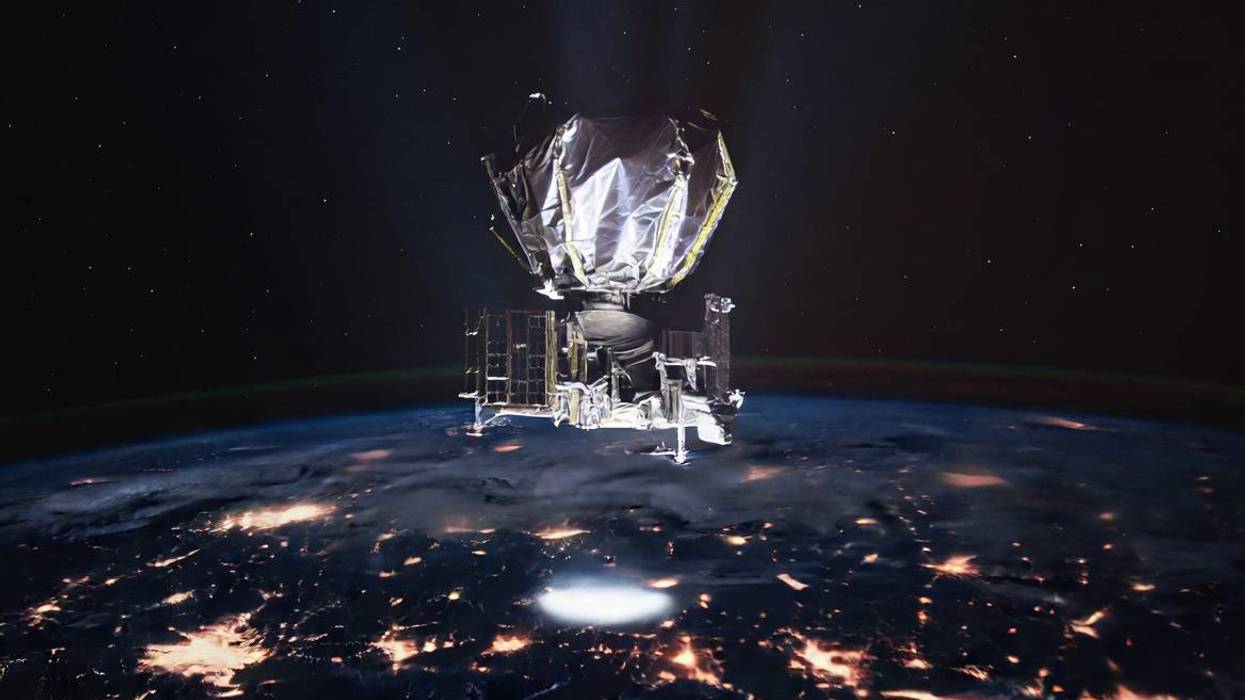
Reflect Orbital’s Eärendil-1 satellite received FCC permission this week to operate its radio equipment. The company plans to launch the spacecraft into a near-polar orbit about 625 kilometers above Earth. Once deployed, it will unfold an 18-by-18-meter aluminized Mylar reflector to direct a moving beam of sunlight onto targeted areas roughly five kilometers wide.
The demonstration aims to test deployment, control and precise aiming from orbit. Reflect Orbital envisions future constellations of thousands of such mirrors to provide “sunlight on demand” for solar farms, extending power generation after sunset. Other potential uses include emergency response, construction, agriculture, military operations and large outdoor events.
The FCC determined the mirror itself falls outside its primary authority over communications spectrum, rejecting calls to block the project over concerns about its enormous reflective surface.
Astronomers have expressed strong opposition. The European Southern Observatory warned that a full constellation could become some of the brightest artificial objects in orbit, creating bright trails across images, increasing sky glow and complicating observations of faint celestial objects.
Critics also cite potential effects on nocturnal wildlife, human sleep patterns, aviation safety and the precedent of a private company controlling artificial illumination. Orbital debris risks are another concern, though the company says each satellite will deorbit within 25 years.
Reflect Orbital insists beams will be tightly controlled and directed only at approved locations. It plans to coordinate with astronomers to minimize disruption and angle mirrors away from Earth when not in use. SpaceX is slated to launch the first two demonstration satellites.
The project echoes Russia’s Znamya experiments in the 1990s, which briefly illuminated parts of Europe before one reflector tangled during deployment.
LISTEN on the Audacy App
Tell your Smart Speaker to "PLAY 1080 KRLD"
Sign Up to receive our KRLD Insider Newsletter for more news
Follow us on Facebook | Twitter | Instagram | YouTube