


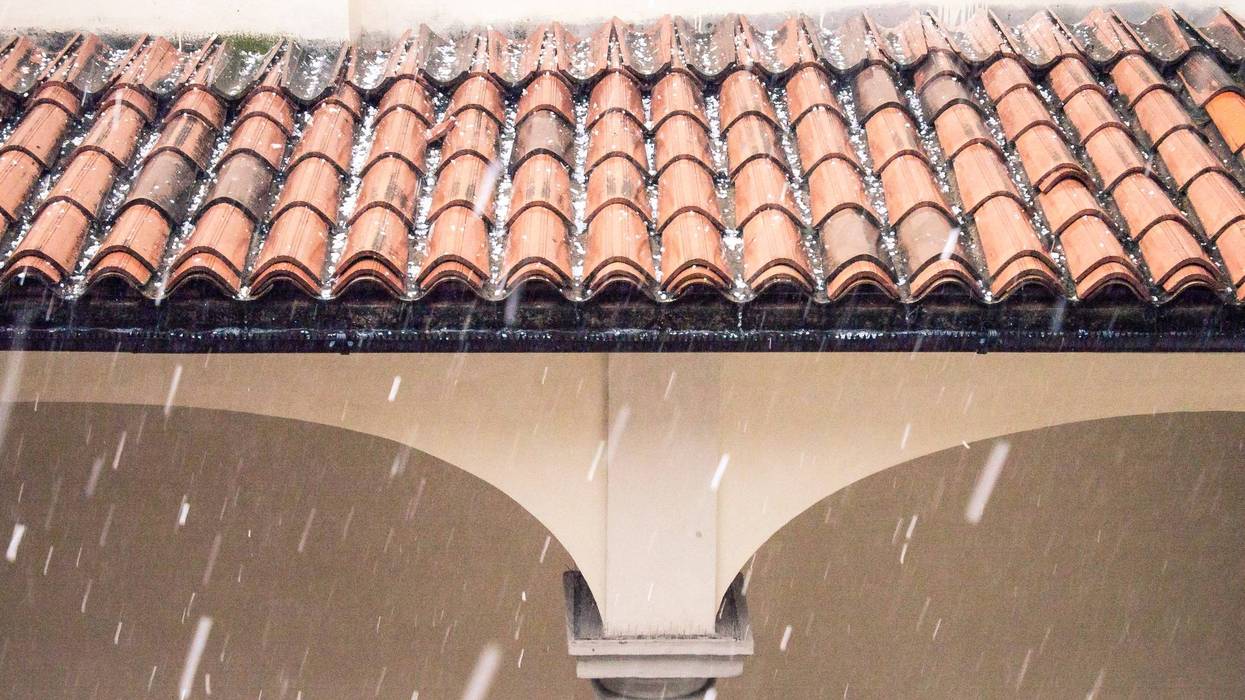

It's a problem nearly everyone in North Texas has to deal with at some time. Hail damage can cost a car or homeowner thousands. And rarely does a storm go by that doesn't result in a dispute between homeowners and their insurance company. The 5th Circuit, U.S. Court of Appeals says there are unresolved questions. The Appeals Court has sent the Texas Supreme Court certified questions.
The case starts with homeowner Harold Overstreet of Euless. His roof had been damaged from a storm that hit June 6, 2018. The damage led to a leak in his three-year-old roof. Overstreet had coverage with Allstate. But the company denied his claim saying the damage was below his deductible.
Overstreet, however, wanted a new roof. A roofer said there was widespread damage beyond the area where the roof was leaking.
But Allstate balked. The carrier said "…that almost all the roof damage was due to uncovered causes, namely a combination of wear and tear and earlier hailstorms that hit the roof before Overstreet purchased the policy." according to a court record.
In a ruling, the 5th Circuit said "There are substantial gaps in the concurrent causation doctrine, and this case poses significant consequences for the Texas insurance market. Therefore, we CERTIFY three questions to the Supreme Court of Texas—
1. Whether the concurrent cause doctrine applies where there is any non-covered damage, including "wear and tear" to an insured property, but such damage does not directly cause the particular loss eventually experienced by plaintiffs;
2. If so, whether plaintiffs alleging that their loss was entirely caused by a single, covered peril bear the burden of attributing losses between that peril and other, non-covered or excluded perils that plaintiffs contend did not cause the particular loss; and
3. If so, whether plaintiffs can meet that burden with evidence indicating that the covered peril caused the entirety of the loss (that is, by implicitly attributing one hundred percent of the loss to that peril)
Overstreet could not be reached for comment and his attorneys did not return a call.
LISTEN on the Audacy App
Sign Up and Follow NewsRadio 1080 KRLD


