


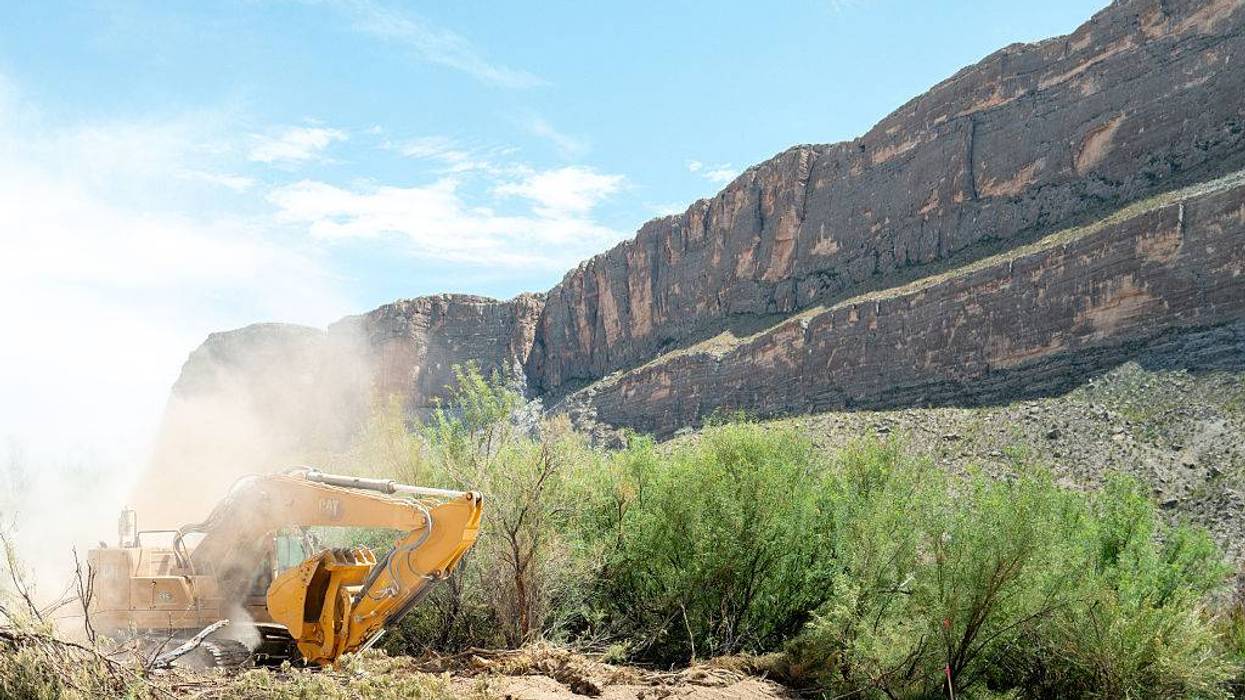

The U.S. Supreme Court on Monday paused a lower-court injunction, clearing the way for the Trump administration to resume border barrier and related infrastructure construction in the remote Big Bend Sector of southwestern Texas while the underlying lawsuit continues.
In an unsigned five-page opinion, the justices granted the government’s emergency request by an 8-1 margin. Justice Ketanji Brown Jackson noted that she would have denied the stay but offered no further explanation. The decision stays a preliminary injunction issued October 2 by U.S. District Judge Kathleen Cardone of the Western District of Texas. That order had barred the Department of Homeland Security from building border barriers, roads, or engaging in any construction or ground-disturbing activities in the Big Bend Sector “until and unless” the government complies with environmental and other applicable laws.
The challengers include an environmental nonprofit, a local river guide and landowner, and Friends of the Ruidosa Church. They argued the project would permanently alter one of the most remote and ecologically and culturally significant landscapes in the United States, including areas associated with Big Bend National Park, Big Bend Ranch State Park, and stretches of the Rio Grande. They contended that then-Secretary Kristi Noem and current Secretary Markwayne Mullin exceeded their authority by issuing three waivers under Section 102 of the Illegal Immigration Reform and Immigrant Responsibility Act of 1996. That law permits the secretary to waive legal requirements necessary to ensure expeditious construction of barriers and roads in areas of high illegal entry.
When we filed in the Supreme Court, I called the district court’s order halting wall construction “as unprecedented as it is flawed.” We just won 8-1.
— James Percival (@DHSGenCounsel) November 9, 2026
The high court said the government is “exceedingly likely to prevail” on its argument that the district court lacked jurisdiction. The challengers’ major-questions claim alleged only that the secretary exceeded statutory authority, which the justices said is not a constitutional claim—the only type of claim district courts may hear under the statute. “There is no such thing as a ‘constitutional’ major-questions claim,” the opinion stated. The court also found that the remaining stay factors favor the government: the injunction delays construction and impedes compelling interests in border security, the government is incurring nearly half a million dollars in daily costs that cannot be recovered, and Congress’s enactment of the waiver provision reflects a clear preference for expeditious border construction over the aesthetic, recreational, and environmental harms asserted by the plaintiffs.
The Big Bend Sector covers more than 500 miles of the U.S.-Mexico border and includes Big Bend National Park. Administration officials have said a continuous 30-foot pedestrian barrier will not run through the park itself; plans there center on vehicle barriers, patrol roads, and detection technology. Construction had already begun in parts of the sector, including a stretch in Hudspeth County, before the October injunction. The Supreme Court’s stay is temporary pending further review and does not finally resolve the case.
Department of Homeland Security General Counsel James Percival welcomed the ruling, writing that the district court’s order had been “as unprecedented as it is flawed” and that the government had “just won 8-1.”
LISTEN on the Audacy App
Tell your Smart Speaker to "PLAY 1080 KRLD"
Sign Up to receive our KRLD Insider Newsletter for more news
Follow us on Facebook | Twitter | Instagram | YouTube