


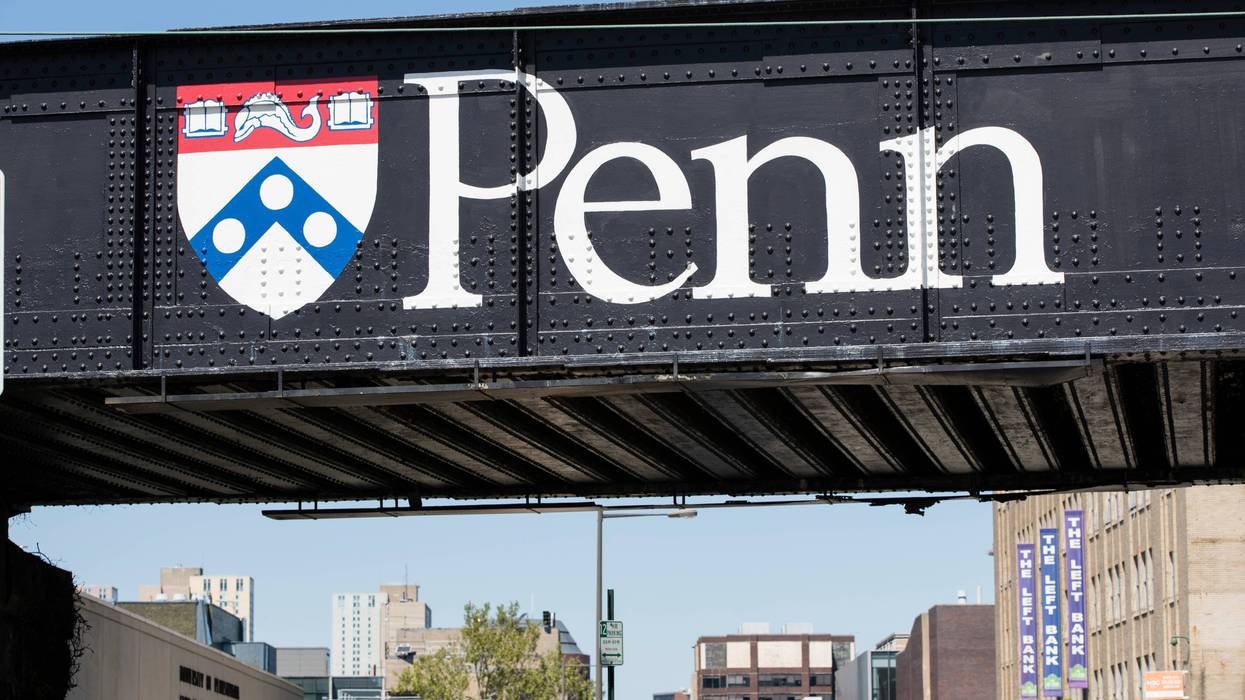

HARRISBURG, Pa. (AP) — A federal judge on Tuesday ordered the University of Pennsylvania to hand over records about Jewish employees on campus to a federal agency as part of an investigation into antisemitic discrimination but said it did not have to reveal any employee’s affiliation with a specific group.
U.S. District Judge Gerald Pappert said employees can refuse to take part in the U.S. Equal Employment Opportunity Commission investigation but the agency “needs the opportunity to talk to them directly to learn if they have evidence of discrimination.”
He mostly upheld an administrative subpoena but said Penn does not have to disclose any worker’s affiliation with a Jewish-related organization nor must it provide information about three Jewish-affiliated groups. He set a deadline of May 1 to comply.
A university spokesperson said in an emailed response that the school is committed to confronting antisemitism and all forms of discrimination and has “taken multiple steps to prevent and address these despicable events.” Penn plans to appeal.
“While we acknowledge the important role of the EEOC to investigate discrimination, we also have an obligation to protect the rights of our employees. We continue to believe that requiring Penn to create lists of Jewish faculty and staff, and to provide personal contact information, raises serious privacy and First Amendment concerns. The University does not maintain employee lists by religion,” the university’s statement read.
It is not unusual for federal investigators looking into employment discrimination to request identities of employees of a particular religion, to facilitate outreach to people who may have been victims, according to a former federal official who spoke on condition of anonymity because they were not authorized to discuss the investigation.
Pappert wrote that the university and others who joined the litigation “significantly raised the dispute’s temperature by impliedly and even expressly comparing the EEOC’s efforts to protect Jewish employees from antisemitism to the Holocaust and the Nazis’ compilation of ‘lists of Jews.’” The judge called that “unfortunate and inappropriate.”
Pappert wrote that Penn and the others who opposed the subpoena were primarily concerned about linking employees to Jewish groups, saying “the EEOC no longer seeks any employee’s specific affiliation with a particular Jewish-related organization on campus.”
The judge exempted information about three Jewish organizations from the subpoena -- MEOR, Penn Hillel and Chabad Lubavitch House. Executive directors with all three groups had declared in court filings they were legally and financially separate from the university.
“The privacy of persons making use of Chabad at Penn’s services and facilities is vital to Chabad at Penn’s operations,” Rabbi Menachem Schmidt said in a January declaration. “Chabad at Penn is accordingly concerned about the impact that non-consensual disclosure of personal information could have on its mission and activities.”
The Equal Employment Opportunity Commission investigation was prompted in part by a series of incidents, including that someone had shouted antisemitic obscenities and destroyed property at a Jewish student life center, a Nazi swastika was painted on an academic building and “hateful graffiti” was left outside a fraternity.
The investigation has also focused on actions related to protests over the war in Gaza, and Penn’s response to that and other incidents.
The EEOC claimed in a November filing that Penn’s “workplace is replete with antisemitism,” and it told the judge that investigators think “identification of those who have witnessed and/or been subjected to the environment is essential for determining whether the work environment was both objectively and subjectively hostile.”
___
Binkley reported from Washington, D.C.


