

Why ICE relies on large detention centers during deportation process

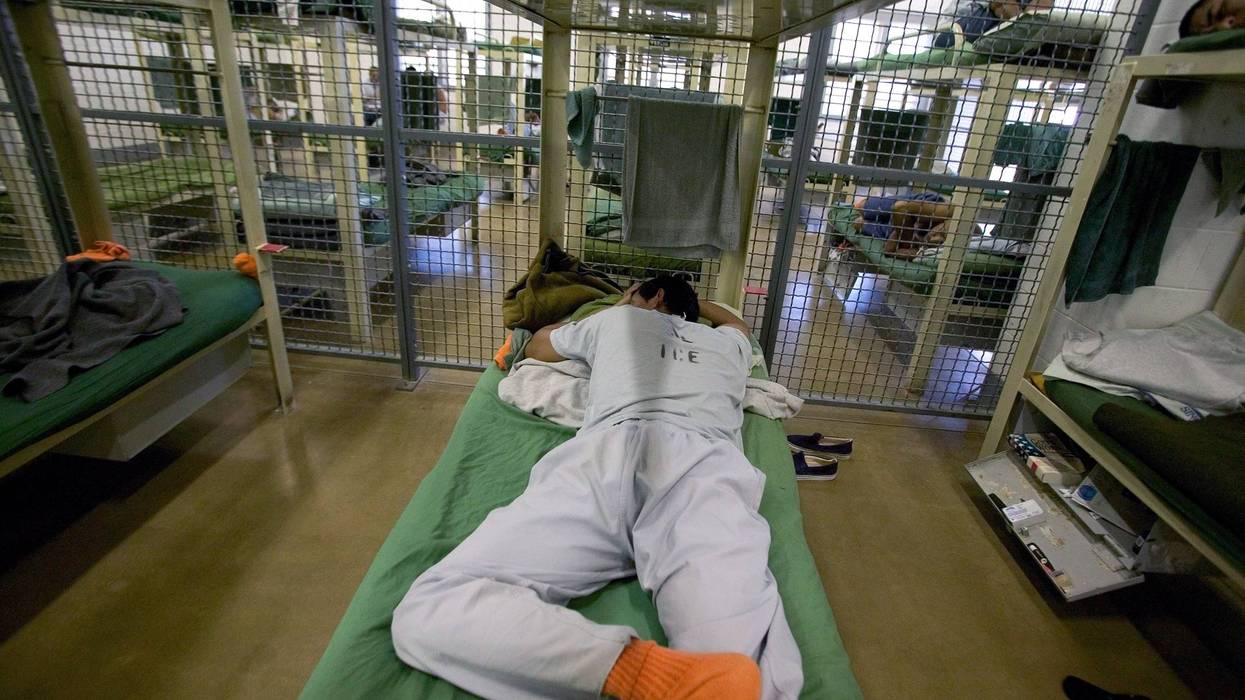
EL CENTRO, CA - MARCH 1: A man sleeps in a dormitory for Mexican and foreign nationals convicted of a felony or deportable offense at a federal detention center on March 1, 2006 in El Centro, California. The federal issue of not having enough beds or detention centers is scheduled to be rectified in 2006 with increased Department of Homeland Security (DHS) funding. Mexican nationals caught illegally crossing the border by Customs and Border Protection (CBP) officers are sent back immediately if there is no outstanding criminal case on record. Those detained by Immigration and Customs Enforcement (ICE) following a criminal conviction are sent to detention centers like El Centro prior to their federal immigration court hearing. Many appeal the judgement to deport and stay at the El Centro facility until they win or lose. California was the first state in 1987 to implement a program where foreign nationals convicted of a crime were eligible for deportation. Many violators of immigration laws flee before their cases come to trial. It is estimated that some 6.3 million illegal Mexican immigrants live in the US and some 485,000 undocumented Mexican immigrants enter the US annually. The US government estimates 11 million illegal immigrants reside in the US In 2005, San Diego and Imperial counties of southern California deported 40,335 Mexican and Central American immigrants. (Photo by Robert Nickelsberg/Getty Images)
EL CENTRO, CA - MARCH 1: A man sleeps in a dormitory for Mexican and foreign nationals convicted of a felony or deportable offense at a federal detention center on March 1, 2006 in El Centro, California. The federal issue of not having enough beds or detention centers is scheduled to be rectified in 2006 with increased Department of Homeland Security (DHS) funding. Mexican nationals caught illegally crossing the border by Customs and Border Protection (CBP) officers are sent back immediately if there is no outstanding criminal case on record. Those detained by Immigration and Customs Enforcement (ICE) following a criminal conviction are sent to detention centers like El Centro prior to their federal immigration court hearing. Many appeal the judgement to deport and stay at the El Centro facility until they win or lose. California was the first state in 1987 to implement a program where foreign nationals convicted of a crime were eligible for deportation. Many violators of immigration laws flee before their cases come to trial. It is estimated that some 6.3 million illegal Mexican immigrants live in the US and some 485,000 undocumented Mexican immigrants enter the US annually. The US government estimates 11 million illegal immigrants reside in the US In 2005, San Diego and Imperial counties of southern California deported 40,335 Mexican and Central American immigrants. (Photo by Robert Nickelsberg/Getty Images) Photo credit (Photo by Robert Nickelsberg/Getty Images)

U.S. Immigration and Customs Enforcement relies on a nationwide network of large detention facilities, including warehouse-style centers in Texas and other states, as part of the deportation process for people in the country illegally.

While deportation is the stated goal, federal officials say detention is often required while cases move through immigration court, travel documents are secured and removal flights are arranged.

ICE oversees more than 100 detention facilities across the country, many operated by private contractors under federal agreements. In Texas, major centers are located in places such as Pearsall, Karnes City and Conroe.

According to ICE, detainees may be held for identity verification, background checks, asylum screenings or court hearings before an immigration judge. Some cases are resolved in days; others can take months due to court backlogs and appeals.

Federal data show immigration courts face a backlog of more than 3 million pending cases nationwide, contributing to longer detention stays in some instances. ICE also says detention is required for certain noncitizens with criminal convictions or those deemed flight risks under federal law.

Critics argue that large-scale detention is costly and can lead to prolonged confinement, especially for asylum seekers with no criminal history. Advocacy groups have called for expanded use of alternatives to detention, such as electronic monitoring or supervised release programs, which they say are less expensive and maintain high court appearance rates.

Supporters of current policy say detention ensures compliance with immigration proceedings and protects public safety. ICE maintains that detainees receive medical care, legal access and oversight under federal detention standards.

In a recent post, ICE said enforcement operations and detention practices are conducted “in accordance with federal law and agency policy,” emphasizing due process protections.

The scale and cost of detention continue to draw scrutiny in Congress as lawmakers debate funding levels and broader immigration reform. For now, large detention facilities remain a central component of the federal government’s deportation system.

LISTEN on the Audacy App
Tell your Smart Speaker to "PLAY 1080 KRLD"
Sign Up to receive our KRLD Insider Newsletter for more news
Follow us on Facebook | Twitter | Instagram | YouTube

Featured Image Photo Credit: (Photo by Robert Nickelsberg/Getty Images)