


An Israeli strike killed at least four people in northern Gaza, including two children, hospital officials said Thursday. The Israeli military said the attack killed a militant.
Separately, Iranian-backed Houthi rebels seized Yemen's strategic Red Sea port city of Mokha, according to Houthi and Yemeni officials, bringing the rebels closer to controlling a critical waterway to the Red Sea.
Here’s a look at the latest news in the Middle East. Full coverage can be found here.
2 children are killed in a Gaza strike
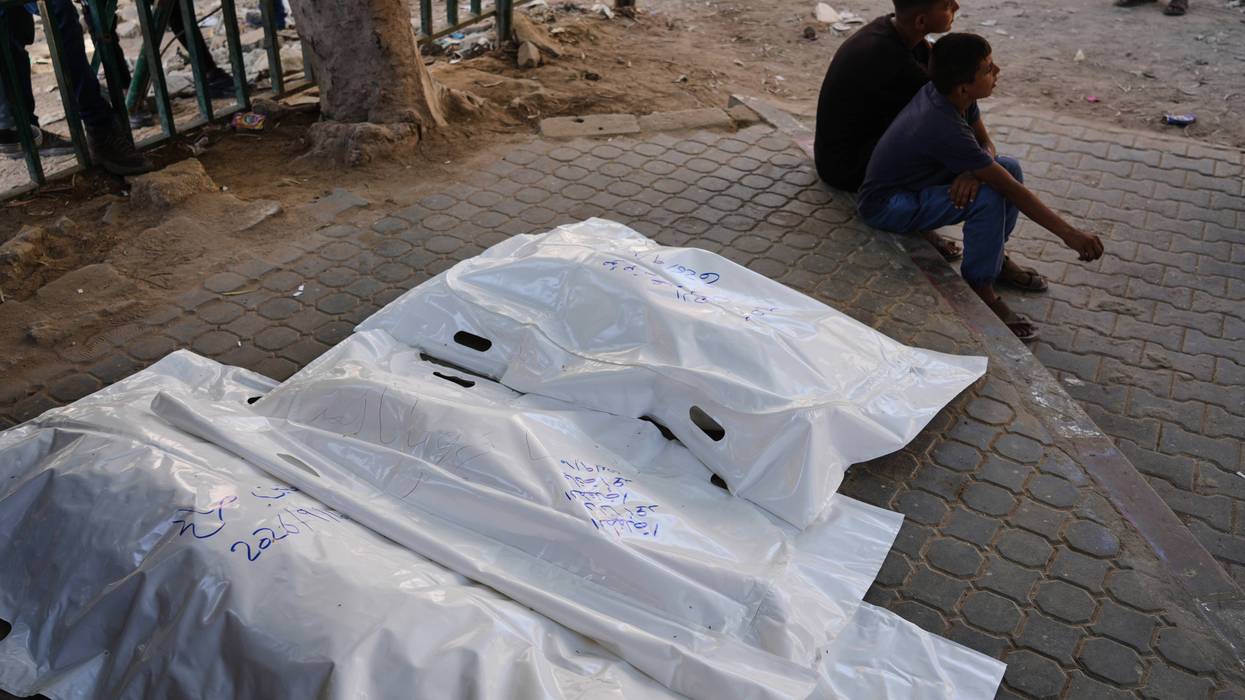
Two children were among the dead after Israel carried out a new strike in the northern Gaza community of Beit Lahiya, according to Shifa Hospital, where the bodies were taken.
The strike killed a husband and wife, alongside their two daughters, aged 8 and 12.
“There is nothing that can justify Israel attacking this home,” said Zuheir al-Heisami, a neighbor of the family, at the hospital. He said the strike happened at around 2 a.m. “These were two children and their parents that were killed while they were asleep.”
The Israeli military in a statement said the strike in Beit Lahiya “eliminated” a militant who had taken part in attacks against its forces. It did not give details.
Israel’s military in the past has said it carries out strikes in response to threats against its forces under the fragile ceasefire that has been in place since October.
Yemen's Houthi rebels take key port city, officials say
The Iran-backed Houthi rebel group on Thursday took over Yemen’s port city of Mokha, Houthi and Yemeni officials said.
Mokha is about 80 kilometers (50 miles) from the Bab el-Mandeb Strait, a strategic waterway between the Red Sea and the Gulf of Aden through which about 12% of the world’s oil and other goods are shipped.
The Bab el-Mandeb has become even more important for global energy supplies since shipping through the nearby Strait of Hormuz was disrupted by Iran after it was attacked by the United States and Israel in February.
The Houthis’ takeover of Mokha was confirmed to The Associated Press by Ahmed Baash, a commander with the National Resistance Forces allied with Yemen’s government, and Hazam al-Assad, a member of the Houthis’ political bureau.
Clash at UN Security Council over Iran’s nuclear program
Nearly a year after the U.N. Security Council reimposed sanctions on Iran over its nuclear program, the U.S., the U.K. and their council allies called on Tehran to implement the tough measures and allow inspectors into all its facilities.
But Russia and China reiterated their claim that reimposing sanctions against Iran was illegal. Russia vowed to oppose any actions to legitimize the “snapback” of sanctions.
The meeting Thursday followed a decision by the U.N. nuclear agency’s board to report Iran to the Security Council for the first time in 20 years, citing its failure to explain uranium traces inspectors found at undeclared sites.
British U.N. Ambassador Sarah MacIntosh said the International Atomic Energy Agency’s latest report needs addressing with “utmost urgency.” Russian U.N. Ambassador Vassily Nebenzia called the report “politicized.”
Iran says it is not pursuing nuclear weapons and its program is entirely peaceful.
Algeria says it's ending diplomatic ties with the UAE
Algeria's government announced on Thursday that it’s severing diplomatic ties with the United Arab Emirates.
An Algerian Foreign Ministry statement read on state television gave no specific reason for the decision, but cited alleged “provocative and hostile actions” by the Gulf Arab state and “regrettable and unjustified behavior.”
The UAE’s Foreign Ministry said in a statement that it hoped Algeria’s decision ends up being temporary, and that ultimately their "fraternal ties” will be preserved.
UN letter accuses Israel of constant violations in Lebanon
Lebanon’s mission to the United Nations has accused Israel of committing nearly 2,000 “land, air and sea violations” of Lebanon’s sovereignty during the month of July, according to a letter to the U.N.
The letter, published Thursday on the U.N. website, did not give details of the alleged violations. The Israeli military did not immediately respond to a request for comment.
Israel occupies a large swath of southern Lebanon it seized during a ground invasion after Hezbollah militants began firing rockets across the border into Israel in March.
Lebanon and Israel reached an agreement in June that calls for Israel to withdraw from occupied areas in exchange for Hezbollah’s disarmament. Implementation has largely stalled, with Israel continuing airstrikes as it accuses Hezbollah of attacking its forces.
Israel threatens strikes on Iran’s energy facilities if attacked
Israeli Defense Minister Israel Katz warned Iran of a “powerful response” if Israel is attacked, saying it would “inflict severe damage on Iran of a kind it has not yet suffered, including on its central energy facilities.”
Katz's video statement came after Iran launched missiles at U.S. targets earlier this week in Jordan, Israel’s eastern neighbor, in response to U.S. strikes on Iranian oil tankers.