



ROME (AP) — Authorities on Tuesday unveiled what is believed to be the largest fresco and mosaic complex of ancient Rome, a 1st century AD depiction of a maritime city in what became the largest bath complex in the world.
Mayor Robert Gualtieri presented the recently restored “Painted City” fresco and “Great Mosaic” that were discovered in an underground gallery during excavations in the 1990s of the Baths of Trajan on the Oppio hill near the Colosseum.
The works are opening to the public for the first time, initially in small groups of 15 and during a trial period of weekend access starting this month. The aim is to determine how the delicate works respond to increased humidity and climactic impacts before allowing more general access.
Gualtieri said the fresco, which features images of a walled port city from a birds-eye view perspective, was the largest wall fresco of its kind from ancient Rome and as such needs to be open to the public.
“They are truly unique in the world, both from the point of view of artistic beauty and the historic and documental importance,” he said at the unveiling.
Rome’s cultural superintendent, Claudio Parisi Presicce, said the grandeur of the port city as depicted in the fresco, with buildings, a theater and temple, public piazzas and towers, was particularly well conserved.
“We don’t know what city it refers to, but it must have been a particularly well-known one,” he said
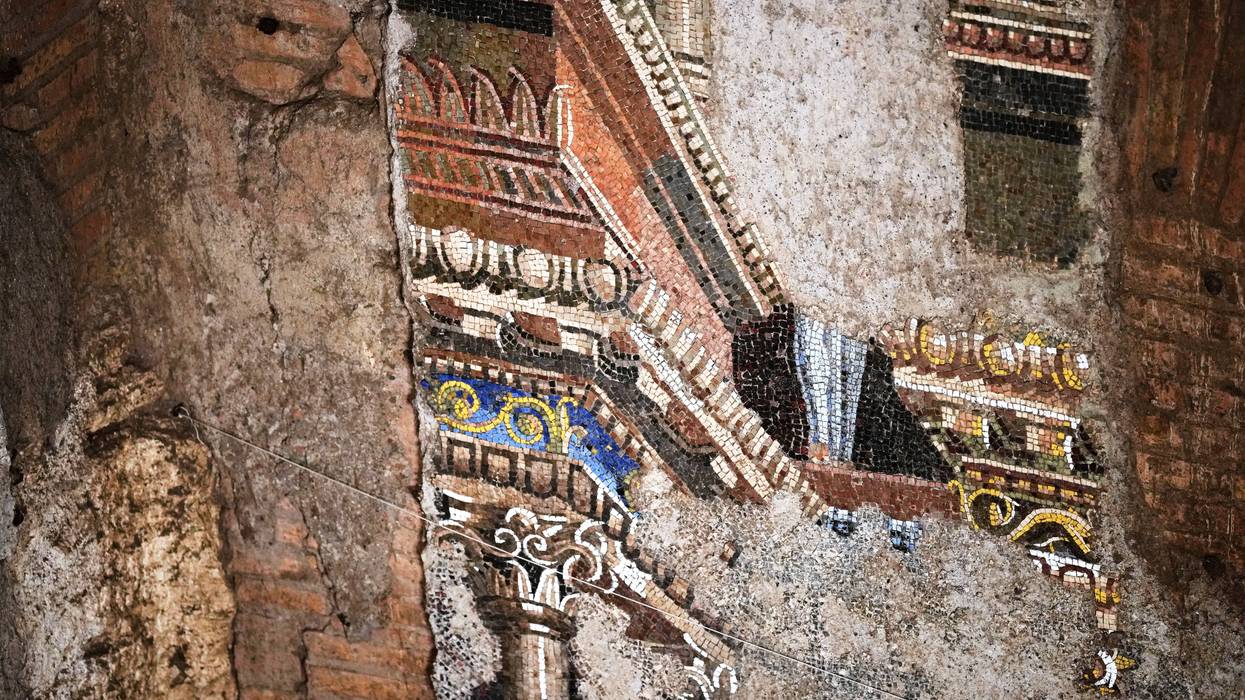
The mosaic, for its part, measures some 15 meters (yards) high and features intricately decorated columns and architectural elements and figures over four different levels. The top levels seem almost like a theatrical scene, while at the bottom are designs of another depiction of a port city that were only recently discovered during the restoration.
The Baths of Trajan, which were dedicated by Emperor Trajan in 109 AD, extended over six hectares and were at the time the largest bath complex in the world. They incorporated an earlier baths complex, the Domus Aurea, and were designed on a different trajectory to take better advantage of the water temperatures to optimize the thermal experience for users.
The complex now open to the public includes a grand semicircular upper-level “library” which archaeologists believe was part of the baths complex and allowed users not only to practice sport and bathe but also to participate in cultural activities.