

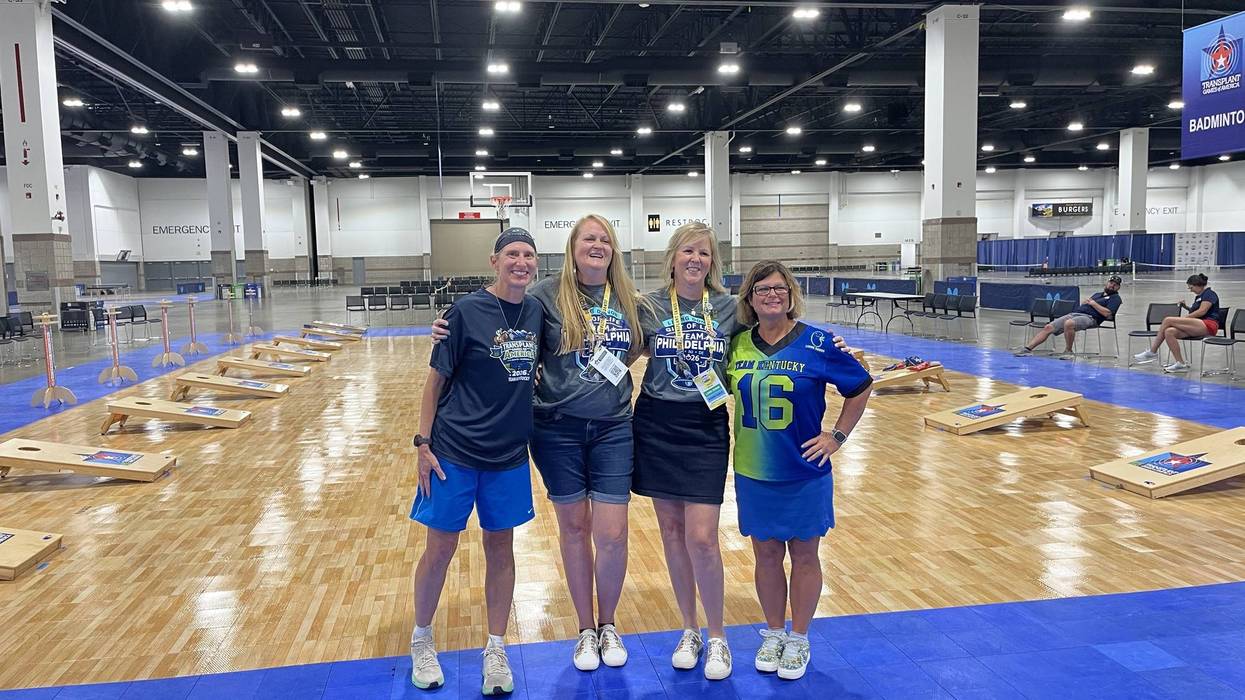

DENVER (KYW Newsradio) — The 2026 Transplant Games of America are underway in Denver, Colorado. Gift of Life’s Team Philly is once again one of the largest traveling squads, with more than 200 participants.
The Transplant Games bring together organ recipients, living donors and donor families, whose loved ones gave the ultimate gift of life. They meet in a different city every two years for an Olympics-style competition.
The ultimate goal of the Transplant Games is to raise awareness of the miracle of organ donation, but also of the more than 100,000 people across the country — and 5,000 in the Philadelphia region — who are waiting for a life-saving transplant.
KYW Newsradio’s suburban bureau chief Jim Melwert — who donated his kidney to his aunt 20 years ago — is one of the 200 representing Team Philly. He talked to participants about what this year’s Transplant Games mean to them.
Donor families return
Pat Hieber’s son, Chris, died in 1999. He saved five lives through organ donation.
This is her 14th Transplant Games, and her 11th as Team Philly’s donor family coordinator.
“I love helping new donor families get through this. It’s an emotional experience, but it’s a fun experience,” she said.
While the competitions take center stage, with heart, lung, liver and kidney recipients taking part in everything from basketball to ballroom dancing, she said it’s the donor families who are often the focus.
“It’s just amazing to watch the games through new eyes when new families come in,” she said, “be there to comfort them when it’s, you know, the hard parts; walking into the opening ceremony and stuff. But then also being able to see the joy on their face when they meet a part recipient and the person wants to give them a hug.”
Diane Milbourne is at her 11th Transplant Games. Her husband, Eddie, died 12 days after a car crash in 1997, donating both his kidneys and his liver.
“I keep coming back to the games because it’s a giant love fest when you meet a new donor family or a new recipient or a living donor,” she said. “It’s goodness — it’s just the goodness in people.”
Dan Snowden, from Harrisburg, has been at every Transplant Games since 1994. He got a kidney transplant in 1992. He’s never met his donor family, but he said participating in the games is a way to show appreciation to other donor families.
“The games wouldn’t be possible without the donor families, so I was actually happy to see a lot of focus on donor families and donor family events,” he said. “That’s where the whole process begins with them, with the families deciding to become organ donors.”
Patty Parisano’s son, Tony Rivera, died four years ago. Patty said Tony made them well aware of his wishes if something ever happened: “I actually told the transplant coordinator on the phone before she even introduced herself that ‘I know what you're going to ask me, and the answer is yes.’”
Tony’s gifts not only saved three lives by donating his liver and kidneys, but his bone, skin and tissue contributed more than 200 grafts to people in need.
The donor process is double-blind; donors and recipients must separately agree to contact each other, but because it’s so inherently emotional, either side can wait years or never hear back.
Patty’s never met her son’s recipients, and said she’s teamed up with liver and kidney recipients here in Denver.
“His words were ‘The liver transplant saved my life, and the kidney transplant enhanced my life and made it better, made my life better’, and I just, it brought tears to my eyes, because it's so important.”
Sisters win silver in cornhole
 Jim Melwert/KYW Newsradio
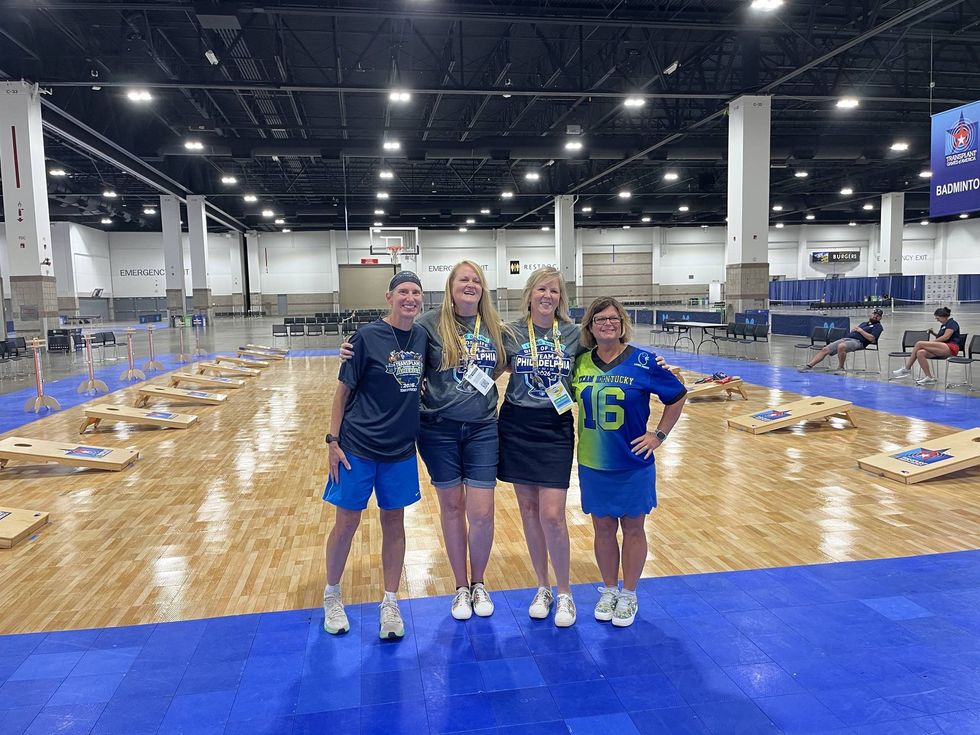
Ellen Smoll and her sister, Kelly Albright, took home the silver medal in cornhole. Both are kidney donors, but that wasn’t their first encounter with organ donation.
“My beautiful son, Evan, he passed away this Saturday, 14 years [ago], and we donated his organs and bone and tissue and corneas,” said Smoll.
Evan died in a motorcycle crash. Smoll said marking the anniversary of his death at the Transplant Games is extremely emotional.
“They’re doing the butterfly release that day, and butterflies remind me of him, like right after he passed,” she recalled. “I was out mowing the lawn and the butterfly was flying right there, and I was like, that’s him, because he used to mow my lawn.”
Five years after her son’s death, Smoll decided to donate a kidney to a woman in Georgia whom she had never met.
“And then, of course, my lovely sister, she’s always my sidekick, she said, ‘You can do it, I can do it,’ so she did it as well.”
Team Philly struts their stuff
 Jim Melwert/KYW Newsradio
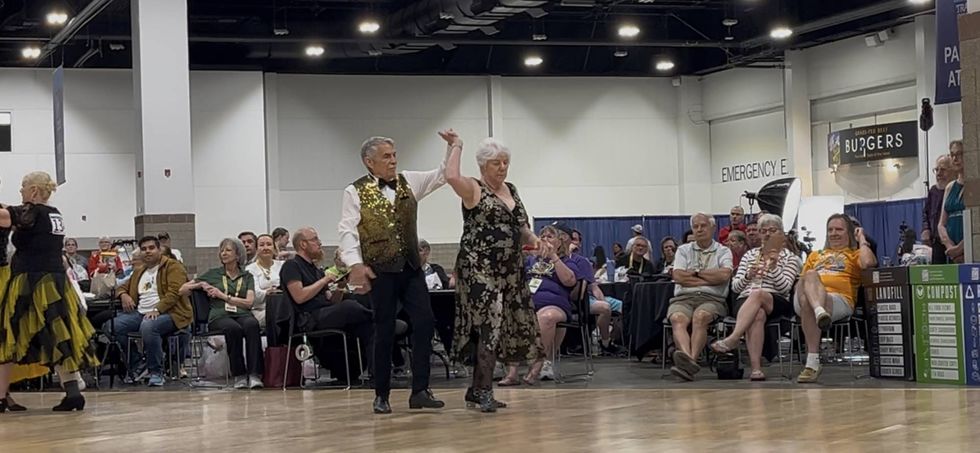
Team Philly’s husband and wife, Albert and Vicky Picatti, showed their stuff on the dance floor, saying their inspiration to try it out came in 2018 when they were at the Transplant Games in Salt Lake City and saw it was an offering.
“This was his idea. Let's do this. All right, I guess we'll try. And so we've been taking dancing lessons since 2018, when we went to Salt Lake City, and it's progressed, it's gotten better," Vicky said.
Albert and Vicky each take home multiple medals in the competition.
Vicky has had four cornea transplants; her sister donated her corneas after she died from cancer. Albert is a tissue recipient with two transplants in his shoulder after rotator cuff surgery failed.
Albert said that while solid organ transplants are life-saving, “tissue transplants, bone marrow, corneas, any of that kind of thing is certainly life-changing. I wouldn't be able to dance if I hadn't had the tissue replacement.”
Lyrics for Life
Jeffery Richards and Ryan Roby gained a following as the "Kidney Boyz," winning back-to-back gold medals in Lyrics for Life in 2016 and 2018, the first two years the singing competition was held.
“Took a few years off, I had my kids, and it's been busy with them, so it was kind of tough to get through the game,” Roby said.
Richards said they feel like this is a “reunion tour.”
“Like, let's get it back together, just kind of playing the hits and see where we go from here.”
Team Philly’s Evett Hawks made her Lyrics for Life debut. She's had two heart transplants, in 1996 when she was three, and the second in 2007.
“I feel incredibly blessed, honestly. Not only getting one transplant, but two transplants in the same lifetime. I think it's just really, really monumental every day. When I wake up to just do any small things or big things, I'm just very blessed and grateful.”
Racking up the medals
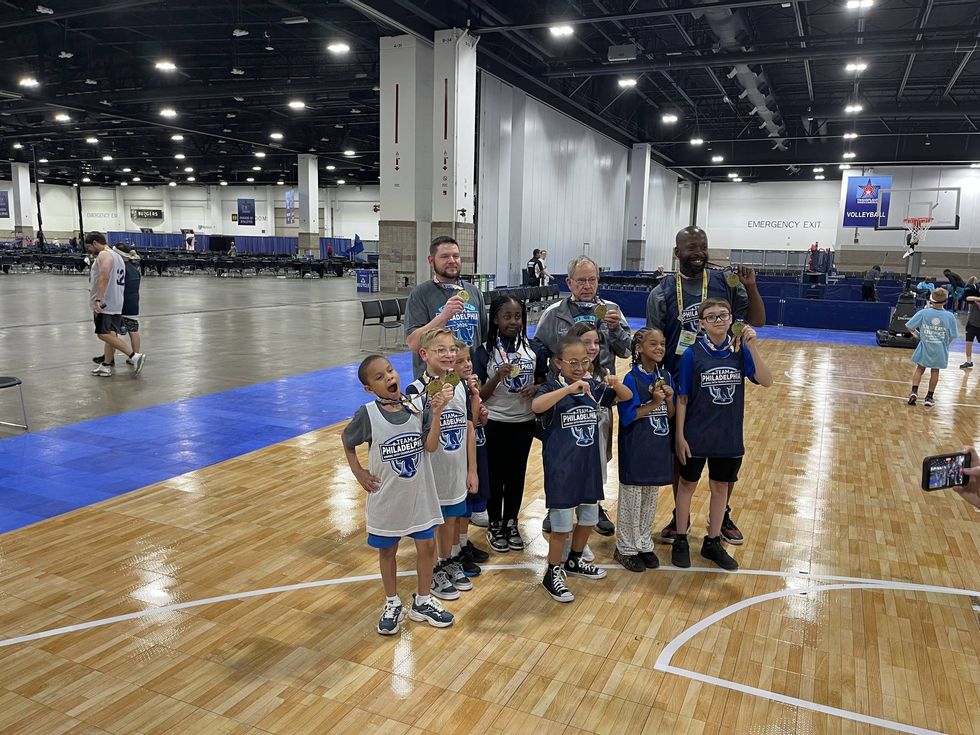
On Saturday, the team’s young transplant recipients took center stage as they won gold in basketball. The game ended in a tie, and both teams were awarded gold medals.
 Jim Melwert/KYW Newsradio
“So, pretty much you try to dribble and hoop, and can I tell you how nervous I was when I first was going to do it, but after a while I got used to it, and then I won, because I have a gold medal,” said 10-year-old Brandon Leathers. He had a kidney transplant when he was three.
Brandon is at his second transplant games, and said it’s really cool to be around other kids who have been through the things he’s been through.
“Sometimes I'm like, ‘Oh, I just want to be like other kids,’ but I'm like, ‘Dang, there's other kids who are just like me.’ And plus, I told my dad, ‘Wait a minute, I get to do stuff that's funner in life than my other friends, because they don't have a kidney transplant, so they don't get to go here and stuff,’ and I'm like, ‘Wait, that's a really good advantage for life.’”
Eight-year-old Amari Nichols, a liver recipient when he was 3, is having a blast at his first Transplant Games, especially on the basketball court:
Amari: “I hit two hoops.”
Jim: “You made two?”
Amari: “Yep.”
Jim: “No way. That's awesome.”
Amari: “I already have a friend, and she is on the blue team.”
As the players were awarded their medals, Amari’s mom, Ruth Robinson, said the games made him open up in a way she’s never seen before.
“He's making friends, he's enjoying himself, playing sports he's never played, meeting amazing people.”
Ruth said meeting other parents whose children have gone through the same things as Amari is beautiful and emotional.
“I've cried being here, just knowing all these kids' stories, and then he gets to meet other kids that have gone through the same things, the hospital stays, the surgeries, all the different things that transplant kids go through, and he's made friends, I think lifelong friends here.”
Honoring loved ones
The Butterfly Release has been part of Team Philly’s Transplant Games for about 20 years.
Tom and Vivian Gano are at their eleventh Transplant Games, honoring their son Curtis. Curtis saved four lives after he was killed when he was 16 in 1987. He was hit by a car while riding his bike.
“The butterfly makes you feel like your child's still with you, and he'll always be with you, no matter how many years, and you'll always love them, and you always get signs once you heal a little bit with your grief.”
For Dawn Ortiz, it’s her second butterfly release, in honor of her son Rickey, who became a donor after he died in 2015 from complications during surgery.
“It's a very special and beautiful tribute to the donor families and the donor heroes. It's a simple that they go on, life still continues on, you know, just differently, that's all."
Breaking records
Mark Payson is at his fourth Transplant Games, shooting for a record, not in his top event on the track, but instead…
“We're trying to do a Guinness Book of World Records attempt at having the most living donors and organ recipients, heart, lung, liver, kidney, etc., in the same place at the same time.”
Life is Short, Live It organized the effort in honor of co-founder and kidney recipient Craig Hostert, and needed to surpass 965 living donors and organ recipients.
Under strict watch, each of the 966 living donors and recipients was checked in and counted under Guinness rules and guidelines to qualify for the record. The results were announced at an event later in the day.
“You had a final count of 966; it’s a new Guinness World Record.”
Swimming takes center stage
Heart recipient Janet Dennis is a veteran not only with Team Philly at the Transplant Games of America, but also with Team USA at the World Transplant Games.
“This is my ninth U.S., and I did eight worlds.”
Janet will celebrate the 21st anniversary of a heart transplant next month and said competing at the games shows the world there is life after transplant, and shows donor families how much their decision to donate their loved one’s organs and tissue means to recipients.
“It's just a community, a community of people who have overcome and a community of people who have been through something, and it's just amazing that how we push through even in the water to reach our goals and our physical goals, and it helps us emotionally.”
Bob Goodman is with Team Philly at his third Transplant Games. He had a heart transplant 12 ½ years ago and did the 50-yard freestyle, 100-yard breaststroke, and 50-yard breaststroke races.
Bob’s daughter, Stephanie, was in the stands cheering him on.
“It's an incredible thing to watch somebody at 75 do any of these things, so regardless of what medical phenomenon he's been through, it's amazing, and it just makes it even better to know that he was given this gift, and he's proving that he's not, he's not letting that gift go to waste.”
Donor tribute ceremony
Against the backdrop of a string quartet, a photo of every donor whose family is attending the games was shown on screens inside a packed Denver theater, while attendees held candles.
Team Philly’s donor family coordinator Pat Hieber said the tribute is a keystone of the Transplant Games.
“I’ve been doing this for 26 years, and it’s still emotional,” she said. “But I know my son’s watching over me, and I’m just here to try to, in between my tears, help the new families that are here to get through it.”
Hieber’s son, Chris, became a donor when he died at 18. Because the ceremony is so emotional, she organized a donor families-only meeting immediately after.
“What I call a sharing session,” she said. “Got a private space, and we’re just going to sit with no outsiders, just donor families. Everybody knows how you feel. You know how I feel, and we can open up and not be judged.”
On the move
Gift of Life’s Team Philly continued to rack up medals Monday at the Transplant Games of America, as the action moved outside with track and field.
Sebastian Foster, who got a kidney transplant six years ago and is at his third Transplant Games, smiled ear to ear as he showed off his medals.
“Double first place. The 50-meter and the 100-meter," the 11-year-old said.
Liver recipient 13-year-old Zachary Wertz said the cheering crowd makes it extra special.
“Feels pretty cool, because I've never done track before, and usually I just run track in school, and it feels pretty cool having people cheer you on, and have like supporters and everyone around you."
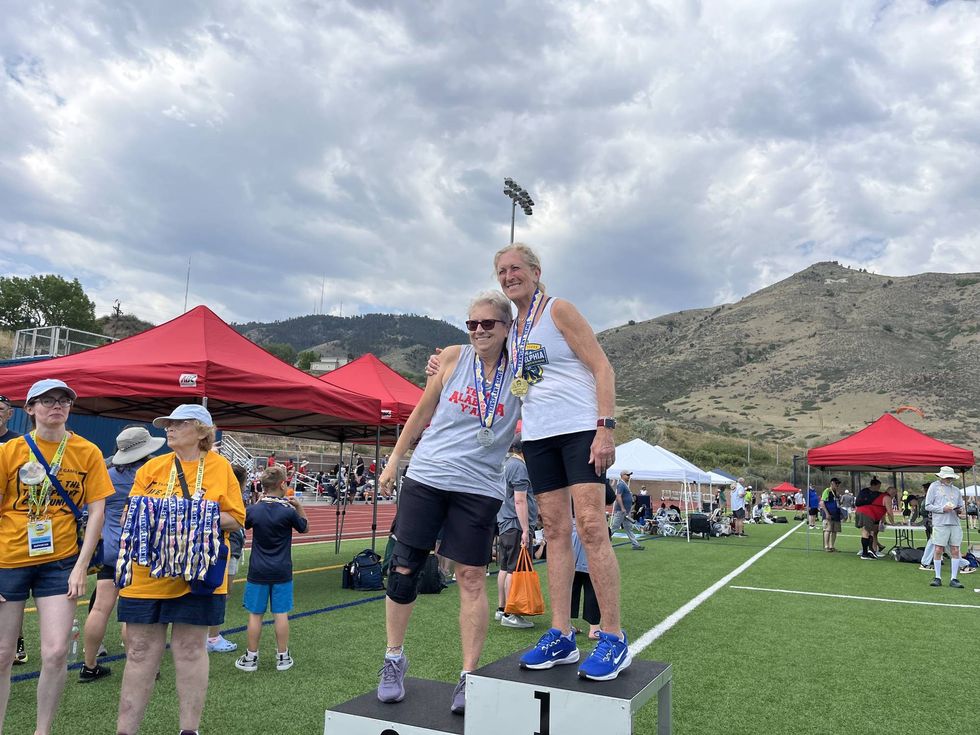
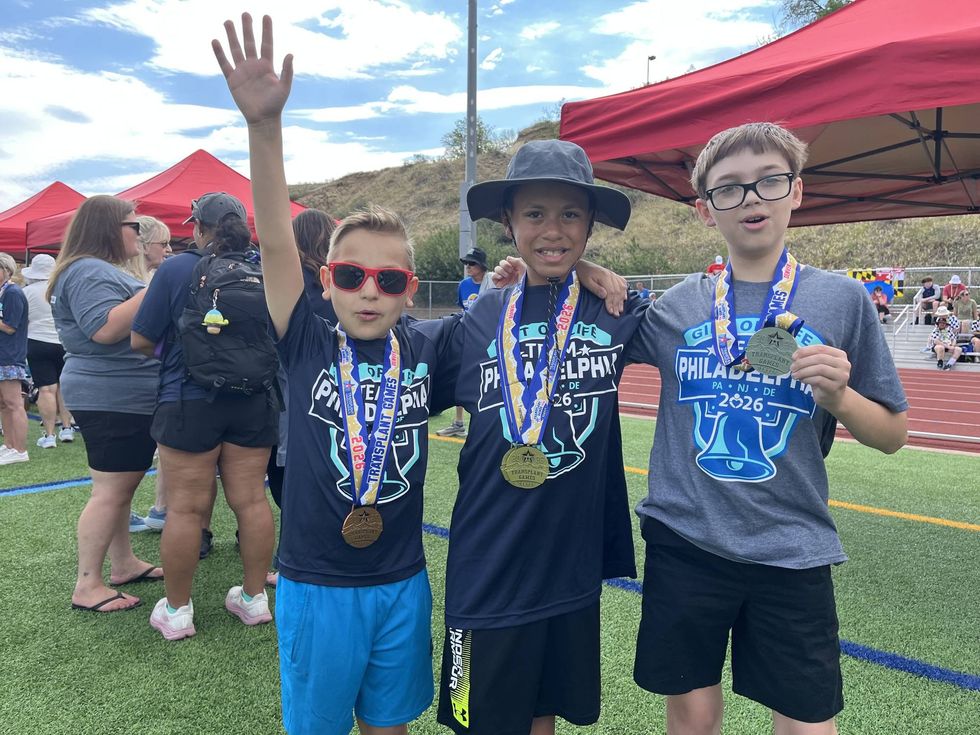
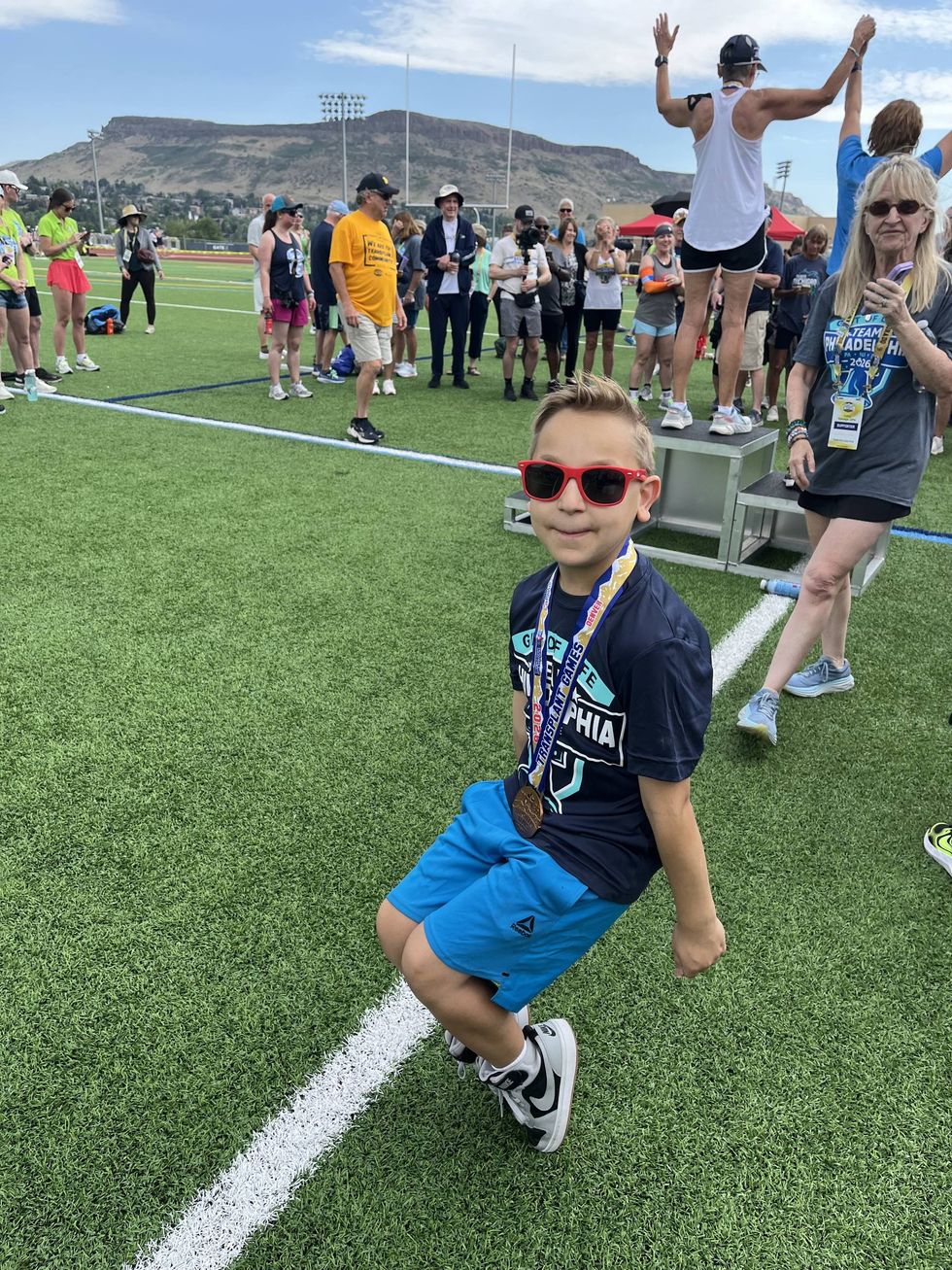
Team Philly living kidney donor Michelle Glazier said competing is fun, but nothing beats watching the kids.
“They are so adorable. I love... we had... we had one of our little runners cross three lanes. He started out in his right lane, and then he crossed three lanes, but he still medaled.”
Heading up the team that makes sure the kids get to the starting line is Gift of Life’s Karen Keener.
“I'm exhausted, and want to scream sometimes, but then I get hugs and smiles, and get told that it's the best time of their life. So, it makes it worth it.”
Living kidney donor Michelle Glazier got the gold in the 100-meter 60-to-69 age group and said she reached her goals.
“My main thing when I do this is to not fall on my face," she said. "That's my first goal, and my second is to get to the finish line.”
Michelle said that, for her, the most important thing is showing that donating a kidney hasn’t slowed her down at all.
“A lot of times, people don't understand, you donated something, it might affect your life later on, it doesn't. That's why we're out here. We're out here to show that we have life, and we're living the life to the fullest.”
Groundbreaking gold medalist
Joe Eitl won a gold medal in the 100-yard dash.
“My son, Joe, 43 years old, is the first person with Down syndrome to have gotten a heart and a liver transplant,” said his mother, Peg. She said the difference between before and after the transplant is night and day.
“He had been living on half a heart, was probably in heart failure for four or five years. And post-transplant, he’s joined the track and field team for his Special Olympics program. I don’t think he ever ran in his life before then, so big difference,” she said.
But before the transplant could be done, Joe had to get in shape, building up from 20 steps to 10,000 steps a day.
He received some inspiration from an Eagles defensive end, whom Joe calls “little brother.”
“Brandon Graham sent him some videos that honestly did more for his motivation than Mom and Dad ever could have,” Peg said. “When we couldn’t get him to listen to us and get up and push himself to walk a few steps more, we just flashed Brandon Graham in front of him.”
These were Joe’s first Transplan Games, and he said he definitely plans on coming back in two years.