


PHILADELPHIA (KYW Newsradio) — Enhanced immigration enforcement is having a negative impact on the economy, according to a local think tank, particularly the gig economy.
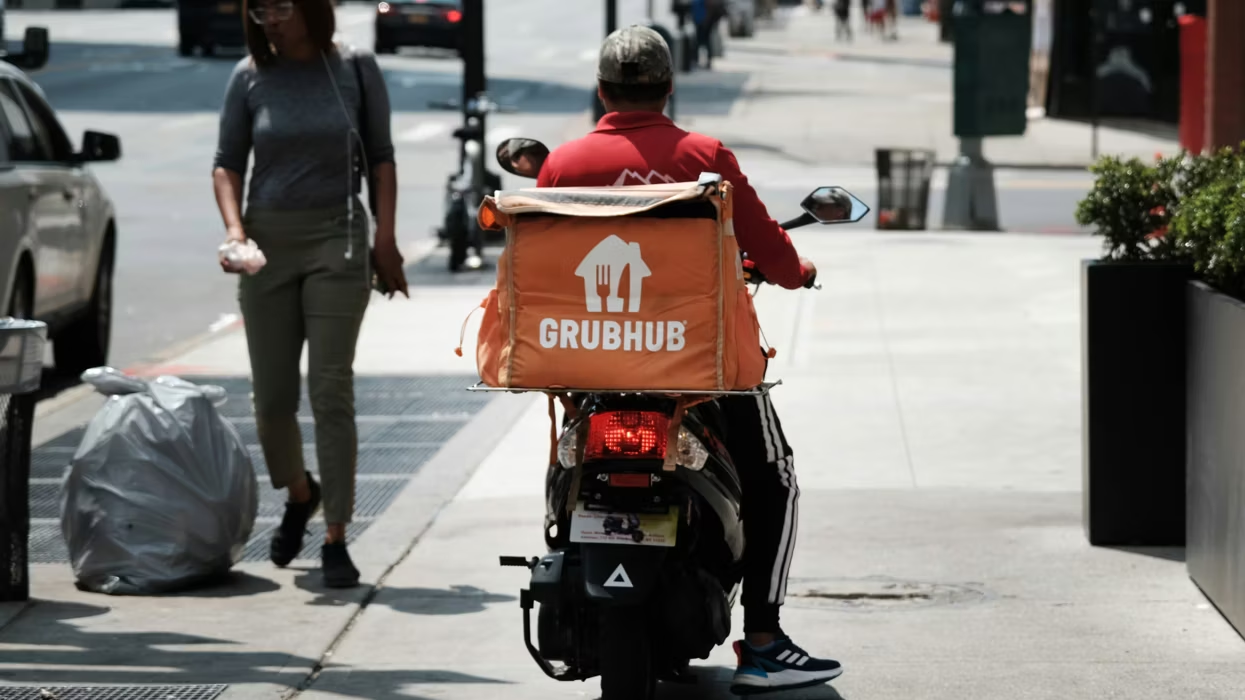
The gig economy runs on immigrant labor, according to a report from the Economy League of Greater Philadelphia, which is focused on the intersection of business and civic interests.
“All these platforms, Uber, Lyft, DoorDash, you know, you name it,” said executive director Jeff Hornstein, “they technically don't employ anybody, because everyone is considered an independent contractor, but they've created this opportunity for people to participate in the economy by joining some sort of a platform.”
Federal statistics suggest a decline in the foreign-born workforce nationally that Hornstein and researcher Saloni Tandan believe translates to the local economy.
“If I'm an immigrant worker and I work in a restaurant or I work in a hotel, every chamber maid in this city is probably Dominican or Jamaican and they're coming in and out of the Marriott at a set time,” said Hornstein.
“So am I going to work? Because I know where ICE can find me. You have to make this calculation for yourself. And a lot of people, we believe, are calculating, ‘Stay at home.’”
According to the report, there are about 160,000 foreign-born workers in Philadelphia, about one-fifth of all workers. It is estimated that between 63,000 and 68,000 take platform-based gig work.
Hornstein said the fear of ICE is keeping them from working and that will drive up the costs of delivery food, rideshare and other platform-based gig work.
The league is now looking for more data. “We're surveying what we call immigrant-dependent businesses, and those are businesses that either rely on immigrants as customers or rely on immigrants as workers,” said Hornstein.
KYW Newsradio was unsuccessful in attempts to reach Uber, Lyft and Grubhub.
Hornstein, who also teaches at Drexel, said he has a student from Uzbekistan who once dreamed of starting a business here.
“She's like, “Look, why do I want to stay in a place where people are — where the government actively is working against my interests?’”
Hornstein said similar impacts are expected beyond the gig economy, comparing the impact of immigration enforcement with the declining population in China, which could see its workforce reduced by hundreds of millions by 2050.