


PHILADELPHIA (KYW Newsradio) — Underneath an I-95 on-ramp near Center City, a peculiar living space has taken shape. There are tents, bedding, a wrought-iron love seat, a shoe rack sporting about 20 pairs of assorted footwear, along with discarded clothes, bottles and food wrappers, spread between the piers, the ramp itself a kind of awning offering shade on a blistering hot Friday morning.
Only a few residents are present as two police officers and an outreach worker, Jomo Brown, approach.
“I’ve met you before,” Brown greets a tall, muscular young man like a long-lost friend. “Are you going to let me help you today?”
Brown and the officers are the advance team for the weekly encampment cleanups conducted by the Office of Homeless Services (OHS).
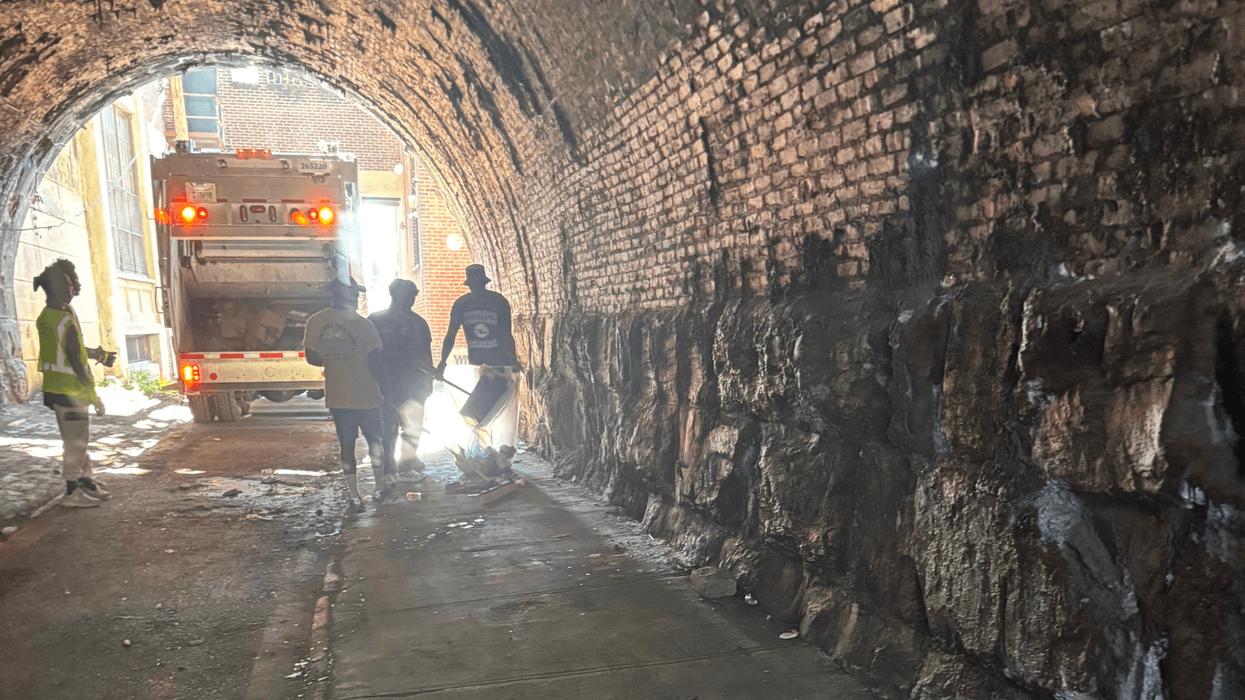
The process includes posting notices at the sites, alerting residents to services, posting the locations and dates of cleanups on social media, and, on the advertised day, sending a team to try to coax any remaining residents into shelters or services before a trash truck comes in to clear away anything left behind.
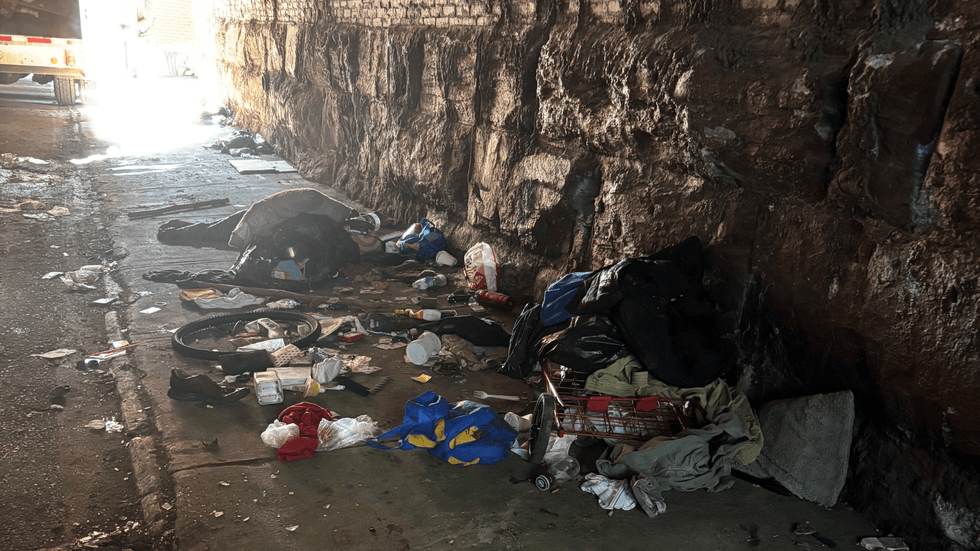 Trash left behind at an encampment site.Pat Loeb/KYW Newsradio
The pattern was set with the first encampment resolution on Kensington Avenue in 2018, a monumental effort that took months of planning. Now, it’s become routine, but an increasingly important tool as Mayor Cherelle Parker pursues the ambitious goal of virtually ending street homelessness.
The city is adding shelter beds so that one is available any time someone wants to come in. People may still choose to live on the street, but Parker is aiming for “functional zero,” meaning episodes of homelessness are rare, brief and nonrecurring. Thus, the outreach work at the cleanup sites is essential.
“It’s not just about moving somebody off of that particular area,” said OHS Executive Director Cheryl Hill. “It’s also about trying to engage them and get them some resources so they don’t have to be in the encampment.”
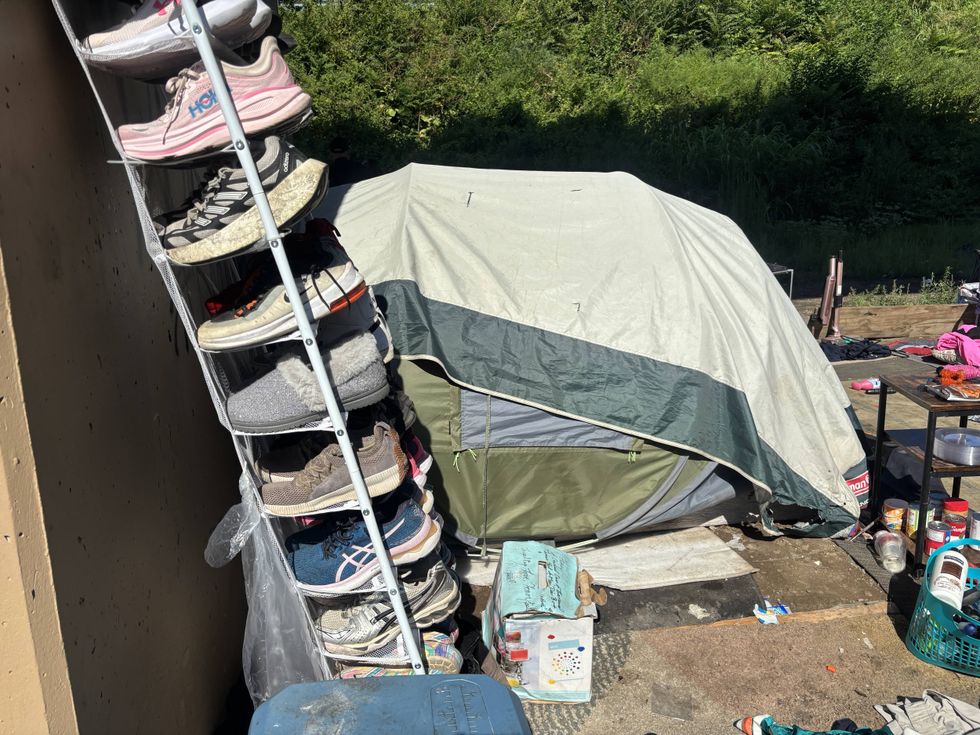 Shoes, toiletries and a tent make up an encampment under an I-95 on-ramp.Pat Loeb/KYW Newsradio
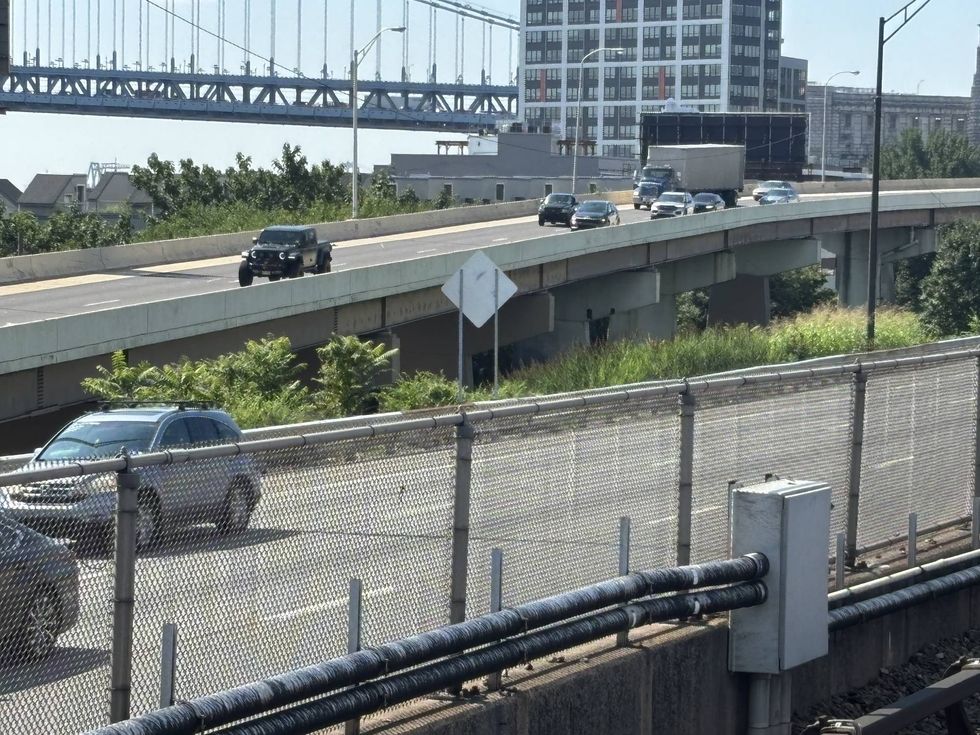 Several people set up an encampment under this I-95 ramp.Pat Loeb/KYW Newsradio
* * * *
At the first stop of the day — a tunnel underneath old Reading Railroad tracks near Chinatown — the lone remaining resident would barely respond to Brown’s offer of help. He gathered his belongings into a shopping cart and left.
The second stop, under I-95, was a little more promising. The young man Brown first approached was open to help.
“I could use a meal,” he told Brown.
“We can take you somewhere where they serve breakfast and lunch,” Brown said.
“I could use shelter, too, a roof over my head.”
“I can help with that,” Brown replied.
The four others on the site presented a bigger challenge. They were two married couples. Couples are hard to place. Most shelters use large rooms with multiple beds and separate men and women. The relatively few spaces for families are prioritized for women with children.
One woman said she and her husband were willing to be in separate rooms if they can be in the same shelter, but she was skeptical it would happen.
“We’ll just set up camp somewhere else,” she said. “There’s always going to be a new place, a new home, keep moving, and a couple weeks, this’ll be right back open. That’s what we do all the time. They shut it down; a couple weeks later, they move it right back in.”
That, in fact, has happened at this very spot, but the outreach team said it has shrunk considerably.
RELATED: Annual Point-in-Time Count shows 39% decrease in Philly street homelessness from this time in 2025
Hill knows it will take persistence, but she has seen progress. As proof, she pointed to the results of Brown’s efforts under I-95. He found beds and persuaded all five of the remaining residents to take them.
“I feel great,” the single young man said. “It takes out the majority of everything I typically worry about during the course of the night. The thing about being homeless is the security issue. I worry about if your things are safe, if you wake up and your things going to be there. I tend to lose a lot of sleep.”
He hopes to find a job that pays more than his occasional off-the-books gig as a construction helper. But, he said, he’s already saving his money so he can find his own place.
“That’s why doing this work in that way is important,” said Hill. “We are giving them a place to go that is safe, that is supportive, and that is what doing the encampment cleanups are about.”