CEBU, Philippines (AP) — The Association of Southeast Asian Nations does not recognize the recently held elections in Myanmar, the first since the army seized power in 2021, the Philippine foreign secretary said Thursday.
ASEAN’s non-recognition of the elections in Myanmar, which a military-backed party claimed to have won, is a major blow to efforts by the country’s military rulers to gain international recognition.
The regional bloc, whose 11 members include Myanmar, has refused to recognize the military-ruled government since the army forcibly wrested power from Aung San Suu Kyi’s elected government in 2021. The powergrab has plunged the impoverished country in a deadly civil war.
Asked in a news conference if the bloc did not recognize the elections in Myanmar, Philippine Foreign Secretary Theresa Lazaro said, “yes, as of now” and added that ASEAN “has not endorsed the three phases of the elections that were held.”
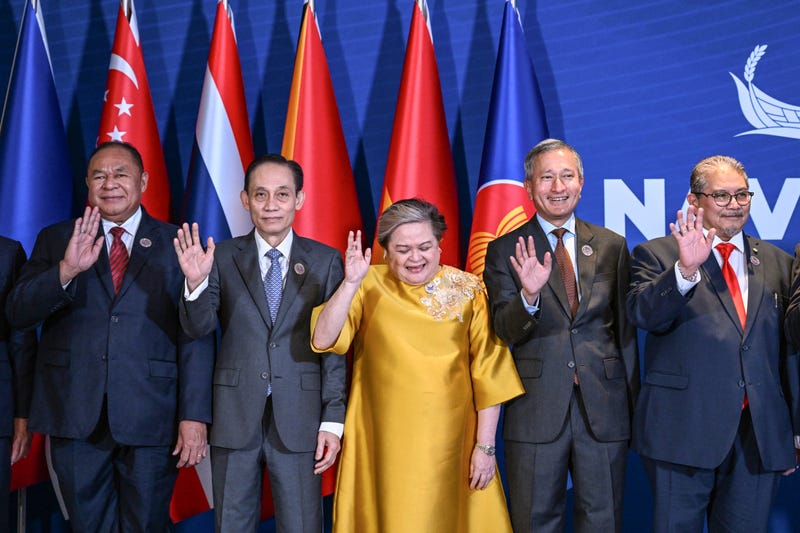
Lazaro did not elaborate how the regional bloc’s stance could possibly change. She was speaking after hosting the ASEAN's first major ministerial meetings this year in the central city of Cebu. The Myanmar crisis was high on the agenda.
Myanmar’s military-backed Union Solidarity and Development Party claimed Monday that it had won the elections. The victory of the party led by a former general was widely expected after the vote excluded major opposition parties and dissent was tightly restricted.
Also, a quarter of parliamentary seats were automatically reserved for the military — effectively guaranteeing control by the armed forces and its favored parties.
Critics say the elections were neither free nor fair, but an effort to legitimize its rule after its forcible seizure of power.
The Philippines holds ASEAN’s rotating chair this year, taking what would have been Myanmar’s turn after the country was suspended from chairing the meeting after the military's seizure of power.
Founded in 1967 in the Cold War era, ASEAN has an unwieldy membership of diverse countries that range from vibrant democracies like the Philippines, a longtime treaty ally of Washington, to authoritarian states like Laos and Cambodia, which are close to Beijing.
The regional bloc adopted the theme “Navigating our future, Together” this year but that effort to project unity faced its latest setback last year when deadly fighting erupted between two members, Thailand and Cambodia, over a longtime border conflict.
Aside from the Myanmar crisis and the deadly fighting that embroiled Thailand and Cambodia before both forged a U.S.-backed ceasefire last year, the ministers also agreed to hold monthly meetings with China in an effort to conclude negotiations this year on a so-called “code of conduct” to manage disputes over long-unresolved territorial rifts in the South China Sea, Lazaro said.
Under growing pressure to conclude the talks on the nonaggression accord, the ministers announced the self-imposed three years ago.
China has expansive claims in the waterway, a key global trade route, that overlap with those of four ASEAN members, the Philippines, Malaysia, Vietnam and Brunei.
Lazaro opened the meetings by calling on the regional bloc to steadfastly maintain restraint and adhere to international law as acts of aggression across Asia and “unilateral actions” elsewhere in the world threaten the rules-based global order.
Several ASEAN members have expressed deep concern over the secretive U.S. strike that resulted in the arrest of Venezuelan leader Nicolás Maduro on orders from U.S. President Donald Trump. China’s intensifying aggressive stance on Taiwan and in the disputed South China Sea have also troubled the region for years.
Calling out the U.S. and China, among the largest trading and defense partners of ASEAN countries, have been a dilemma and diplomatic tightrope.
“Across our region, we continue to see tensions at sea, protracted internal conflicts and unresolved border and humanitarian concerns,” Lazaro said in her opening speech before ASEAN counterparts.
“At the same time, developments beyond Southeast Asia, including unilateral actions that carry cross-regional implications, continue to affect regional stability and erode multilateral institutions and the rules- based international order,” Lazaro said.
___
Jacqueline Hernandez in Cebu, Philippines, contributed to this report.