


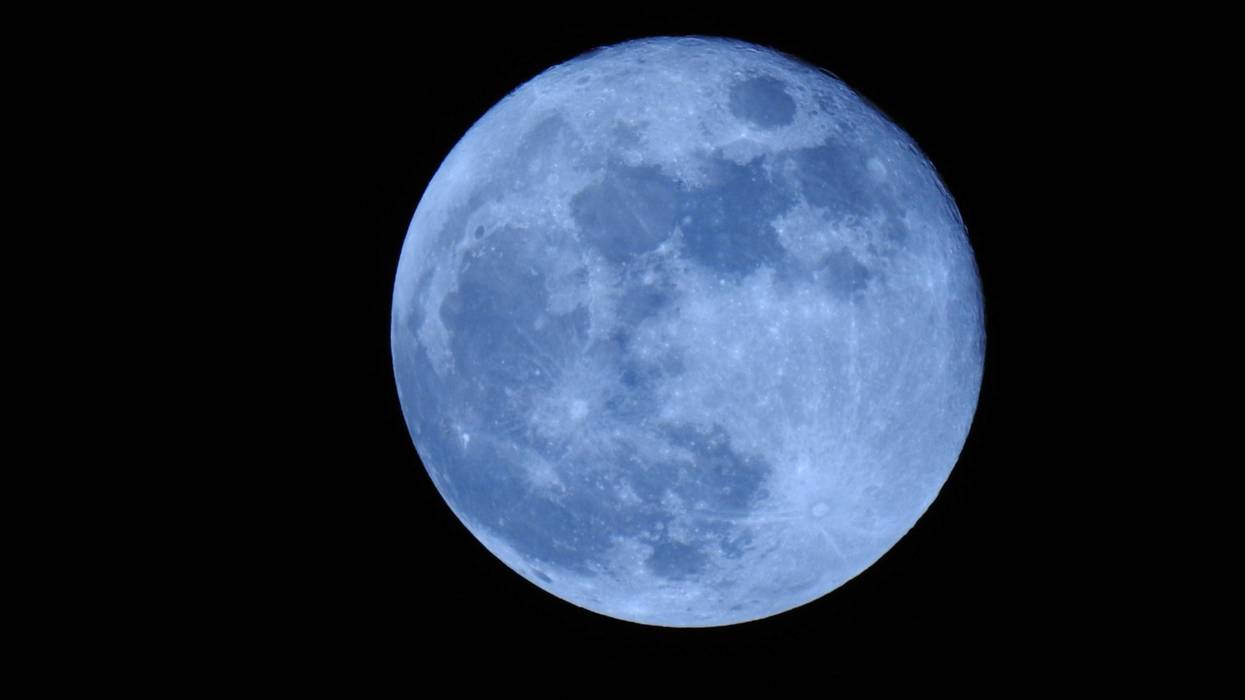

A Blue Moon isn't really blue but they are still really cool to see. Especially since they only come around every one to three years. "A seasonal Blue Moon is the traditional definition of a Blue Moon and refers to the third full moon in a season that has four full moons according to NASA. Not only that but there are 2 meanings to the term "blue moon". From Almanac.com:
Seasonal Blue Moon: The extra full Moon that occurs within an astronomical season. One season—defined by the dates of the solstices and equinoxes—typically has three full moons occurring within it. If a season instead has four full moons, then the third full moon (not the fourth) in the season may be called a Blue Moon.
Calendrical Blue Moon: The second full moon to occur in a calendar month. It takes our Moon about 29.5 days to complete one cycle of phases (from new Moon to new Moon), so if a full Moon occurs on the first of a month, there will be a second full Moon—a Blue Moon—at the end of the month, too (except in February).
The next Blue Moon up will be the evening of August 30th, 2023. This moon will be a "calendrical" blue moon. But it's special blue moon because it's also going to be a supermoon, the nearest one of this year! Of course, a supermoon is a full moon that looks bigger than normal because of how close it is to the earth. If you can believe it there are a couple of definitions of the supermoon, too, but let's just stay with the blue moon for now.
 Getty Images
The reason the seasonal blue moon is considered "rare" is because a moon's phase actually take 29.5 days. To complete 12 lunar cycles it takes 354 days. That equates to a 13th full moon every 2.5 years for a 13th full moon to be observed within a calendar year. The next seasonal Blue Moon will happen on August 19, 2024.
 Rebecca Wilde
 Getty Images
Make sure to mark your calendars and get the kids to see! It will appear in the sky at 8:36pm. While you're looking up, keep an eye out for Saturn, Jupiter, and Venus.