


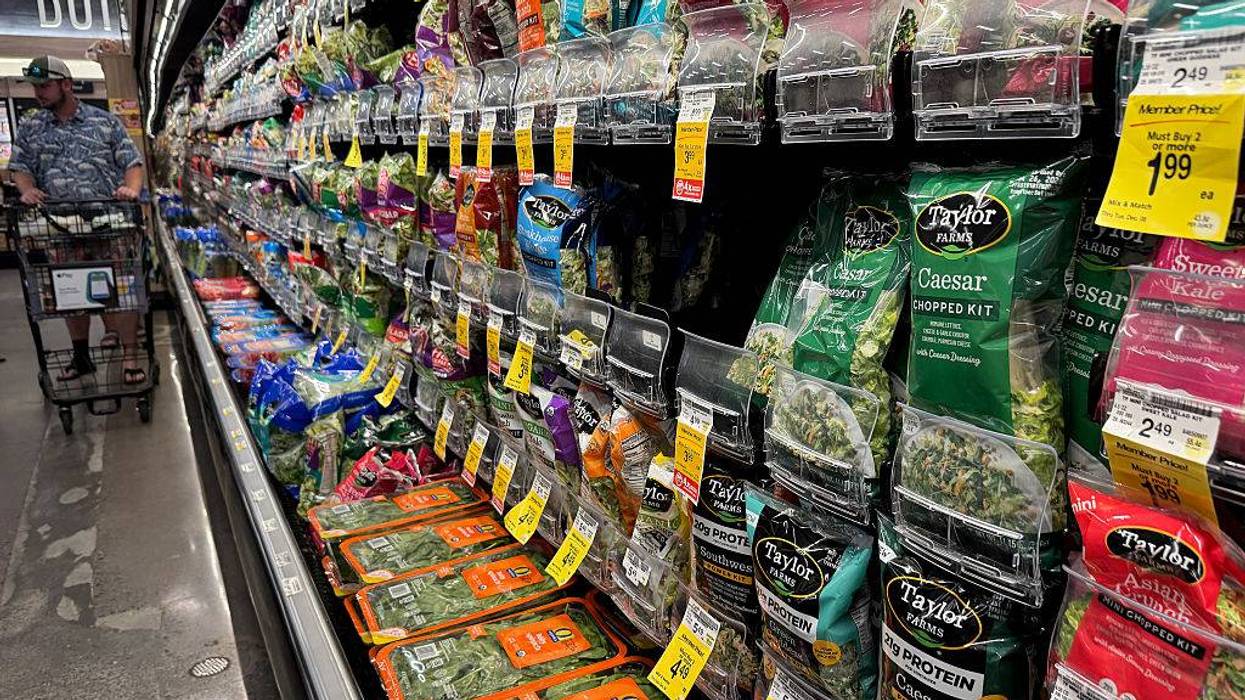

Cases of cyclosporiasis continue to tick up, and while the U.S. Centers for Disease Control and Prevention identified one product (Taylor Farms lettuce) linked to the diarrhea-causing outbreak, there are still questions. Some of those revolve around funding for federal food safety programs, and others concern other potential sources of contamination.
Earlier this month, Sen. Amy Klobuchar (D-Minn.) called on the CDC and the U.S. Food and Drug Administration to reinstate funding and staffing tor federal food safety programs. Specifically, she mentioned cuts to the Foodborne Diseases Active Surveillance Network (FoodNet), Public Health Infrastructure Grants, Preventive Services Block Grant, Food Safety Inspection Service, and Food Emergency Response Network.
Cyclospora is a microscopic parasite that can contaminate water used to rinse and wash produce and infection can cause severe, explosive diarrhea. Chlorine, a common disinfectant used in irrigation water, doesn’t kill the parasite, though cooking at least 158 degrees should. Cases usually increase in the spring and summer.
According to a letter Klobuchar sent to federal officials, President Donald Trump’s administration made reporting of foodborne illnesses caused by parasite cyclospora optional last year. It also suspended the FDA’s Food Emergency Response Network program last April following firings of key scientists as part of the administration’s layoffs of federal public health employees. Furthermore, the administration terminated Congressionally-appropriated Public Health Infrastructure funding that paid for state health department staff, laboratory capacity, diagnostics, tracking, and surveillance.
“The recent actions taken by the administration have significantly weakened federal and state defenses and undermined nationwide coordination against foodborne illnesses, particularly when there is no longer a central location for reporting and comparing data across state lines,” said Klobuchar.
USA Today also reported on the link between Health and Human Services Secretary Robert F. Kennedy Jr.’s cut back on parasite monitoring and the cyclospora outbreak. Snopes published a fact check article that determined claims that Trump’s administration cut surveillance of the parasite before the outbreak were true.
Consumer Reports said in a July 16 fact sheet that the lack of cyclospora monitoring did not cause the outbreak. However, it said that the funding and surveillance cuts may have impacted the CDC and FDA’s ability to mitigate the problem.
“The secretary of the Department of Health and Human Services now faces one of his biggest tests yet, as the country tries to contain an outbreak – or potentially multiple outbreaks – of foodborne illness,” CNBC said of Kennedy in a Thursday article. “Two months and thousands of cases of cyclosporiasis later, it looks like the nation’s already fragile system is faltering.”
As of Thursday, the CDC said there were more than 1,644 cyclospora cases across at least five states involving 94 hospitalizations and no deaths. Cases numbers are likely much higher, with the Michigan Department of Health and Human Services reporting more than 7,600 cases as of Thursday, along with 160 hospitalizations.
Last week, the CDC announced that Taylor Farms initiated a recall of all iceberg lettuce sourced from central Mexico. This recall included iceberg lettuce sold at retail stores and restaurants, including Taco Bell locations in Indiana, Kentucky, Michigan, Ohio and West Virginia.
Restaurant Dive reported Thursday that both Taco Bell (associated with around 60% of outbreak cases, according to former FDA Commissioner Scott Gottlieb, as cited by Reuters) and Taylor Farms have been hit with lawsuits over the outbreak and response. Placer.ai data indicates that foot traffic is also down at Taco Bell and other chain restaurants as the cyclospora outbreak continues to make news.
There have been issues with the identification of Taylor Farms as a potential outbreak source, the Associated Press reported in a Monday article.
“Food and Drug Administration officials on Monday said a laboratory test incorrectly identified a positive result for cyclospora on a sample of lettuce from Taylor Farms,” said the outlet. “The FDA posted the finding to its website on Saturday but then said Sunday that the result had been a false positive.”
Even so, the AP noted that federal health officials remained focused on Taylor Farms as the outbreak source at the start of the week. Taylor Farms said on social media that the FDA apologized about the test error, though the AP said agency officials denied an official apology.
“CDC is also investigating other outbreaks and illnesses of cyclosporiasis nationally that are unrelated to this outbreak,” said the latest update from the centers. A new cyclospora outbreak with an unknown source involving 72 cases was posted on the FDA’s “active investigations” page Wednesday.
One of the challenges that public health officials face when it comes to determining an outbreak source is the fact that common tests used to check for food poisoning have not been geared to detect cyclospora. According to the AP, technicians aren’t able to grow the parasite in labs, another challenge, as is the sometimes long cyclospora incubation period.
Reuters explained that scientists “often must rely on… interviews instead of testing because of the particular characteristics of cyclospora.”
“Cyclosporiasis is very hard to test for. There's no whole genome sequencing,” Gottlieb said. “FDA relies on whole genome sequencing to effectively fingerprint a pathogen to try to isolate a particular pathogen to a particular outbreak to a particular grower. You don't have that in this case.”
Methods that are available are more likely to result in false positives, such as the Taylor Farms case. In the meantime, Reuters said doctors are expecting a continued influx of cases.


