
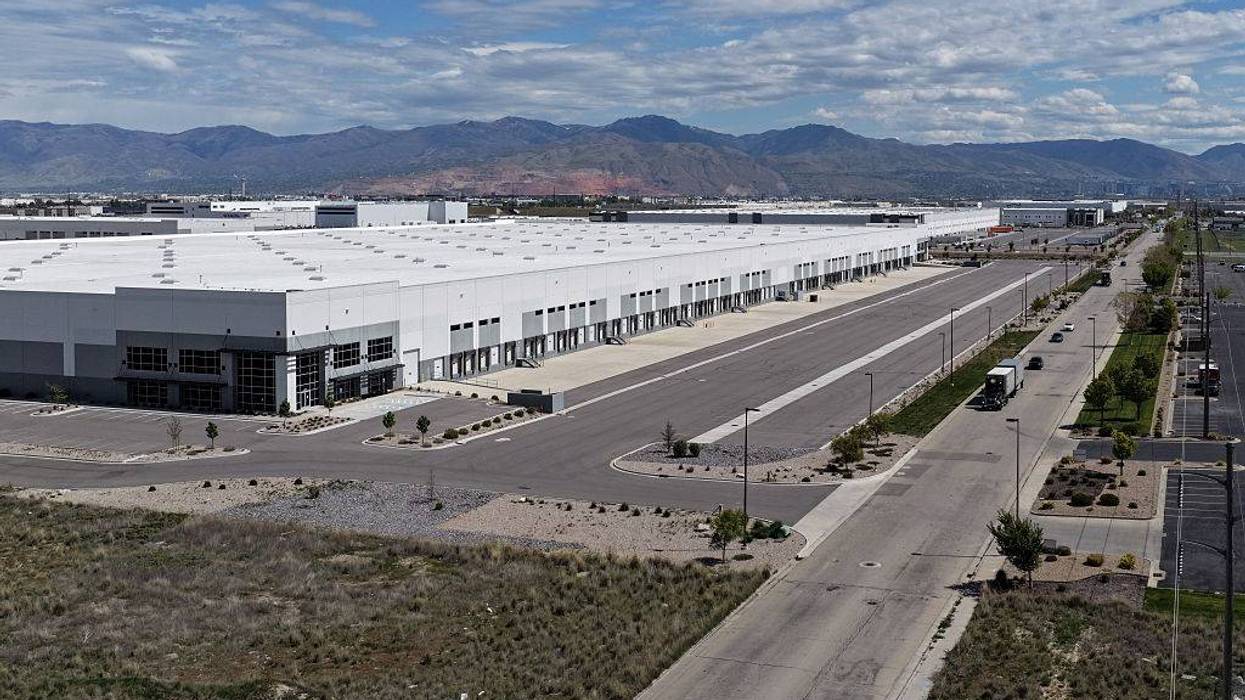

After spending $700 million on seven warehouses for Immigration and Customs Enforcement (ICE) operations, the government is now trying to get rid of them, according to a new report. What does it signal about the immigration plans moving forward?
Let’s start with how the warehouses were initially acquired. Per The New York Times’ report, these seven facilities were among 11 empty warehouses ICE (a sub-agency of the Department of Homeland Security) purchased to ramp up deportations in the year following President Donald Trump starting his second term in January 2025. Altogether, the warehouses cost around $1 billion, according to The Times.
Former DHS head Kristi Noem was in charge when the properties were purchased. Contractors had typically owned detention centers in the past, The Times noted.
By the end this March Noem was out of the department, and she’s been replaced by current DHS Secretary Markwayne Mullin. The Times said that Mullin “privately expressed skepticism about the plan, has said publicly that he wants the agency to be quieter about how it carries out immigration enforcement.”
Noem’s tenure was marked by controversies, including the deaths of U.S. citizens at the hands of federal agents and ICE using a song loved by white supremacists to recruit agents, as well as reports of bonuses for “dud” ICE recruits and cuts to its training program. She’s also dealt with controversy in her personal life, with reports indicating that Noem and her husband were $3 million in debt while he spent thousands on his “bimbofication” fetish.
According to The Times, selling the warehouses marks a “major turnabout” in the agency’s approach under Mullin. It said the agency plans to give the facilities to other federal agencies or to sell them outright, citing documents.
“The shift also raises questions about the original decision-making behind the plan to buy the warehouses – a costly undertaking that involved converting industrial space into places that could house thousands of human beings, with water and sewer capacity and proper ventilation, and created almost immediate conflict with local communities across the United States,” said The Times’ report.
As of this week, the DHS appears to be looking to get rid of the ICE warehouses purchased in Romulus, Mich.; Social Circle and Flowery Branch, Ga.; Hamburg and Tremont, Pa.; Salt Lake City; and Roxbury, N.J., the report said. It plans to move forward with operations at other warehouses purchased in San Antonio and Socorro, Texas; Surprise, Ariz.; and Hagerstown, Md.
Fox 10 in Phoenix reported Tuesday that the facility in Surprise “received the green light from federal officials, even as the Department of Homeland Security scales back its plan to build these facilities across the nation.” Some members of the local community had pushed back on the plans, including Surprise City Councilman Chris Judd, the report said.
Pushback wasn’t unique to Arizona, The Times said.
“As soon as the agency bought the warehouses, local communities began to rebel, including in conservative areas that worried about the toll on local utilities and the economy, and the potential to draw protests,” according to the outlet. “Even Republican politicians wrote to homeland security leaders urging them to turn away from the idea in their communities.”
There have also been a proliferation of environmental lawsuits across the country, said The Times. A judge in Maryland has even blocked ICE from taking any action at the warehouse that state, purchased for around $100 million. ICE reportedly also said in federal court it would take no action at the warehouses in New Jersey and Michigan until it conducted further environmental tests.
John Fabbricatore, a former Trump administration official who until recently worked as a senior adviser on immigration issues at the Department of Health and Human Services said the warehouses were simply a “were a quick concept to scale up mass deportation.” He added that the left “was able to throw up immediate roadblocks,” due to the size and scale of the facilities.
“Immigration detention is necessary for a successful deportation plan, and this was the easiest point for the Democrats to attack and stop that effort,” he said, per The Times.
Now, The Times said there are questions about whether ICE has the ability to deport high numbers of immigrants as it lets go of at least seven facilities. It explained that illegal immigrants are usually arrested then processed and detained by ICE, then flown out of the country. However, The Times also reported that ICE plans to buy more immigration detention facilities from private prison companies.
“From Day 1, DHS. has remained singularly focused on removing the worst of the worst criminal illegal aliens from the United States and is always evaluating the best methods to do so,” the Homeland Security Department said in a statement cited by The Times. “These heinous criminals, once arrested, should be removed at lightning speed, not housed on American soil at the taxpayer’s expense. DHS. is moving swiftly to utilize EXISTING detention space with our state and county partners.”