


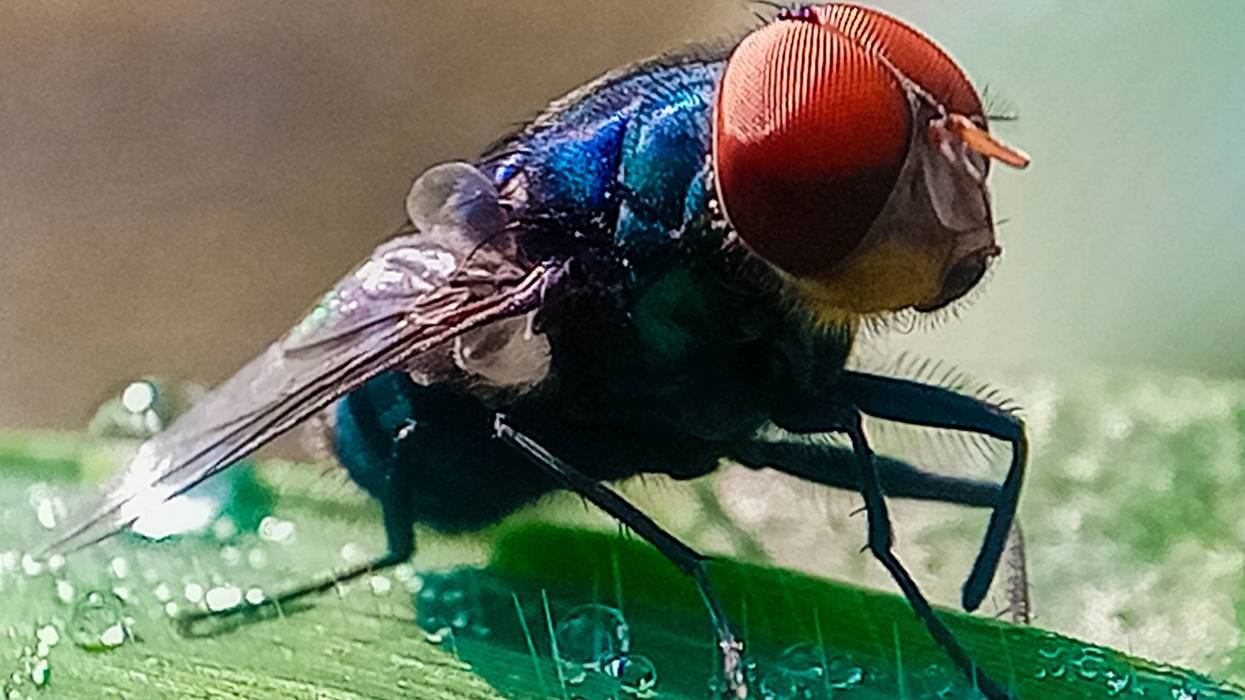

Larvae of a dangerous fly was found infesting the umbilical area of a three-week old calf in Texas, the U.S. Department of Agriculture announced Wednesday. If the larvae spreads, it could be a dire situation for livestock and it could cause beef prices to rise.
It also poses a risk for human infection. Here’s what you need to know.
This confirmed case of New World screwworm larvae was identified in Zavala County, Texas, close to the Mexican border. NWS (Cochliomyia hominivorax) is typically found in South America and parts of the Caribbean, per the U.S. Centers for Disease Control and Prevention. Since 2023, the NWS has been moving further north, through every country in Central America and Mexico.
According to the Washington State University College of Agricultural, Human and Natural Resource Sciences’ Veterinary Medicine Extension, NWS is a type of blowfly that lays its eggs in a living host rather than a dead one. It explained that adult female screwworms lay their eggs at the edges of wounds or body orifices. After feeding on the flesh, the maggots fall to the ground, burrow and emerges as flies.
“Commonly infested natural wounds are the navels of newborn animals, and the vulval and perineal regions of their mothers, especially if traumatized,” said the institution.
Once the eggs are deposited, the larvae can invade undamaged tissue such as the nostrils and associated sinuses, eye orbits, mouths, ears, and genitalia. Larvae emerge within 12 to 24 hours and begin to feed on the wound fluids and underlying tissues, “burrowing gregariously head-downwards into the wound in a characteristic screwworm fashion,” according to the extension.
As the maggots eat live tissue with hook-like mouth parts, they cause pain and a foul smell, the CDC said. This smell can attract other female screwworms. Severe infestation left untreated may result in the death of the host, said the WSU extension.
While human NWS infestations do not regularly occur in the U.S., they are possible. Symptoms include painful skin wounds or sores that worsen over a few days, foul odor at the infestation, bleeding from open sores and seeing or feeling maggots in a wound.
Anyone who does see or feel maggots on a wound or their body should immediately contact a healthcare provider. People who have recently traveled to Central or South America, the Caribbean, or Mexico are particularly at risk, especially those with any type of open wound – even a tick bite.
“Bacteria can also infect wounds where NWS maggots are present and may cause infection that can lead to symptoms like fever or chills,” the CDC added.
To treat a human NWS infestation, healthcare providers will need to remove each maggot, sometimes surgically, the CDC explained. People are advised not to attempt to remove maggots or eggs themselves or dispose of them in the trash, as that could spread the NWS. If they fall out of wounds, the maggots or eggs should be sealed in an airtight container with rubbing alcohol.
At this time, concerns about infestation in livestock are more pressing than rare human cases. The CDC noted that NWS “can be particularly devastating to livestock health with serious economic impacts.”
Per the WSU extension, an isolated outbreak of NWS that occurred in Texas in 1976 was estimated to result in $330 million in losses. Today, an outbreak could cost billions.
In an interview with Audacy station WWL in New Orleans this week, Louisiana Agriculture Commissioner Mike Strain said it’s “very likely” that the recent NWS finding will cause (already high) beef prices to go higher. That increase would be due to fear than an actual spread of the NWS.
"It’s not going to have an initial negative effect on supply, only if it gets out of control,” Strain explained. “You will have some market instability in the next week or two because you're going to have speculators get in on the Chicago Board of Trade and others.”
He said measures to prevent further spread will likely cause prices to rise, but that the spike should be temporary if the NWS is kept under control.
Thankfully, the U.S. worked out a way to control NWS populations. It includes mass-producing sterile male NWS flies by using gamma or x-ray irradiation during their pupal stage and releasing them into the wild.
“All of their matings with wild females result in infertile eggs only, leading to a progressive population reduction and, eventually, eradication,” said the extension. However, it noted that this method can be expensive.
In its Wednesday announcement, the USDA said that models showed the NWS entering the U.S. last year, but that preventative measures delayed the onset of infestation.
“Protecting our livestock industry is a national security issue of the utmost importance, and USDA is wasting no time in taking action,” said Dudley Hoskins, Under Secretary for Marketing and Regulatory Programs. “USDA invested heavily in the tools needed to eliminate NWS ever since cases started increasing in Central America and Mexico. The United States has defeated this pest before, and we will do it again.”
According to the USDA, it is forming an Incident Command Team with the Texas Animal Health Commission and deploying response personnel to the area; establishing a 20 kilometer infested zone around the detection; implementing quarantines, movement controls, and surveillance in this area; expediting the release of the sterile NWS flies (4 million are already being released weekly in the area); increasing trapping for NWS flies along the border and just outside of the dispersal area; implementing NWS surveillance and management strategies in wildlife and conducting targeted outreach in the local area.
“Additionally, USDA’s National Veterinary Stockpile stands ready to assist and will provide resources including treatments, equipment, and logistics support the response as needed,” said the agency. Going forward, it also said it is working with state and local health and wildlife departments, as well as trading partners, to help mitigate any potential impacts.
Residents near the area where NWS was reported are advised to check their pets and livestock for signs of infestation.
“Look for draining or enlarging wounds and signs of discomfort,” the USDA recommended. “Also look for screwworm larvae (maggots) and eggs in or around body openings, such as the nose, ears, and genitalia or the navel of newborn animals. If you suspect your animal is infected with screwworm, contact your state animal health official or USDA area veterinarian in charge immediately.”
It also said that the U.S. food supply is safe. Per the USDA, screwworms do not infest meat, fruits, vegetables, or other food sources, and its Food Safety and Inspection Service (FSIS) “ensures that the nation’s commercial supply of meat, poultry, and egg products is safe and properly labeled,” and that food is inspected.